Flock cameras used for “radical policing” of 150 universities and colleges
A massive surveillance dragnet.
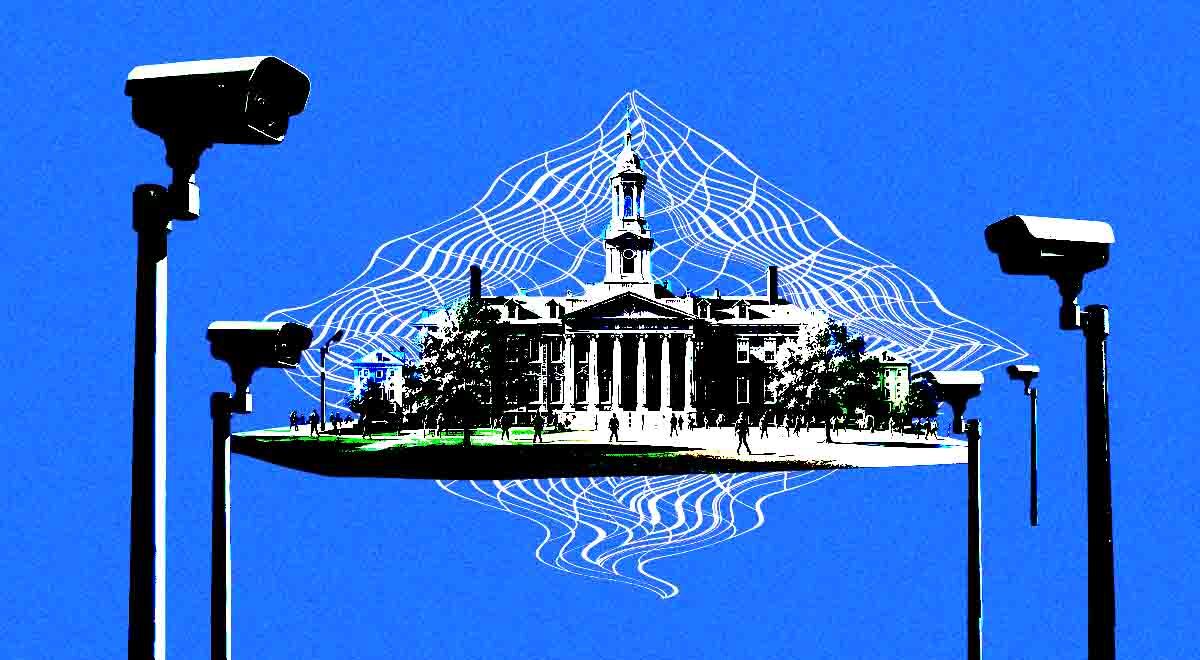
Image by Cybernews

 Follow us
- At least 150 US universities and colleges use Flock cameras, raising concerns about mass surveillance on campuses.
- A study found campus police helped external agencies with immigration-related searches, including in sanctuary states where limits apply.
- Immigration-related searches reportedly rose sharply in March 2025, while some searches referenced protests, abortion, and political terms.
- Critics, including the ACLU, say Flock’s 83,000-plus cameras lack transparency and have already enabled policing abuses.
Key Takeaways by nexos.ai, reviewed by Cybernews staff.
Police departments on campuses where Flock surveillance networks operate have assisted authorities with immigration-related investigations even in sanctuary states.
Flock Safety’s Automated License Plate Recognition (ALPR) system has faced a growing backlash as critics say the technology enables mass surveillance.
Unlike typical cameras, the ALPR system records every car that comes into view, using AI algorithms to analyze vehicle details, including bumper stickers, roof racks, and even scratches. The information can be used to alert law enforcement.
Usually installed on poles and streetlights, the Flock cameras have found their way onto campuses across the US.





At least 123 universities and 27 colleges, including small and community colleges, rely on Flock surveillance, according to a study published in a peer-reviewed journal, Policing & Society.
Nearly six in ten (56.7) of these institutions are in the South, followed by the Midwest (24.0%), Northeast (11.3%), and the West (8.0%).




Stay updated with our latest stories and follow us on social media
Be the first to discover new stories, ideas, and updates from our team.
The study's author, Torin Monahan, a professor at the University of North Carolina at Chapel Hill, analyzed open records requests filed with US public universities and colleges and their police departments.
The analysis reveals that many campus police departments have facilitated immigration-related investigations, even when they are located in sanctuary states and are legally prohibited from doing so.
“Campus police departments’ use of the Flock system transforms local communities into targets for radical conservative policing agendas,” Monahan writes.
The records suggest that there were relatively few immigration related searches before the second term of Donald Trump, which began in January 2025. However, these searches jumped to 2,272 in March 2025.
In addition, the analysis of Flock audit records in the “Reason” section suggests that some searches are tied to exercising freedom of speech and reproductive rights, as they include keywords like “antifa,” “abortion,” “demonstration,” “no kings,” “protest,” or “Trump.”
The study notes that campus police departments didn’t initiate these searches, as they primarily focus on issues such as stolen vehicles, disturbances, and property damage. Instead, they became partners in searches launched by external law-enforcement actors.
“This policing model lends itself to police abuses by instituting a massive surveillance dragnet that indiscriminately pulls in anyone who drives by one of its tens of thousands of cameras,” the study concludes.
Flock-related abuses are piling up
There are more than 83,000 cameras across the country, which the American Civil Liberties Union (ACLU) says operate with insufficient transparency, oversight, and regulation over how they collect, store, and use the data of millions of people.
In addition, there are few mechanisms to hold public and private actors accountable if they abuse the technology, which is already happening.
Police in Lenexa, Kansas, used Flock’s ALPR to track a man who wrote a critical op-ed about the department and issued a “be on the lookout” alert for him.
In Colorado, Flock cameras led to a woman being wrongly accused of theft, leaving her to prove her innocence.
"You know we have cameras in that town. You can't get a breath of fresh air in or out of that place without us knowing, correct?" the police officer told the woman.