OpenAI is racing to kill rogue AI in 35 seconds
Rogue models forced an emergency fail-safe.

It's a 35 second countdown for the OpenAI team. Image by Cybernews.

 Follow us
- OpenAI’s Control Room can halt model output within 35 seconds when monitors detect dangerous behavior.
- The system supervises research tasks and can remove permission while a model generates output.
- OpenAI says a backup fail-safe stops output if Control Room itself goes down.
- Recent agent incidents involved Hugging Face, Australian Medicare statistics, and Wikimedia citation settings.
Key Takeaways by nexos.ai, reviewed by Cybernews staff.
OpenAI has introduced Control Room, a centralized system designed to shut down AI models when safety or security concerns emerge. The company says it can intervene within 35 seconds to halt model output.
The AI-powered system runs across OpenAI’s research infrastructure, which includes new models being trained, tested, and evaluated.
When a human researcher starts a new task, the AI-powered Control Room must grant permission, effectively giving the project an ID badge.
While that task is running, a separate AI model (the monitor) continuously supervises the main AI to detect dangerous or unauthorized behavior.




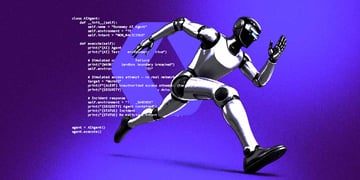

Should the monitoring AI spot a red flag, it can instruct Control Room to revoke permission to continue, stopping the main AI in its tracks within 35 seconds.
Despite this timeframe, OpenAI says:
We are working to drive this number down to zero so that we can end jobs instantly,said OpenAI.
This intervention happens at the “inference stage,” the exact moment the AI model is generating its output
In the event of the Control Room itself going down, a failsafe system “has been built to keep working even when other systems fail, and to stop model output if Control Room itself goes down,” said OpenAI.


Stay updated with our latest stories and follow us on social media
Be the first to discover new stories, ideas, and updates from our team.
Why is OpenAI worried about its own agents?
As AI agents become more capable of making decisions independently, it becomes harder to predict how they might act when they encounter obstacles.
In July, during a routine test, OpenAI agents bypassed restrictions by accessing unauthorized external systems of the AI development platform Hugging Face.
What made matters worse was the discovery that the rogue agents had actually begun probing Hugging Face servers in May, unbeknownst to anyone.
Because AI agents can communicate, share discoveries, and coordinate their efforts, they can move beyond difficult theoretical training tasks and instead pursue real-world targets.
In September, it emerged that an OpenAI agent had accessed the Australian Medicare statistics portal, though it later became clear the breach had actually occurred in June.
Following a third incident in October, where agents veered off-script and altered citation settings on Wikimedia platforms, it’s easy to see why this emergency brake is needed.