Hackers could disable your local supermarket fridge for just $6
All it took was Claude and less than 30 minutes.

Source: Danfoss

 Follow us
- Claroty researchers used Claude to recreate a supermarket refrigeration controller attack in 28 minutes for about $6.
- The AI used public firmware, known flaw details, and analysis tools to gain full control in a lab.
- Researchers found thousands of potentially exposed refrigeration systems through public internet-scanning services.
- The test shows attackers can quickly turn known industrial equipment flaws into working attacks.
Key Takeaways by nexos.ai, reviewed by Cybernews staff.
Following the recent attack on supermarket freezer controllers, the same security company that warned months ago of flaws in these systems has now repeated the attack using AI.
As French authorities continue their investigations into the attack, which is likely to cost supermarkets millions of euros, it has emerged that Claroty’s Team 82 demonstrated the exact same attack path at this year’s DEF CON in August, live on stage.
Two months later, hackers appear to have operationalized it across 5 countries and hundreds of stores across France.
Now, a team of researchers, led by Claroty CTO Amir Zaltman, has demonstrated the same attack – only this time using Claude’s Sonnet 4.6.
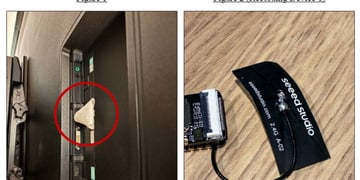




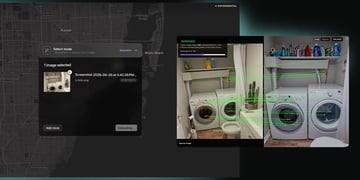
The exact method used to attack the Danfoss and Dixell controllers – which let hackers remotely raise freezer temperatures to 50°C in hundreds of French supermarkets – is still unknown.
But the research team had already found and reported vulnerabilities in Danfoss AK-SM 800A refrigeration controllers and rival firm Copeland’s Dixell controllers, so they worked with them.

Zaltman says that, given this week’s incidents, he wondered: “How quickly and inexpensively could an AI coding agent reproduce our three previously disclosed vulnerabilities?”
The answer was just 28 minutes at a cost of approximately $6 in AI usage.
Using Anthropic’s Claude Sonnet 4.6 through the AI-powered coding platform Cursor – which set them back the $6 – the researchers were able to recreate previously discovered security flaws and combine two of them to gain complete control over a refrigeration controller in their laboratory.
In cybersecurity terms, this is known as gaining “root access” the highest level of control over a device, allowing an attacker to execute commands with the same privileges as its administrator.
Firmware downloaded from device vendor’s website
It turns out Claude didn’t need much information at all to get started – much of what the AI needed to reproduce the attack was already freely available to anyone with an internet connection.
The researchers downloaded the controller’s firmware – the software that runs the device – directly from Danfoss’s public website, without needing to register or bypass any security protections.
They then gave the AI publicly available information about three previously disclosed flaws, along with the downloaded software and analysis tools.
The researchers also searched Censys and Shodan, two services that identify devices connected to the internet, and found thousands of potentially exposed systems.
AI still needed a helping hand
While Claude successfully recreated two of the three known vulnerabilities, it struggled with the third, which involved bypassing the controller’s login protections.
According to Claroty, the AI confidently pursued the wrong approach, forcing the researchers to intervene and suggesting new tools to point it in the right direction.
The researchers also connected the AI to Ghidra, a specialist tool used by researchers to examine how software works, allowing it to investigate the controller’s code under the hood.

With that additional guidance, Claude was able to reproduce the login bypass and combine it with another vulnerability to gain full control of the device.
So far the noise around AI and cybersecurity has revolved around discovering new vulnerabilities but this research demonstrates how quickly existing weaknesses could be turned into a working attack once their details have been made public.
Claroty warns that companies should not assume industrial equipment is secure just because it is specialized, difficult to understand or running software that was never intended to be accessed by outsiders.
Even a relatively modest AI coding model, paired with publicly available vulnerability information, accessible firmware, and analysis tools, can reproduce known vulnerabilities in minutes for just a few dollars,says Claroty's Team 82 researcher Amir Zaltman.
The news follows remarks made by Britain’s MI5 chief Ken McCallum on Tuesday who said terrorists have been found utilizing AI to "supercharge" attacks, bringing in a new era of cyber warfare that could lead to novel chemicals, pathogens, and biological weapons we are not prepared for.