LinkedIn “AI Slop” button clicked over 1M times since release
LinkedIn falls out of love with AI.
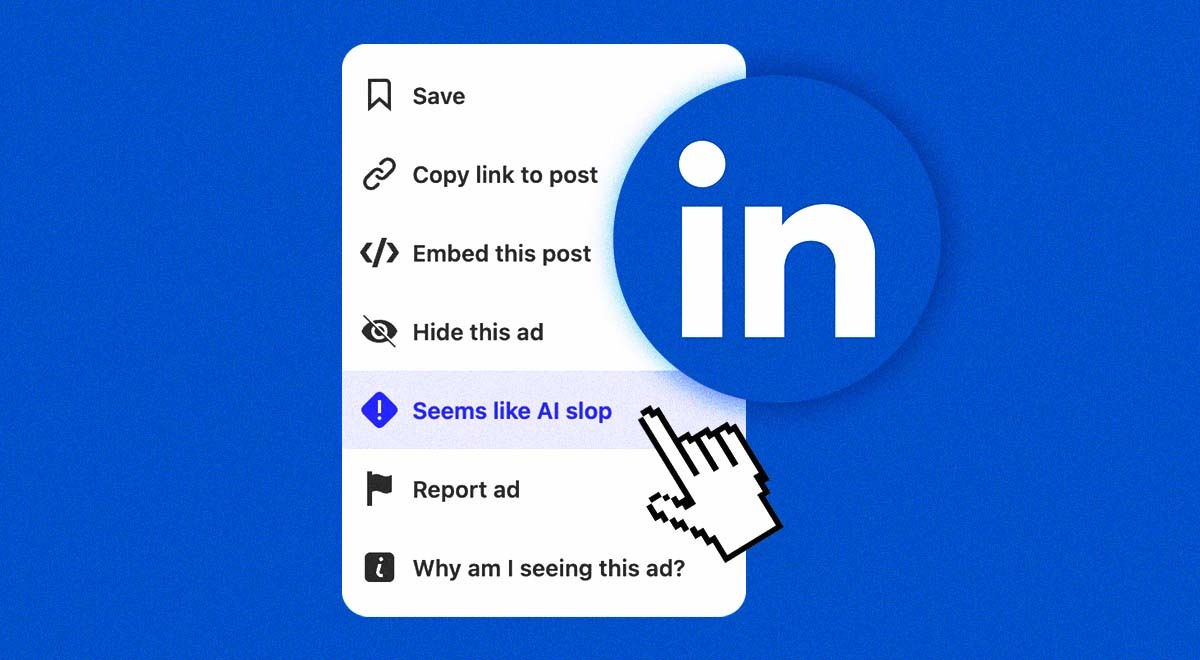
"Seems like AI Slop" button by Cybernews f

 Follow us
- LinkedIn added a "seems like AI" button for users to flag posts they believe are AI-generated.
- Chief product officer Hari Srinivasan said over one million users clicked the button within two weeks.
- LinkedIn says flagged AI slop gets 40% fewer views, but no single report controls content distribution.
- Tech companies are responding to wide industry pressure which demands low-quality AI posts, spam bots, and automated comments be banished.
Key Takeaways by nexos.ai, reviewed by Cybernews staff.
LinkedIn, along with a laundry list of other tech companies, is waging the war on AI slop in an attempt to banish bots and synthetic content from its site.
The professional networking site has implemented a “seems like AI Slop” button that allows users to flag posts that may have been created using AI.
In a post on LinkedIn, the company’s chief product officer, Hari Srinivasan, thanked “over a million people” who “have now clicked ‘seems like AI’ since (its) launched 2 weeks ago.”
It helps LinkedIn understand users’ attitudes towards “low-quality content,” he said.





With the implementation of the “AI slop button,” Srinivasan said that LinkedIn is also introducing a new feature in each user’s post analytics to show how other users are engaging with content.
In other words, the new feature shows users how many people think their content is AI-generated, which could help them approach content creation a little differently.
It’s unclear whether LinkedIn actively punishes accounts that post AI-generated content or is just out to get AI spam bots.
Cybernews has reached out to LinkedIn for comment.

“LinkedIn users are now experiencing 40% less views on what we classify as AI slop,” Srinivasan said, but didn’t provide the exact number.
This means LinkedIn is showing users less content deemed spammy and synthetic.
The potential issue with users self-reporting AI slop is that the feature could be misused.
However, the button doesn’t work by blocking or limiting the reach of content that received a few pieces of feedback.

“No single piece of feedback determines how content is distributed,” Srinivasan explained, adding that “we look at many signals together.”
LinkedIn claims to have built safeguards “to help prevent individual feedback from being used to unfairly target other members.”



Stay updated with our latest stories and follow us on social media
Be the first to discover new stories, ideas, and updates from our team.
AI is off the table
Big tech was once so excited about AI that it seemingly encouraged an epidemic all of its own. The AI slop epidemic.
Gentle encouragement of AI use on platforms like LinkedIn ushered in a tidal wave of “expert” posts written using the tech.
A study by Pangram found that AI-generated text was rapidly saturating social media, with LinkedIn as the main offender.
Pangram argued that LinkedIn's own AI writing tools, including its "Enhance post" feature, have helped normalize AI-assisted publishing on the platform.

What once seemed to be a major asset has turned into a major pain point for LinkedIn: it is changing the “enhance your post” feature, which helps improve writing with AI, and replacing it with a proofreading tool to help moderate authenticity, according to Fortune.
Bot accounts are also on the chopping block, as LinkedIn supposedly blocks hundreds of thousands of automated slop comment attempts each day.
LinkedIn has also prevented billions of other automation attempts in the last few months.