Microsoft and Mistral deal promises sovereign AI deployment in Europe
The exact opposite of sovereign AI?
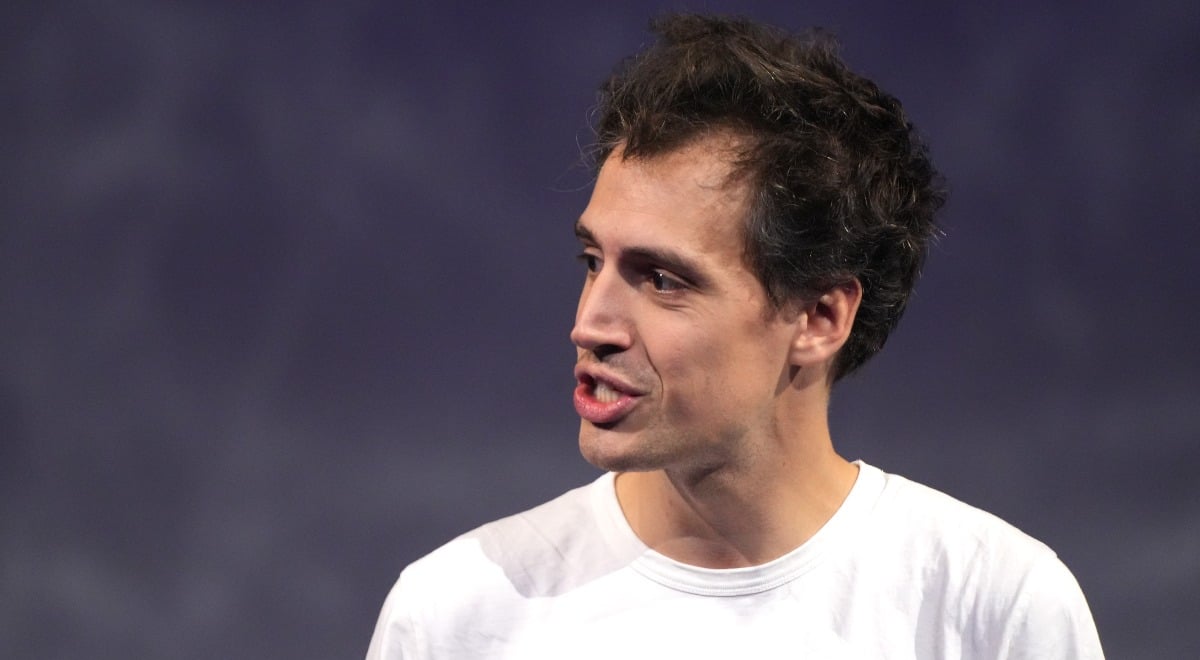
Arthur Mensch by Nathan Laine/Bloomberg via Getty Images

 Follow us
- Microsoft will use Mistral’s French data centers while investing billions in the AI startup’s expansion.
- Mistral models are now available through Microsoft Foundry, Copilot Studio, and Azure deployment options.
- The companies say the deal supports European customers seeking more control over data, operations, and AI infrastructure.
- Critics in France argue the partnership could deepen Europe’s reliance on US technology.
Key Takeaways by nexos.ai, reviewed by Cybernews staff.
European AI champion Mistral is opening its data centers in France to Microsoft, which will, in turn, invest billions of dollars in the French startup’s expansion.
The US tech giant will use Mistral’s Europe-based graphics processing unit (GPU) infrastructure to increase AI development capacity and support the delivery of Microsoft cloud and AI services, according to a press release.
In addition, Mistral models Medium 3.5 and OCR 4 are now integrated into Microsoft Foundry, the enterprise AI platform. The open-weight model Medium 3.5 is also available in Microsoft Copilot Studio, a tool for building agents, and in a managed Azure environment.
The companies say that the partnership extends Microsoft’s “sovereign cloud” approach, giving European customers more flexible AI deployment options.






Azure, Microsoft’s cloud computing platform, now enables organizations to deploy Mistral models across cloud, cloud-connected, and fully disconnected environments, while maintaining “control over data, operations, and business continuity.”
“Our mission has always been to put frontier AI in the hands of every organization while keeping them in control of their technology,” said Arthur Mensch, a co-founder and CEO of Mistral.




Stay updated with our latest stories and follow us on social media
Be the first to discover new stories, ideas, and updates from our team.
According to Microsoft, fully disconnected Azure deployments operate independently of external connectivity and can be used for highly sensitive environments.
“By putting Mistral’s models on Azure Local and on Mistral’s computational capacity, we can combine American and European technology and do it in a way that provides continuous and assured access,” Microsoft President Brad Smith told Reuters.
Sovereign cloud solutions are Microsoft and other tech giants' response to Europe’s growing concerns about its digital dependence on the US and data privacy.
The US Cloud Act, enacted in 2018, obliges American companies to provide data requested by the country’s law enforcement, regardless of where it is stored.
US companies now offer “sovereign cloud” solutions, which operate in the EU and are run by EU-resident employees. However, critics call it “sovereignty washing,” arguing that US laws still apply to these companies.
Mensch, a long-time supporter of European digital sovereignty, has recently warned that Europe has two years before becoming America’s AI “vassal state,” urging the continent to build its own infrastructure.
“Once supply is monopolized by American players, suddenly we no longer have supply, and we can no longer transform electrons into tokens,” he said.
The conversation on this topic is live. Join in the discussion.
Mistral’s partnership with Microsoft has attracted criticism in France.
Jean-Luc Mélenchon, leader of the left-wing La France Insoumise party and 2027 presidential candidate, called the partnership “the exact opposite of what should be done in terms of sovereign AI.”
“Mistral is making data centers available in France – and therefore French electricity and water – so that Microsoft can train its own models, through which it will strengthen French dependence on a US digital ecosystem,” he wrote on X.
South Korea’s Samsung is also in talks to invest hundreds of millions of euros in Mistral, Reuters reported on July 22nd, 2026.
Samsung said in April it would consider investments and acquisitions to accelerate the development and commercialization of robotics, while partnering with local companies on technology development.