Build or surrender in the AI race, Mistral CEO Arthur Mensch tells Europe
“For now, the choice is still ours.”
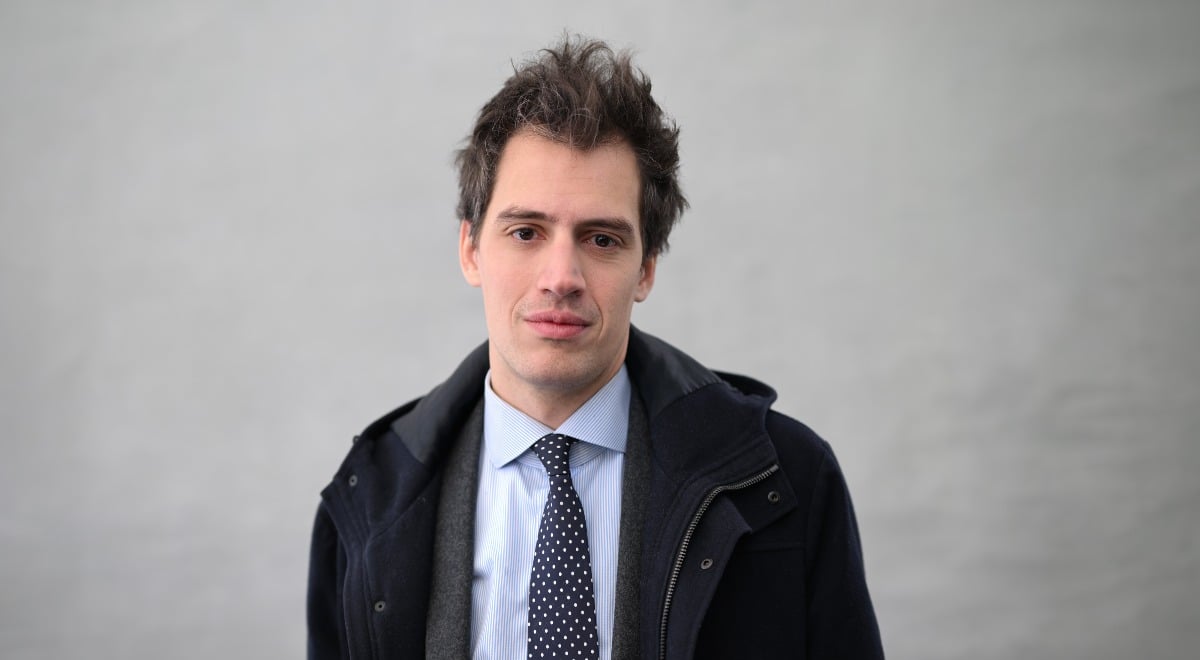
Image by Chris J. Ratcliffe/Bloomberg via Getty Images

 Follow us
- Arthur Mensch says Europe must build frontier AI models or accept deeper dependence on the US and China.
- He says European companies already pay over €260 billion a year to American cloud and software providers.
- Mensch argues open models help, but Europe must shape releases and access to stay in control.
- He says frontier AI is now a security issue for cyber defense and critical infrastructure.
Key Takeaways by nexos.ai, reviewed by Cybernews staff.
Arthur Mensch, a CEO of France-based Mistral AI, says open models only partly solve Europe’s AI problem.
Mensch writes in his October 15th LinkedIn post that the idea of leaving frontier AI models to the US and China has gained ground in Europe, and calls it “a fundamental mistake.”
“It will end up costing Europe what remains of its place in the world and lock it into a regime of economic dependence unprecedented in the history of civilizations,” his post reads.
Mensch argues that Europeans, following the internet playbook, developed the applications and “left the platforms to others.” As a result, European companies pay more than €260 billion ($292.9 billion) every year to American cloud and software providers.





He emphasizes that AI is not the internet, which runs on open protocols owned by nobody.
“Closed AI models, by contrast, have an owner. What an application or an agent can do is decided by the model, and whoever controls the model sets the terms: they change the price, restrict uses, withdraw a version,” Mensch writes.
Every decision made upstream is imposed on the entire chain. Those who build on top bear the consequences, with no say in the matter,Arthur Mensch, a CEO of Mistral AI
Mistral CEO points out the Donald Trump administration’s order to the Anthropic lab to suspend access to its Fable 5 and Mythic 5 models for foreign nationals in June, leaving Europeans without access to the most advanced AI capabilities.
Mensch’s remarks come after the German search engine Ecosia said it was dropping Mistral as its AI provider in favor of open-weight models, including Chinese models such as Qwen, GLM, and Kimi.
Ecosia’s leadership said they were “disappointed with the quality of Mistral,” calling the company “a year behind” the competition.
Open models aren’t the solution
Mensch writes that open models, which can be downloaded, self-hosted, and audited, offer only a partial solution to the problem. He warns that without active participation in the ecosystem, Europeans won’t be able to decide what is released and when.
Mistral recently unveiled its open-weight model Mistral Large 4, dubbed Le Chonk, which will be released to the public on October 27th, 2026.
The company said it “closes the gap with frontier models” in areas including coding, finance, geospatial analysis, manufacturing, and product design, but didn’t specify benchmarks.
Mensch argues that building frontier AI systems is becoming a vital matter of security, as they are playing a central role in cyber defense and in protecting critical infrastructure.
A state must be able to audit the systems it uses, adapt them to its needs, and be certain it will still have access to them tomorrow. With a model designed and controlled elsewhere, none of these three conditions is guaranteed over time,Arthur Mensch, a CEO of Mistral AI
Mensch urges breaking with pessimism and ignoring the narrative that “Europe has lost.”
“If Europe resigns itself, AI will go on being built elsewhere, and we will only have access to second-rate export versions, in exchange for fees running into the trillions of euros. That will wipe out any prospect of growth or power,” he writes.
“Build or surrender: for now, the choice is still ours,” Mensch adds.