European Google Search alternative drops Mistral, slams it as “disappointing”
Ecosia says that Mistral is “a year behind” the competition.
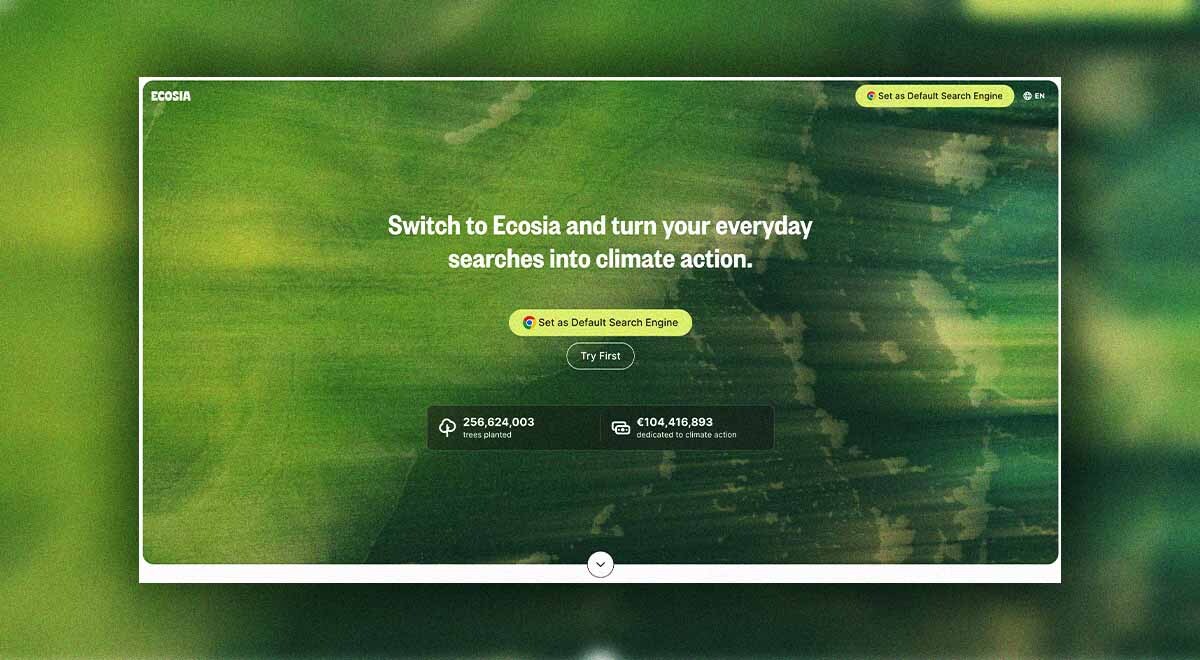
Screenshot from Ecosia.com via Cybernews

 Follow us
- Ecosia says it is dropping Mistral because of quality problems and overloaded servers.
- The search engine is now considering open-weight AI models, including Qwen, GLM, and Kimi.
- CEO Christian Kroll says Mistral is one year behind competitors and struggled to serve Ecosia.
- The move raises questions about European tech sovereignty, clean energy claims, and dependence on Chinese AI models.
Key Takeaways by nexos.ai, reviewed by Cybernews staff.
German search engine Ecosia, positioning itself as an alternative to Google, says it’s ditching its partnership with France’s AI lab, Mistral.
Ecosia announced it would replace OpenAI with Mistral as its AI provider in May 2026, but the partnership didn’t last long.
The company is now eyeing open-weight models that can run on users’ own hardware, including Chinese models such as Qwen, GLM, and Kimi.
Christian Kroll, Ecosia founder and CEO, recently told Politico that the company is “disappointed with the quality of Mistral,” and that the AI lab is “a year behind” the competition.





Kroll cited recurring technical problems, including overloaded servers, saying that Ecosia is a “too large customer” for Mistral.
Ecosia is an environmentally-focused company that donates 100% of advertising profits to planting trees and broader climate action.
The company also champions European tech sovereignty by building its own web index in partnership with the French search engine Qwant through their European Search Perspective (EUSP) joint venture.
Some of Ecosia’s search results and ads, however, come from American engines Google and Bing.
Kroll questioned whether Mistral is truly sovereign because of its reliance on international investors and its alignment with environmental goals, which is partly due to its use of nuclear power, according to Politico.
Social media users were quick to notice that Chinese AI companies are not necessarily champions of clean energy either – at least for now. Alibaba Group, the tech giant that owns Qwen, aims to have its global data centers run entirely on clean energy by 2030.
Moonshot AI's open-weight model, Kimi K3, meanwhile, can already run on 100% renewable European energy through its OpenAI-compatible API.
There are also questions about sovereignty. Chinese models have been repeatedly shown to parrot the government’s propaganda or avoid politically sensitive issues, such as the Tiananmen Square massacre.
Mistral didn’t respond to Politico’s request for comment, but the company’s chief scientist, Guillaume Lample, encouraged Ecosia to try its latest open-weight model, Mistral Large 4, dubbed Le Chonk, which will be publicly available on October 27th.
The company said Large 4 is “closing the gap with frontier models” in areas including coding, finance, geospatial analysis, manufacturing, and product design.