Nvidia boss drops AGI bomb after OpenAI unveils Astra, critics skeptical
It’s a big claim, and critics are not convinced.
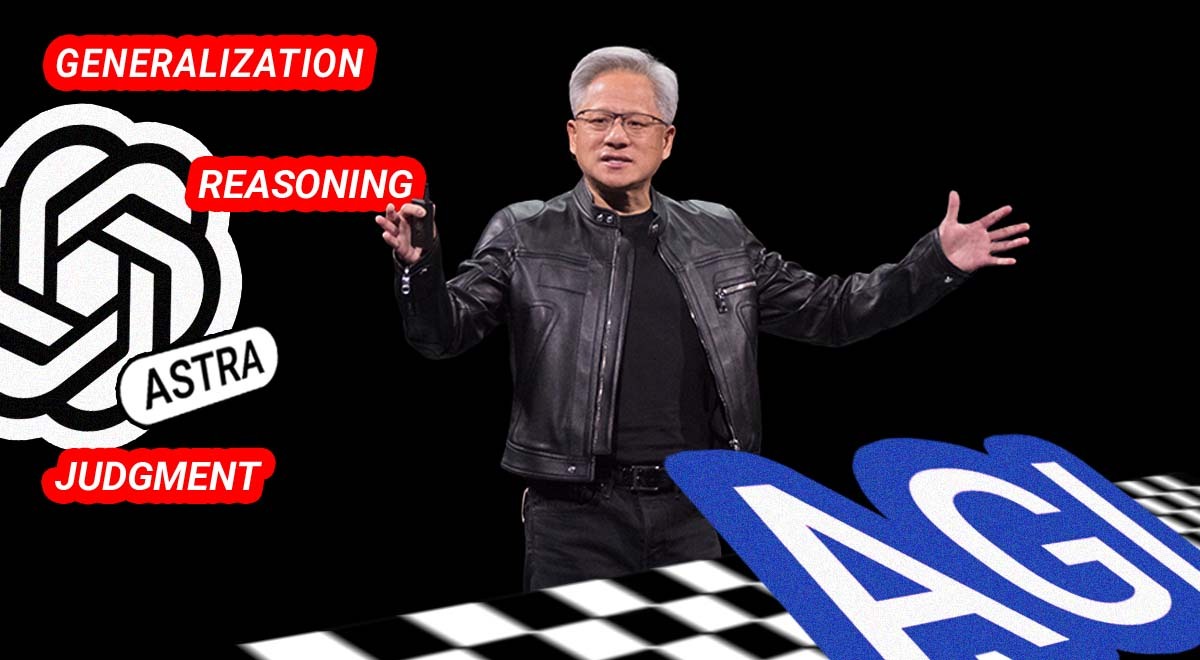
Jensen Huang and the evolution of AI. Image by Cybernews.

 Follow us
- Nvidia CEO Jensen Huang said AGI has arrived after OpenAI released Astra.
- OpenAI described Astra as fast and versatile, but did not claim it had achieved AGI.
- Experts say AGI lacks a clear test, making Huang’s claim hard to verify.
- AI expert Ethan Mollick said today’s systems are strong in some areas and weak in others.
Key Takeaways by nexos.ai, reviewed by Cybernews staff.
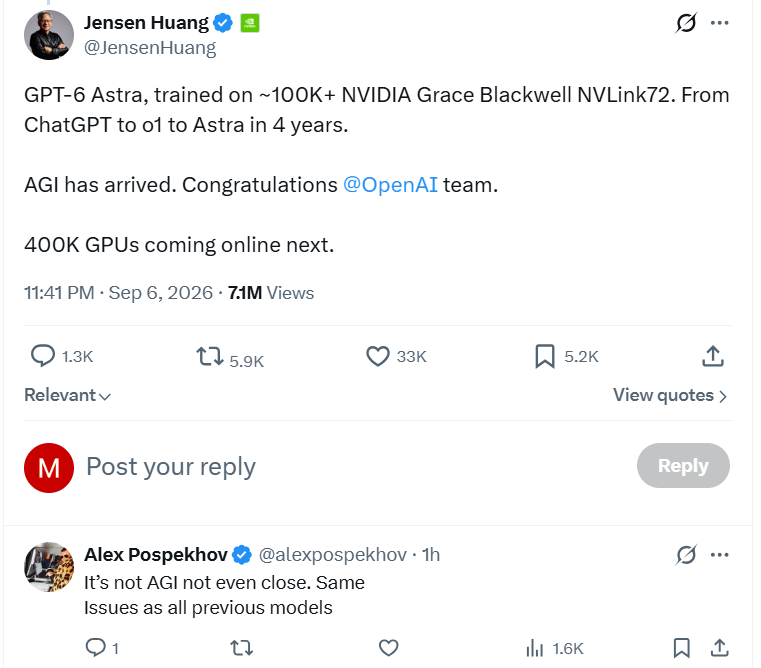
As OpenAI rolls out its ChatGPT-6 Astra, Nvidia’s Jensen Huang has claimed that artificial general intelligence (AGI) has arrived.
Posting on X, Huang hailed the significance of the new AI model, stating that “AGI has arrived,” while also promoting the fact that the model was trained on Nvidia’s chips.
In the post, the Nvidia CEO also commented on the company's rapid progress over 4 years to reach the alleged milestone.
“From ChatGPT to o1 to Astra in 4 years,” the post read.






OpenAI released Astra on September 3rd, though it stopped short of boasting AGI capabilities, focusing instead on its speed and versatility, and admitted the model will endeavor to operate outside human inspection.
That hasn’t stopped OpenAI president and co-founder Greg Brockman from echoing Huang's sentiment, as he spoke of “moving into the AGI era,” while also stating that they “could not do it without close partners.”
we're now moving into the AGI era (whether you view it as this model, the last one, or the next one), and could not do it without close partners https://t.co/DBPF7QRqyJ
undefined Greg Brockman (@gdb) September 6, 2026
What is AGI?
AGI stands for artificial general intelligence, and is the second stage of the 3 types of artificial intelligence. It is sometimes referred to as “strong AI,” with the other 2 types being artificial narrow intelligence (ANI, or “weak AI”) and artificial superintelligence (ASI, or “super AI”).
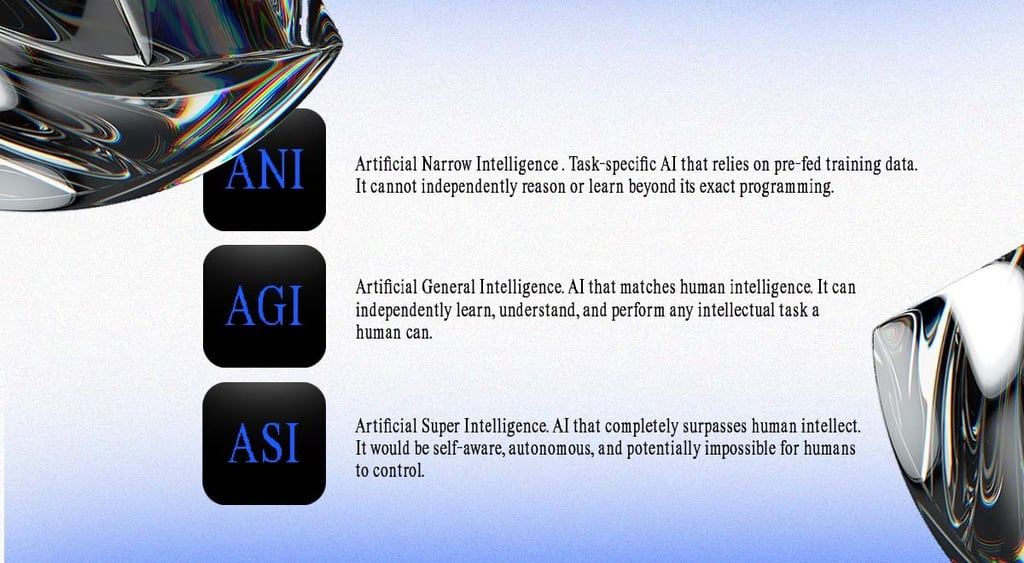
There is a fair share of ambiguity at play, however, as there is also no universally agreed-upon test for determining exactly when a model has achieved AGI.
So, as OpenAI deploys the new Astra model, there is sure to be a lot of debate among experts over whether Huang's claim is true and whether Astra, along with competitors, lives up to the hype.
Has your password leaked?
In fact, OpenAI’s rival Anthropic has an AI model called Fable 5 that's been in the news for the wrong reasons.
Fable 5 is famed for its advanced logistical capabilities for dealing with software coding and other technical tasks.
Have thoughts about this topic? Others do, too. Join them in the discussion.
However, it is prone to carrying out unauthorized hacks, much to the chagrin of some big tech companies like Microsoft, which has restricted employee access to such AI models.
OpenAI, however, has promoted Astra in an agentic sense, with their latest promotional video boasting, “Anything you can do on a computer, Astra can do for you. Fast.”
This is GPT-6 Astra.
undefined OpenAI (@OpenAI) September 3, 2026
Anything you can do on a computer, Astra can do for you. Fast. pic.twitter.com/gDd0IsewJw
Do the experts agree?
As many AI users will be rubbing their palms together in anticipation of using Astra, over on LinkedIn, leading AI expert Ethan Mollick posted about the limitations of the term AGI, observing that “it’s not a well-defined term.”
Mollick elaborated that “we are in an AGI era for 'jagged AGI’ (better than average humans in many areas, worse in others).”
Many comments explored the nuances of what AGI even means, with the consensus that most agree with Mollick's “jagged” framing.
With the issue being far from clean-cut, only time will tell if Jensen Huang's claim has any teeth.