How does eSIM security compare to physical SIMs?
Our in-house expert researchers and journalists conduct independent, unbiased testing of eSIM services, assessing their real-life effectiveness and usability.
By staying current with industry developments and openly sharing our transparent testing methodologies, we ensure readers receive accurate, up-to-date insights so they can make informed choices about eSIM solutions.
Learn more

In the eSIM security vs physical SIM head-to-head, neither automatically qualifies as secure in every situation. Each depends on the threat, the carrier or provider you use, and how well you protect your account and device.
This guide examines where eSIMs reduce certain physical risks and where physical SIMs can be more predictable and practical. I also explain why account security matters.




Our team of researchers thoroughly tests eSIM services using a clear and consistent process. We combine first-hand experience with expert analysis to evaluate features, performance, coverage, and pricing - so you can make confident decisions before your trip. Learn how we test eSIMs.
Quick answer: is an eSIM safer than a physical SIM?
While an eSIM offers better protection against physical threats like card removal after theft, it doesn't eliminate all risks. Account-based and remote-management vulnerabilities still exist in both formats.
The biggest advantage of eSIMs comes into play when you lose your phone or have it stolen. Because the eSIM is permanently soldered inside the device, a thief cannot simply remove it to intercept SMS codes used for two-factor authentication (2FA).
However, digital risks remain. Stolen account credentials still let attackers attempt SIM swaps or profile transfers, regardless of SIM type.
Ultimately, eSIMs aren't automatically safer just because they are digital, and physical SIMs aren’t automatically safer just because they are tangible.
What changes when a SIM becomes embedded instead of removable?
An embedded subscriber identity module, or eSIM, works just like a plastic SIM card. It stores cryptographic data and keys that authenticate your device to a mobile network. The difference lies in its physical form. A traditional SIM is a removable plastic chip, while an eSIM is a tiny, rewritable microchip soldered directly to the phone’s motherboard.
So, instead of inserting a specific SIM card with encoded data, you download and install a digital profile directly onto the eSIM microchip.
This specific difference changes how you interact with your mobile service in several ways:
- You can store multiple eSIM profiles on a single device and switch between them with a simple click, instead of physically removing one SIM and inserting a new one.
- You can obtain, activate, renew, or replace an eSIM online instead of visiting a store.
- Removing the plastic tray that holds the SIM card frees up space for other mobile hardware and eliminates another opening where water and dust can enter.
This transition doesn't change cellular network encryption; it simply shifts service delivery and profile management from physical hardware to digital channels.
Physical theft and phone loss: where eSIM can have an edge
When it comes to eSIM vs physical SIM security, the eSIM’s biggest benefit is this specific, but important, scenario: you lose your phone or have it stolen. If the phone has a traditional SIM inside, a thief can simply remove it to exploit the phone number. With an eSIM, this isn’t possible, and they still have to bypass your phone’s lock screen.
A common tactic for street-level thieves is to eject the SIM and put it in another phone as soon as they snatch yours. Then they can receive calls and SMS, including verification codes, if the SIM isn’t PIN-protected. A PIN helps prevent someone from using an extracted card in another phone because repeated incorrect attempts lock the SIM.
However, with an eSIM, this form of attack is practically useless. There’s no chip to remove, and your device lock protects the eSIM profile from being deleted. The thief still needs to use your fingerprint, face scan, or passcode to unlock the phone. Moreover, phone tracking stays active, since the attacker can’t easily turn off cellular data by removing a card.
Naturally, none of this makes an eSIM bulletproof, but it does make an attacker's job much harder.
SIM swapping: can criminals hijack eSIMs too?
A common misconception is that switching to eSIM makes you immune to SIM swapping. However, SIM swapping attacks can target both SIMs and eSIMs.
The attack doesn’t target the physical card. It goes for the carrier’s administrative systems and verification protocols. A scammer can contact your carrier pretending to be you.
They use information gathered on victims and get the carrier to transfer the number to a new profile they control. Once they succeed, all incoming calls and text messages simply move to the criminal’s device.
You notice this when you lose your mobile network, which happens as soon as the carrier transfers the number, regardless of what you’re doing with your SIM or eSIM.
Remote provisioning: convenience, control, and new security considerations
Remote provisioning is another important distinction of eSIMs. You can download and activate them remotely, i.e., online through an internet connection.
This eliminates the need to visit a store, wait for postal delivery, or handle physical chips. This is particularly useful and convenient for travelers, but also for anyone who wants to switch plans without visiting a store.
However, bear in mind that it brings both benefits and trade-offs:
- Encrypted delivery protocols. When you scan the QR code to activate an eSIM profile, the device starts an encrypted communication channel with a secure server. Then it downloads and installs an encrypted profile.
- Handling the QR code matters. The QR code is the key to your profile, so you can’t leave it unprotected in an unencrypted document or email inbox. You certainly can’t leave it on a printed sheet. If someone grabs it, they can potentially activate the profile before you.
- Dependence on a second connection. Physical SIMs don’t have this problem, but eSIMs generally need an existing mobile or Wi-Fi connection for installation. If you’re using insecure public Wi-Fi, you’re still exposed to risks, even if the connection to the carrier is encrypted.
Overall, remote provisioning is neither inherently dangerous nor entirely risk-free. Security depends on your digital hygiene and the security of the download channels.
User account security may be the real deciding factor
When you compare physical SIM security risks to those of eSIMs, it’s easy to focus on the hardware. However, in account-takeover attacks, your overall digital hygiene matters more than the SIM format. The main problems here are:
- Weak email security practices
- Reused passwords
- Bad account recovery settings
- Lack of multi-factor authentication
For example, if a scammer gains access to your email or carrier account through a weak, reused password, they can reset it and take control of the account. Then they can ask the carrier to transfer your eSIM to their device or order a replacement SIM card to their address. Once they have the number, SMS verification codes start landing on their device, letting them bypass two-factor security on your personal or financial accounts.
That’s why you need to take proactive security measures instead of worrying about the SIM format:
- Use strong, unique passwords
- Use 2FA authenticator apps instead of SMS 2FA
- Enable carrier account PINs or transfer locks
- Ensure your primary email is secure with good 2FA
Travel security and everyday convenience: practical trade-offs
International travel is one of the main reasons why people consider switching to eSIMs. Doing so removes several inconveniences and introduces new benefits:
- You don’t need to handle plastic SIM cards and SIM ejector tools or worry about losing your old SIM.
- You can keep your main line active while using eSIM data abroad.
- Your phone connects to the internet as soon as you land and turn on the eSIM plan.
- You get a clear data plan from the eSIM provider, with clear prices and data allowances.
- You avoid looking for a SIM provider at the airport and installing a new SIM card.
However, despite the convenience of eSIMs, traditional plastic SIM cards still have their advantages:
- You can easily transfer your SIM card and its data plan to a new phone if the old one's battery dies or the phone gets damaged.
- Plastic SIM cards work with almost any mobile phone, especially older ones that don’t support eSIMs.
- Buying a SIM card from a kiosk can be better in countries with strict telecom registration laws or when certain services require a local phone number.
Even if you don’t care about these SIM card benefits, remember that eSIMs' many conveniences don’t guarantee safety. You still need to be careful with your digital habits and travel eSIM security.
Are physical SIMs ever the safer or simpler option?
Physical SIMs still feel simpler for people who prefer manual control and carriers with better in-store verification than online self-service.
Moreover, they have practically no learning curve. Staff typically set up SIMs at the store, so you don’t have to do much yourself. eSIM setup varies: some plans install through an app or carrier activation, while others use a QR code or require manual settings.
Moving a physical SIM between compatible phones may feel simpler for users unfamiliar with eSIM setup. This is much simpler for users who are not comfortable with apps or account-based troubleshooting.
Why Nomad eSIM can be a practical option for security-conscious travelers
When travelers weigh physical SIMs against eSIM security risks, they know the main risk at a new destination isn’t theoretical. You may need to join untrusted airport Wi-Fi to book a ride, hand over your passport at unregulated local SIM stalls, or even compromise the phone number tied to your sensitive financial accounts.
In that context, a provider like Nomad eSIM helps reduce risk by ensuring:
- Zero reliance on unverified airport Wi-Fi. Nomad uses an app-based model with a 60-day activation window, letting travelers buy and set up profiles on their own network before they depart. The plan then activates as soon as you land and turn on the prepared eSIM profile.
- Reduced identity exposure during purchase. Unlike physical SIMs, which require you to hand over your passport and sensitive information at unfamiliar kiosks, Nomad eSIM lets you buy plans online without an ID or phone number.
- Isolation for your main 2FA line. Because Nomad eSIM doesn’t need to connect to your phone number, your main 2FA number stays safe while you’re on unfamiliar ground.
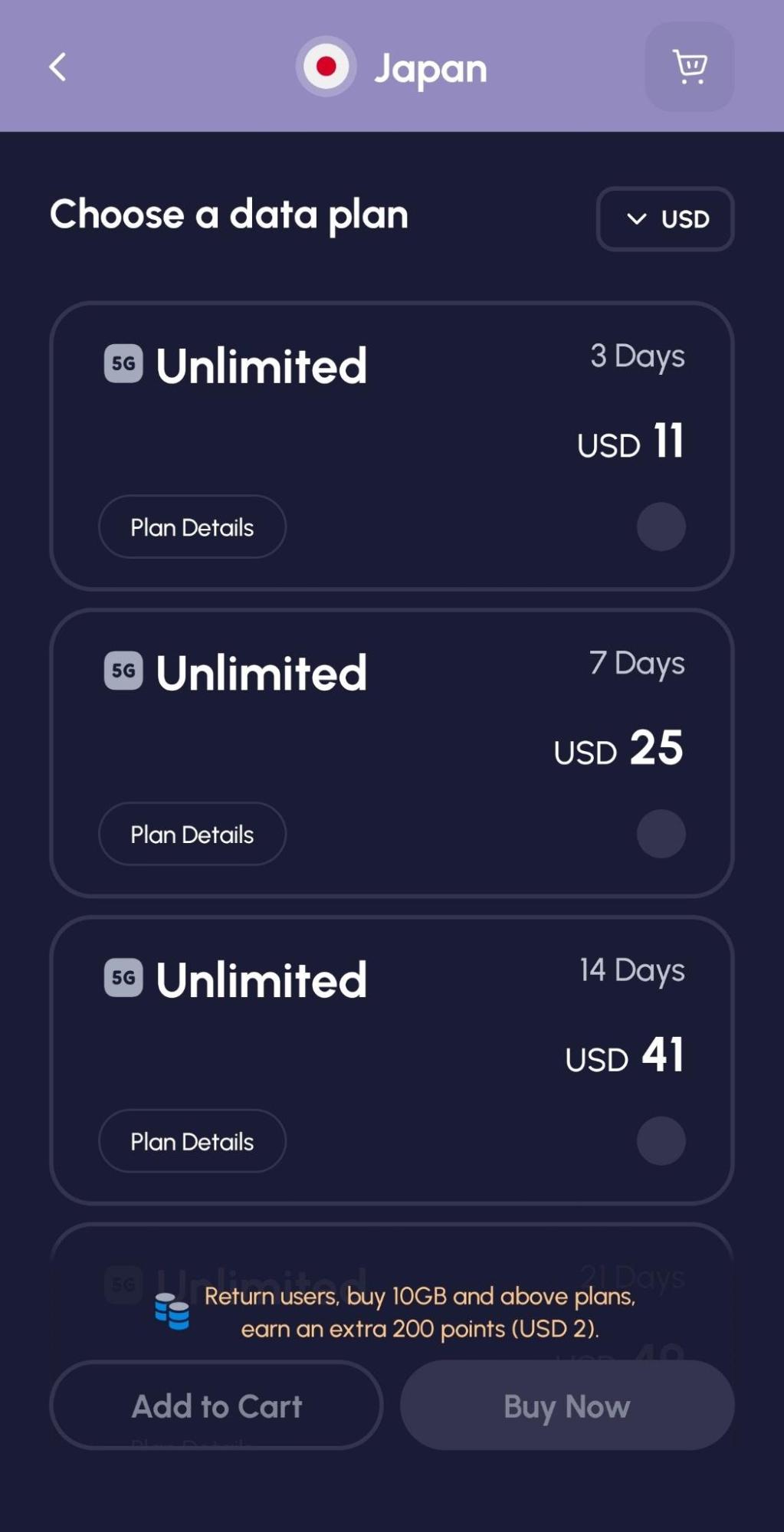
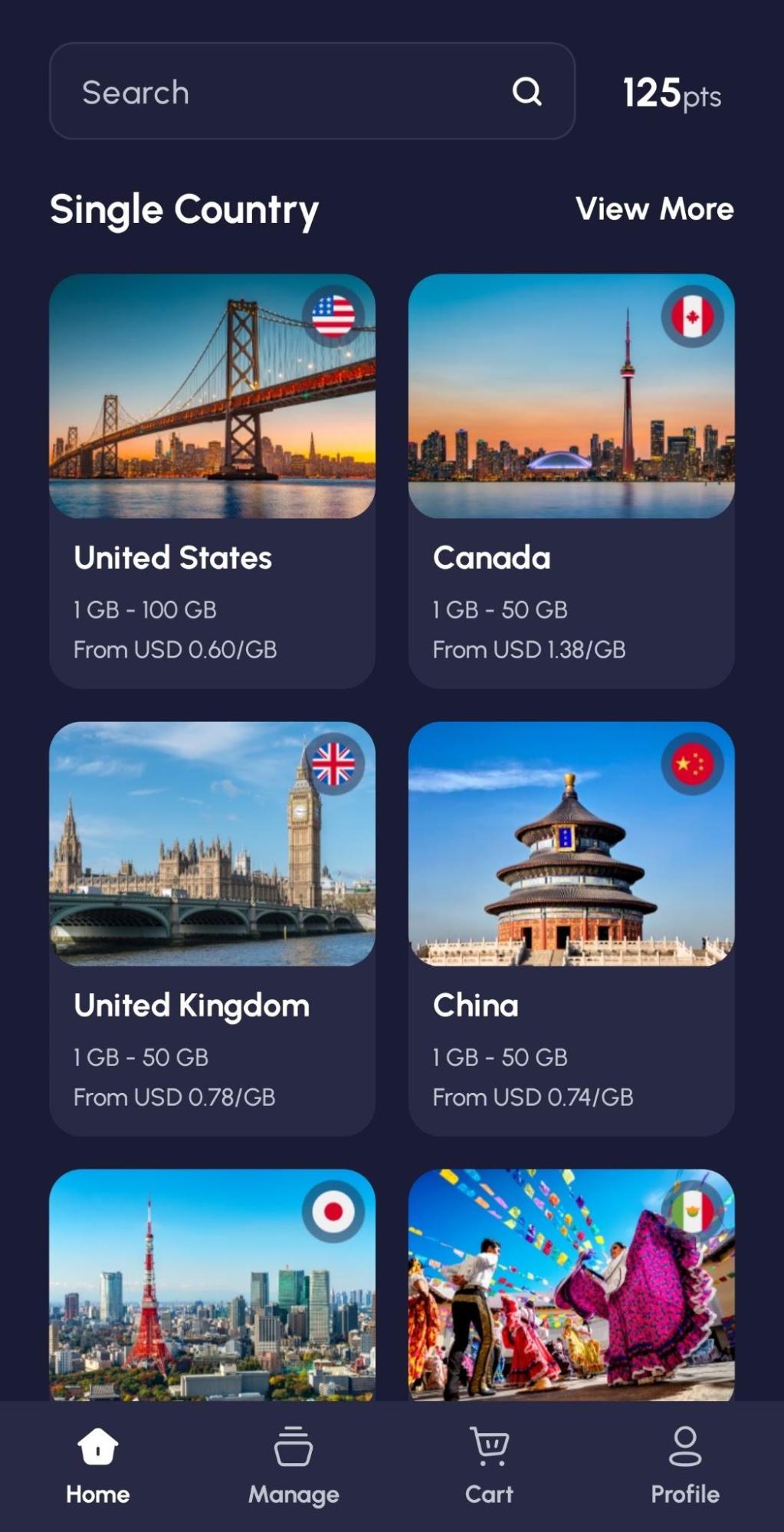
Nomad eSIM supports connectivity in 200+ destinations and offers both unlimited and fixed data options. Most plans are data-only, with the exception of their UK plans, which means they usually do not replace your home carrier account or the number tied to it.
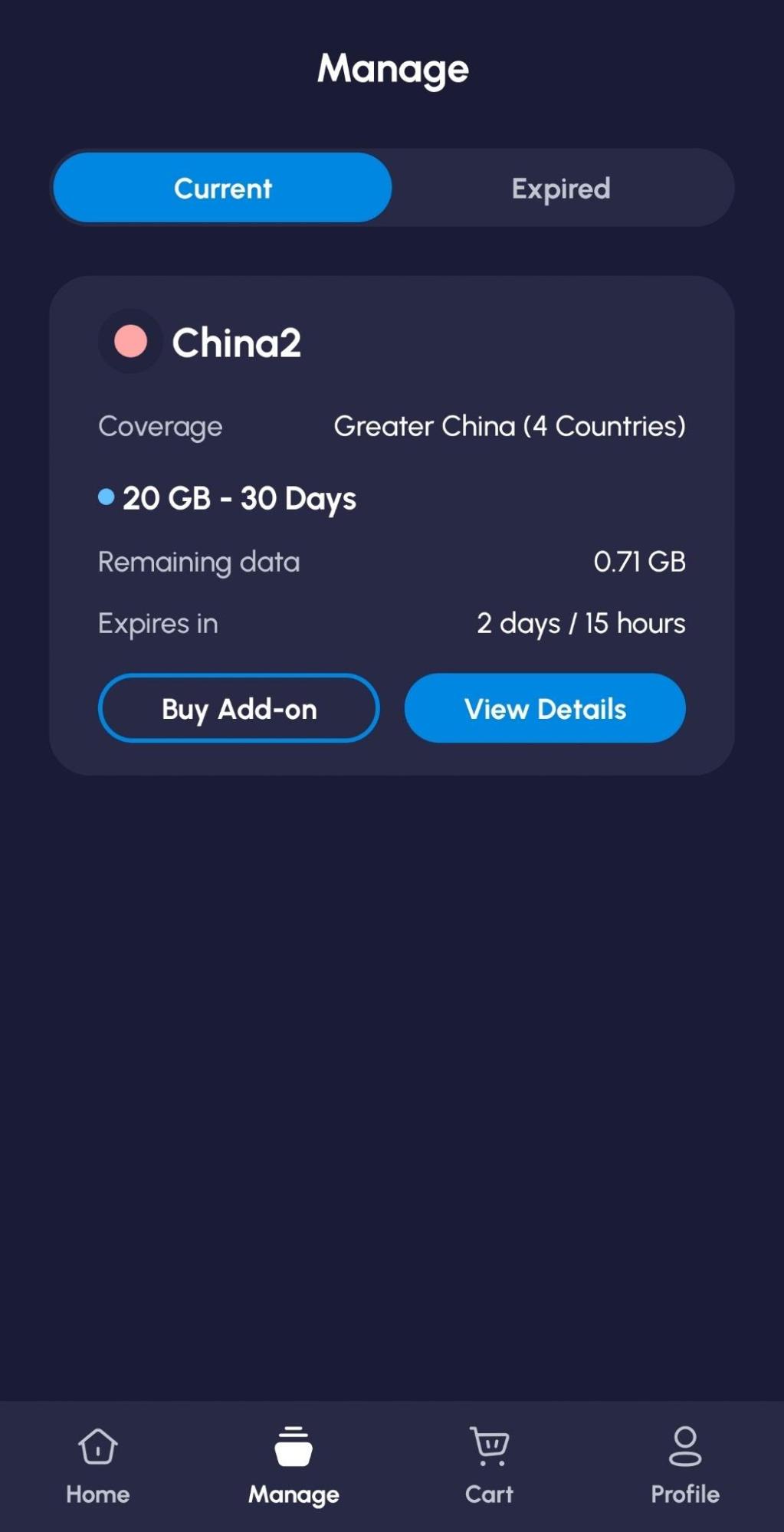
Nomad eSIM offers a straightforward app portal to manage your plan, track your data usage in real time, and buy add-ons as needed so you don’t run out.
Choosing a reliable data provider like Nomad eSIM streamlines connectivity, but you still need to practice proper digital hygiene. Use strong device locks, enable 2FA, keep your system updated, and understand how eSIM data plans work and how to troubleshoot them on the road if needed.
Bottom line: security is about your habits, not just the hardware
There’s no clear winner when evaluating eSIM security vs physical SIM safety. Both have trade-offs, and the safer option really depends on your habits, travel needs, account protection, and carrier safeguards.
True mobile security depends far less on the plastic or silicon in your phone’s hardware and far more on how you protect your account and authentication settings.
By combining reliable connectivity from a trusted provider like Nomad eSIM with strong digital hygiene, you can reduce common connectivity problems and security risks.
FAQ
Is an eSIM safer if my phone is stolen?
Yes, an eSIM generally offers better security when the device is stolen. A thief can’t take it out and access incoming verification calls and SMS messages.
Can an eSIM be targeted in a SIM swap attack?
Yes, criminals can target both SIMs and eSIMs in SIM swap attacks. They target the verification systems and customer support protocols, not the hardware.
Are physical SIM cards less vulnerable because they are offline?
No, physical SIM cards aren’t inherently safer because they are tangible objects. Like eSIMs, they remain vulnerable to carrier account takeover and physical loss or theft.
What security risk matters most: the SIM itself or the mobile account?
The most critical factor is the security of your mobile account. Weak account passwords, flawed carrier verification, and compromised recovery email accounts can expose either SIM format to account takeover.
Is eSIM a better choice for international travel security?
Yes, eSIMs like the ones Nomad eSIM offers have more practical safety benefits for most travel. You don’t have to carry a tiny plastic card or hunt for an airport kiosk, and pre-installing an eligible plan over a trusted Wi-Fi can reduce reliance on public Wi-Fi when you arrive.