Germany is prime target for dark web and ransomware attacks
Germany, well known as the industrial powerhouse of Europe, is now also the top target for dark web and ransomware attacks. With factories operating around the clock, the country’s critical industries are under a wave of cyberattacks.

Image by Cybernews.

 Follow us
Germany, well known as the industrial powerhouse of Europe, is now also the top target for dark web and ransomware attacks. With factories operating around the clock, the country’s critical industries are under a wave of cyberattacks.
Countries with influential markets and key roles in industrial production are much more likely to be targeted by cyberattacks. Take Germany, for example. Just this month, the country, which is already home to Europe’s largest industrial economy, announced that its factories are as active as ever, producing more and showing the fastest increase since March 2022.
No wonder this sector makes up about 27% of Germany's employment, according to Reuters.
However, with great industrial power comes great responsibility for cybersecurity.
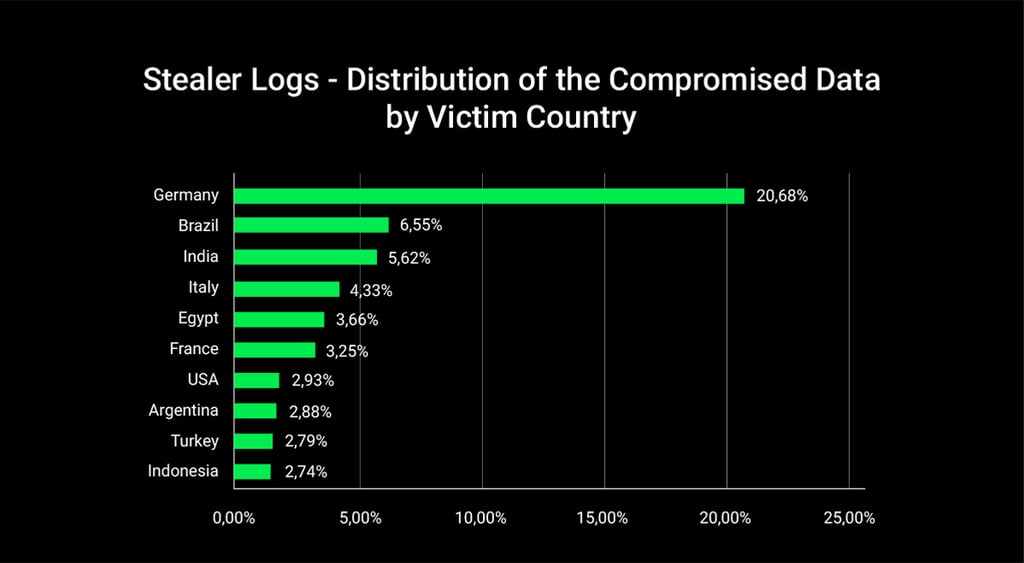
A new cyber threat intelligence report reveals that Germany accounts for 20.68% of all compromised records identified in stealer logs – bundles of data that cybercriminals get out of computers after they’ve been infected with malware, specifically stealer malware. It’s in the name – the malware is designed to steal sensitive data.





Germany has the highest share of stolen data that ends up in stealer logs, almost three times more than Brazil (6.55%), the runner-up on the list, and India (5.62%), the third-place country.
The study, conducted by cyber threat research team SOCRadar, focused specifically on Germany. Its aim was to measure the scale and nature of cybercriminal activities that target German organizations on the dark web, including forums, marketplaces, ransomware leaks, and stealer logs.
Find out how Germany scored in the above-mentioned aspects.
Dark web: 3 in 4 threat posts target Germans alone
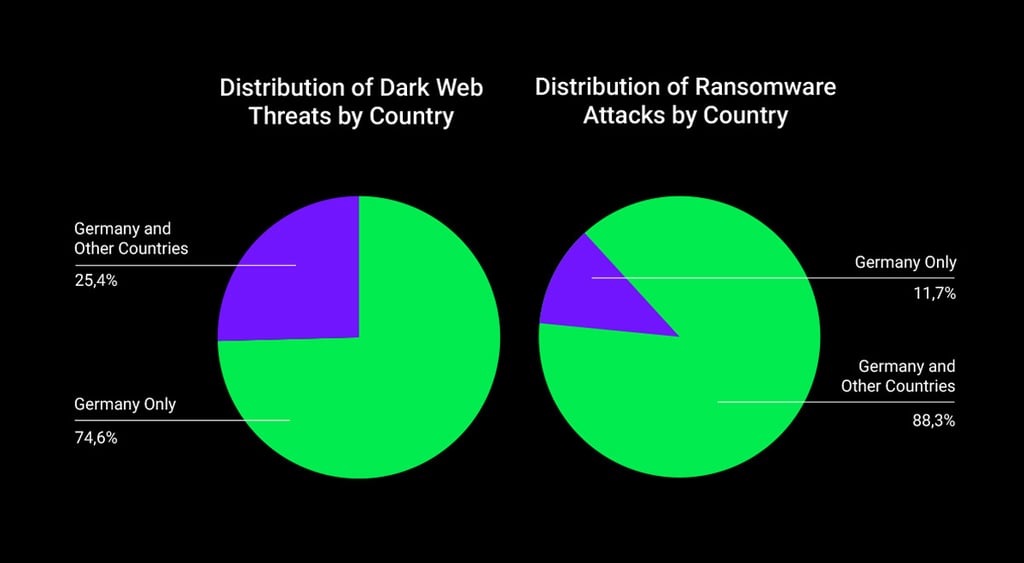
The authors of the report also investigated the dark web, analyzing data from various forums. The analysis revealed that 74.6% of all posts targeting Germany focus exclusively on German victims, while only 25.4% included victims from other countries.
“This indicates that the majority of threat actor activity against Germany on underground forums and marketplaces is highly localized, reflecting region-specific targeting preferences. However, the notable portion of multi-country targeting highlights how some operations remain opportunistic or globally distributed, bundling German victims with international attack campaigns”, the report concludes.
Ransomware hits German manufacturing the hardest
While the dark web forum analysis reveals specific German targeting, ransomware attacks, on the other hand, show a wider, more global pattern.
Only 11.7% of ransomware incidents target Germany exclusively. However, the remaining 88.3% still affect Germany even though those attacks are part of wider multinational campaigns.




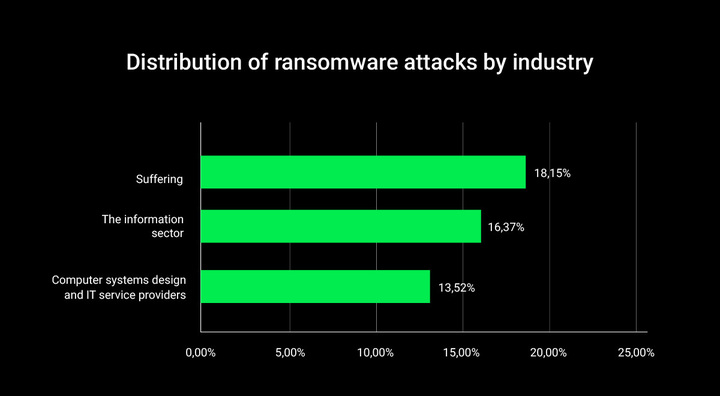
Of those 11.7%, the manufacturing industry is the most impacted, suffering 18.15% of all ransomware attacks in the country. The information sector comes second with 16.37%, and computer systems design and IT service providers represent 13.52%.
“These insights point to ransomware operators prioritizing sectors where downtime is costly and where lateral access can amplify the impact of their attacks,” write the authors of the report.
The report concludes with an advice section, where the authors suggest that German companies should treat cybersecurity as a strategic part of business worthy of high priority and investment.
This means integrating cybersecurity measures into business strategies, creating and renewing cyberrisk management and incident response plans, taking practical advantage of insights from threat intelligence reports, and including it in decision-making processes.