Best red light therapy for back pain: tested devices we recommend
Being behind major reports like The Mother of All Breaches and RockYou2024, our in-house cybersecurity experts and journalists provide unbiased, real-world testing and in-depth analysis.
We maintain complete transparency by openly sharing our testing methodologies with our audience.
Learn more
Our team has been testing and reviewing red light therapy devices for a while, and over that time, we have witnessed the trend grow. What started as a niche wellness trend has grown into something most people already know about.
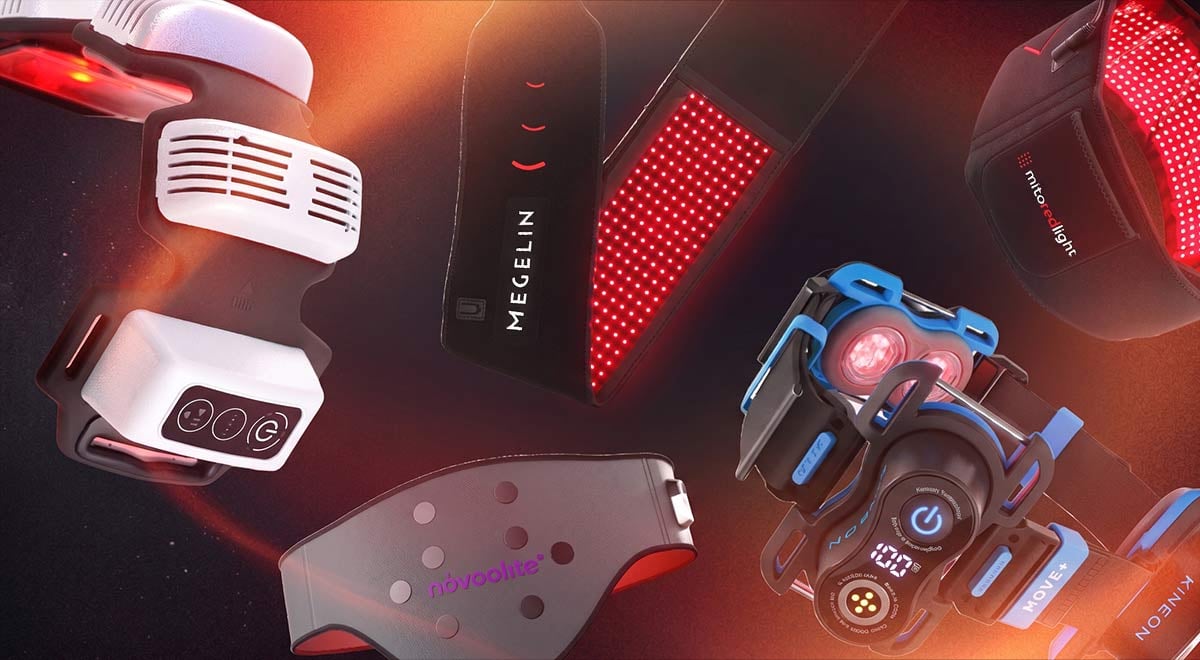
With the experience we already had on the subject, we sat down to review a bunch of devices tailored for back pain. We checked wavelengths, design, durability, and more, and here are our top picks for the best red light therapy for back pain.
Quick picks: best red light therapy devices for back pain
- MitoQUAD™ Wavelength Belt – Best overall
- Novaa Back Pad – Best for soothing relief
- Megelin ContourLux – Best value pick
- FlexBeam – Best for targeted RLT
- Kineon – Best laser-and-LED combination


Our team of in-house researchers, writers and editors reviews and analyzes health tech products using a research-driven approach. We gather data from multiple sources, fact-check all information, and conduct our research based on peer-reviewed studies, expert opinions, consumer ratings, and regulatory approvals.
You can learn more about how we test health tech products here.
Best red light therapy for back pain compared
| Device | Device type | Red wavelengths | Near-infrared wavelengths | Unique features | Price | Best for |
| MitoQUAD™ Wavelength Belt | Belt | 630nm, 660nm | 810nm, 850nm | Broad coverage due to tri-chip LEDs | $349.00 | Most users |
| Novaa Back Pad | Belt | 660nm | 850nm | Vibration and heat | $332.10 | Wind down sessions with massage-style functions |
| Megelin | Belt | 635nm, 660nm | 808nm, 830nm, 850nm, 1064nm | Most wavelengths | $279.00 | Value for the money |
| Recharge Health FlexBeam | Wearable system | 610-650nm peaking at 622nm | 800-850nm peaking at 814nm | FDA-cleared device | $479.00 | Targeted applications |
| Kineon | Wearable system | 660nm | 808nm | Features lasers as well | $449.00 | Users who prefer lasers |
Best red light therapy devices for pain in 2026: detailed list
Now that we have covered the shortlist, let’s dive right in and explore how these devices work in greater detail.
1. MitoQUAD Wavelength Belt – our top choice for red light therapy for back pain

| Price: | $349.00 |
| Size: | 22" x 5" (Treatment area) |
| Number of LEDs: | 1,215 |
| Wavelengths: | 630nm, 660nm (red) 810nm, 850nm (near-infrared) |
MitoQUAD Wavelength Belt is one of the more purpose-built options for shoppers who want something more targeted than a full-size panel. Because it wraps directly around your torso, the light sits closer to the treatment area.
As our testers pointed out, it is easy to use — and not just for back pain; you can wrap it around your legs, feet, or even your arms, so you are not stuck with a single use.
It uses both red light and near-infrared light, targeting tissue at both more superficial and deeper levels. The total wavelengths you’ll be getting from MitoQUAD Wavelength Belt is four, which may give it broader tissue coverage than simpler single-wavelength belts, and the five intensity levels add some flexibility.
At 50 x 7 inches and 1.2 pounds, it’s also far easier to travel with or use around the house than a bulkier setup.
The catch is that the battery is sold separately and is currently out of stock, so you can’t use it wirelessly. Without the battery, it is less convenient, but you can still multitask and use it while sitting at your computer or lying in bed.
2. Novaa Back Pad – best for soothing relaxation sessions

| Price: | $332.10 |
| Size: | 50" x 7" (treatment area: 22" x 5") |
| Number of LEDs: | 80 |
| Wavelengths: | 660nm (red), and 850nm (near-infrared) |
Now, if you are looking for something more than just a red light therapy device, Novaa Back Pad combines red light, heat, and vibration for a more massage-like, relaxation-focused experience. Using a regular red light therapy device does not usually deliver that same immediate sense of soothing relief, which makes this a stronger pick if your priority is easing tension and winding down rather than focusing purely on light therapy alone.
For this reason, our testers noted that Novaa Back Pad was the easiest to use regularly. It immediately feels like you are doing something for your back, while other products don’t have that, since red light therapy alone does not create that same instant, massage-like sense of relief.
Its headline specs are solid enough for the category. You’re getting 80 medical-grade LEDs using 660nm red light and 850nm near-infrared, with a claimed irradiance of up to 150mW/cm² at the surface. The large pad size should also give better lumbar and waist coverage than smaller targeted belts.
That said, the company behind this belt is super bold with their marketing strategy, claiming this product can reverse years of stiffness, chronic pain, or sciatica. While red light therapy may be helpful for back pain, your expectations should be realistic, and this should be viewed as a comfort-focused wellness device rather than a treatment for chronic back conditions.
3. Megelin ContourLux – best value for the money

| Price: | $279.00 |
| Size: | 51.2" x 7.1" (does not specify treatment area) |
| Number of LEDs: | 1,350 |
| Wavelengths: | 635nm, 660nm (red) 808nm, 830nm, 850nm, 1064nm (near-infrared) |
Megelin ContourLux was originally designed for body contouring and fat loss support, but we couldn’t pass on this product for this list. With frequent discounts, this is one of the more affordable picks — and since it also uses a similar wraparound belt design to MitoQUAD and Novaa, it can certainly work as a practical option for back pain, too.
The specs are competitive. Not only does it have more LEDs than our top picks, but it also includes a broader range of wavelengths. Of course, more doesn’t always mean better results, but on paper, it gives the ContourLux plenty of flexibility and strong treatment coverage for the price.
Still, this isn’t a back-pain device first and foremost, and that’s worth keeping in mind. Its branding leans much more heavily into shaping and body-contouring claims than pain relief, so it feels a little less purpose-built for lumbar support than some rivals here. Furthermore, the standard price tag is fairly high, meaning its status as a budget-friendly option largely depends on current promotions.
4. Recharge Health FlexBeam – best for targeted treatment

| Price: | $479 |
| Size: | 11.61” x 9.25” x 2.83” |
| Number of LEDs: | 3 light pods, each containing 3 LEDs |
| Wavelengths: | 610-650nm peaking at 622nm 800-850nm peaking at 814nm |
FlexBeam by Recharge Health feels a little different from most red light therapy wearables because it isn’t built as a simple belt. Instead, it uses a more targeted design that can be strapped to different parts of the body, including the lower back, hips, shoulders, and knees. That makes it a strong option for people who want something more versatile than a lumbar-only device, especially if back pain is just one part of a wider recovery routine.
The specs are solid, too. The device combines red and near-infrared wavelengths, with peaks at 622nm and 814nm. FlexBeam specifies these wavelength ranges alongside their peak outputs to clearly indicate that the emitted light centers around targeted wavelengths, rather than relying on generalized figures.
FlexBeam, however, is on the expensive side. This comes with an extra guarantee for durability, as this brand offers a 5-year limited warranty covering defects — significantly longer than most devices on the market that usually offer 1 or 2 years.
5. Kineon MOVE+ LED & Laser – best with lasers

| Price: | $449 |
| Size: | Does not specify |
| Number of LEDs and lasers: | 8 LEDs and 10 lasers |
| Wavelengths: | 660nm (red) 808nm (near-infrared) |
MOVE+ LED & Laser takes a slightly different route from the other wearables here by combining standard red LEDs with near-infrared Class 1 laser diodes. While most back-focused devices stick to LEDs alone, MOVE+ adds lasers, giving it a more clinical angle, as lasers are sometimes preferred in research studies.
Each unit uses three modules, with 660nm deep-red LEDs and 808nm near-infrared lasers, quite a solid combination for those who are looking for back pain management tools.
Kineon positions this as a versatile device that can be used across the body, but in our testing, we didn’t find every application equally practical. You can readjust the modules for different areas, but that takes a bit more effort than simply strapping on a belt.
For lower-back use in particular, we generally preferred the ease and coverage of a wraparound design. That said, if you want a more targeted treatment approach — and one that doesn’t restrict movement in the same way as a larger pad — Kineon does have a clear advantage over a more traditional wearable.
How we chose and tested red light therapy devices for back pain
To make this list, we focused on red light therapy devices that made sense for back pain, rather than just rounding up the biggest panels or the most aggressively marketed gadgets. That meant prioritizing wearable formats such as belts and modular systems that could be positioned on the lower back without making treatment feel overly time-consuming.
In testing, we looked at more than just specs. Wavelengths, coverage area, and extra features all mattered, but we also paid close attention to how each device actually fit into real life.
Some products looked impressive on paper, with more LEDs or broader wavelength ranges, but were less practical to position or use consistently. Others stood out because they felt easier to reach for every day, whether that was due to a wraparound fit, hands-free use, or added features such as heat or vibration that made sessions feel more immediately soothing.
Since RLT is known to take time, consistency is one of the things that are crucial. In the end, we picked devices we believe are easy to stick to, something that will collect dust in your home.
Does red light therapy work for back pain?
Yes, red light therapy may be helpful for those with back pain.
Red light therapy uses specific wavelengths of light to try to influence how cells repair. The idea is that when light penetrates the skin, it may help support cellular energy production and the body’s natural healing processes.
When it comes to back pain, though, the evidence is still developing rather than settled. Some research suggests light-based therapy can help reduce pain in people with chronic low-back pain, which is why it continues to attract attention as a non-invasive wellness tool. But the research base is not especially large, and the results across studies have been mixed rather than consistently strong.
Also, back pain is a broad category, covering everything from temporary muscular strain to long-term chronic conditions, and not all studies look at the same kind of pain. That makes it hard to say red light therapy has been conclusively proven to work for back pain in a blanket, one-size-fits-all way.
Red light vs near-infrared light for back pain
Both may be helpful for back pain but near-infrared light is considered to be superior.
Red light works closer to the surface, while near-infrared is generally used to reach deeper into tissue. Since back pain often involves muscles and structures below the skin’s surface, near-infrared tends to be considered better.
But red light therapy or photomodulation is a growing field of scientific research, meaning many of these concepts are still rooted in theory. This is what you’ll also often see in marketing material of these devices, not necessarily what has been proven in academic research.
Of course, it would be ideal to have clear cut answers, we are now in the early stages of that, and most consumers would prefer to try the therapy themselves instead of waiting for another study to be published.
How to choose a red light therapy device for back pain
Choosing a perfect device for you might seem like a tedious task, especially if you compare the specs, which often offer little clarity to those new to red light therapy.
That is why we advise looking beyond spec sheets alone. For instance, some brands will highlight the amount of LEDs or wavelengths featured in the product, but the raw specs do not say much about the product. More is not necessarily better or more effective.
A device can have impressive wavelengths and power claims, but if it’s awkward to position on your lower back or inconvenient to use regularly, you’re far less likely to stick with it.
In general, belts and pads are the easiest options for consistent lumbar use because they stay in place and cover a broader area. More targeted devices can still work well, but they tend to make more sense if you want flexibility to use them on other parts of the body too.
It’s also worth paying attention to practical details such as coverage area, comfort, portability, safety credentials, warranty, and return policy — not just LED counts and marketing promises.
How to use red light therapy for back pain safely
Red light therapy is considered to be generally safe, but you should always be cautious.
Read the manufacturer’s instructions closely. They will help you determine the most suitable treatment plan. Besides that, the power output of RLT devices varies, so what works for one product might not work for another.
Check if the manufacturer mentions any contraindications. These can include active cancers or tumors, certain photosensitizing medications, and open wounds. If you are not sure, the best course of action is to consult your doctor.
Avoid direct eye contact. This can cause irritation, and if you are using a panel or a mat, you can use eye protection — most brands will include goggles in your kit.
And lastly, if your back pain is unexplained, severe, persistent, or worsening, talk to your healthcare provider.
What are the limitations of red light therapy for back pain?
First and most important limitation is that the red light therapy device can not heal the underlying problem. This means that it is used for symptom reduction, so you feel better sooner and get back to your routine. It is crucial to follow your treatment plan devised by your healthcare provider.
The second limitation is also sometimes overlooked: the effects from RLT may take time. We are talking about weeks, sometimes even months, before you start noticing improvement. This is not to say that red light therapy has no value for those passing, short-term pains such as muscle pain after workouts, as it may support recovery, but don’t expect it to work overnight.
And lastly, red light therapy might not work for everyone or have only small effects. But being quite cost-effective and well tolerated, red light therapy still stands as a good tool in your overall recovery program, as long as it is not the only thing you are relying on.
Final verdict: which red light therapy device should you choose?
This will depend on your preferences, but we believe that MitoQUAD™ Wavelength Belt is a well-rounded option that should work well for most users.
We also enjoyed using Novaa Back Pad as it offers vibration and heat, meaning your session is soothing and enjoyable.
Megelin is a good choice for those who want the most specs for the lowest cost, while FlexBeam is the best product for more targeted treatments. And for those who want lasers due to their more clinical approach, Kineon is our pick.
Whichever product you choose, if you are experiencing back pain that is bothering you, the best course of action is to talk to your healthcare provider as well.
Other red light therapy reviews:
Best red light therapy mats: from small to full-size, we picked our favorites
Best red light therapy devices: our overall top recommendations
Best red light therapy devices for face: tested devices for glowing skin
Best red light therapy devices for hair: support your scalp with these picks
FAQs
What wavelength of red light is best for back pain?
Near-infrared red light may be best for back pain as it can penetrate deeper than red, which is usually applied for relatively superficial tissues. Most devices use both to potentially cover both superficial and deep tissues.
How often should you use red light therapy for back pain?
A common approach is 3–5 red light therapy sessions per week, following your device's recommended treatment plan. More isn't necessarily better.
How long does red light therapy take to work?
Red light therapy may provide some pain relief after a few sessions, but noticeable results often take several weeks of consistent use. In one recent low-back-pain study, outcomes were assessed after 28 days of treatment. Results vary depending on the cause of pain and treatment parameters.
Can you use red light therapy on your lower back?
Yes, red light therapy can be used on the lower back. Some studies indicate it to be a safe intervention that may help reduce chronic lower back pain. If you are not sure if it is a right tool for you, it is best to consult your healthcare provider.
Are red light therapy belts good for back pain?
Yes, they can be especially convenient since you wrap them around your waist. If you are experiencing lower or upper back pain, however, a mat may be more comfortable, as you can use it on the chair.
Is near-infrared light better for back pain?
Yes, it is believed so because near-infrared light can go deeper than red light. Since most devices feature both, you don’t have to pick one.
3 resources
- Infrared therapy for chronic low back pain: A randomized, controlled trial. Pain Research and Management.
- Clinical efficacy study of LED red and infrared light therapy for chronic non-specific low back pain. Lasers in Medical Science.
- Photobiomodulation in human muscle tissue: an advantage in sports performance? Journal of Biophotonics.