Coffee machine uses 1,000GB of traffic in 10 days, leaves IT Pro shocked
It overtakes a notorious washing machine, which only sent 3.6GB.
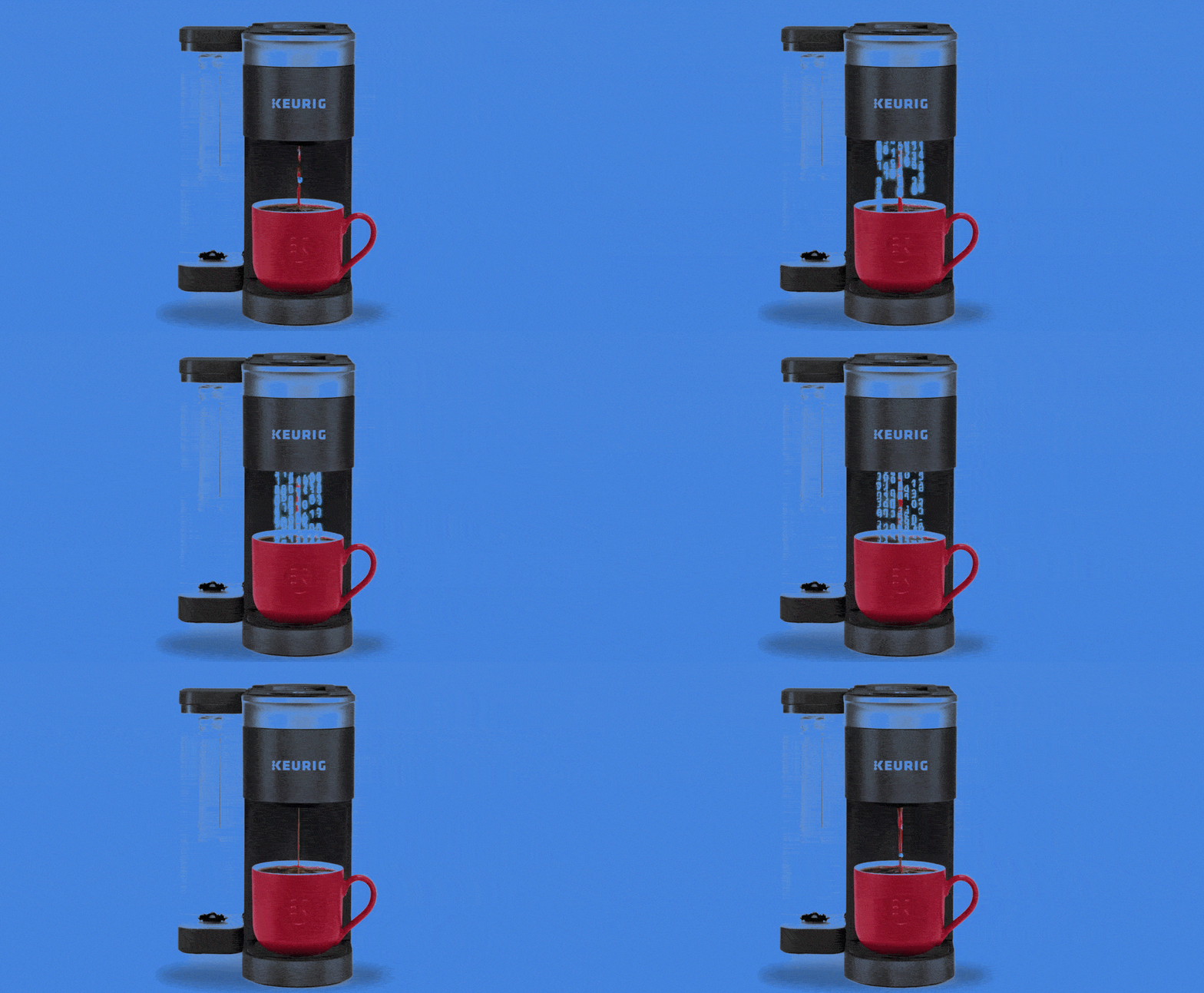
Keurig coffee machine. By Cybernews.

 Follow us
- A Keurig K-Supreme SMART coffee maker uploaded 1,008GB of data in just over 10 days.
- The owner said the traffic saturated a home access point and could have disrupted the network.
- The issue did not return after the device was rebooted and moved to a separate network.
- The viral post raised fresh concerns about internet-connected appliances and unnecessary data traffic.
Key Takeaways by nexos.ai, reviewed by Cybernews staff.
In 10 days and 9 hours, a coffee maker sent 1,008 gigabytes of data. A viral post on X demonstrates an ordinary appliance causing network issues.
Exceptionally high network activity was detected from the Keurig K-Supreme SMART coffee maker.
“Hey uh, Keurig – what the hell is a COFFEE MACHINE uploading, let me double check… ONE F***ING TERABYTE OF DATA IN 10 DAYS!?!?” A tweet exploded on X, with nearly 2 million views in hours.
The shocked owner, who goes by the alias Nomad, said he will unplug the device immediately and will get his parents a new coffee machine.





The included screenshot from a network monitoring app shows the appliance downloading 9.94GB and uploading 1,008.45 GB of data in just over 10 days.
Nomad later explained that the device belongs to his parents and he simply helps to manage their network. He discovered the suspicious activity while checking the statistics through Ubiquiti’s UniFi networking system.
The excessive traffic became an instant joke on X, with commenters blaming the coffee maker for crypto mining, peddling adult content, and seeding torrents. Some users feared that the device might be spying or had been hacked.
Nomad said that most of the suspicious traffic didn’t escape the network. He has a hypothesis that the unit was simply affected by a bug. Nomad said he has over 10 years of experience in IT and works as a Technical Field and Community Specialist at the 3D printer manufacturer Prusa.
“This is a problem that saturated an access point (AP) and could have taken down the network if I didn’t have other APs to share the load. It needs to be fixed,” Nomad added.
After rebooting the device and reconnecting it to a segregated virtual LAN (VLAN), the issue did not reappear.
Anything more nefarious would have come back as soon as it saw a path to the internet. It's likely this was a bug in their network stack,Nomad said.
Coffee recipes live on the cloud
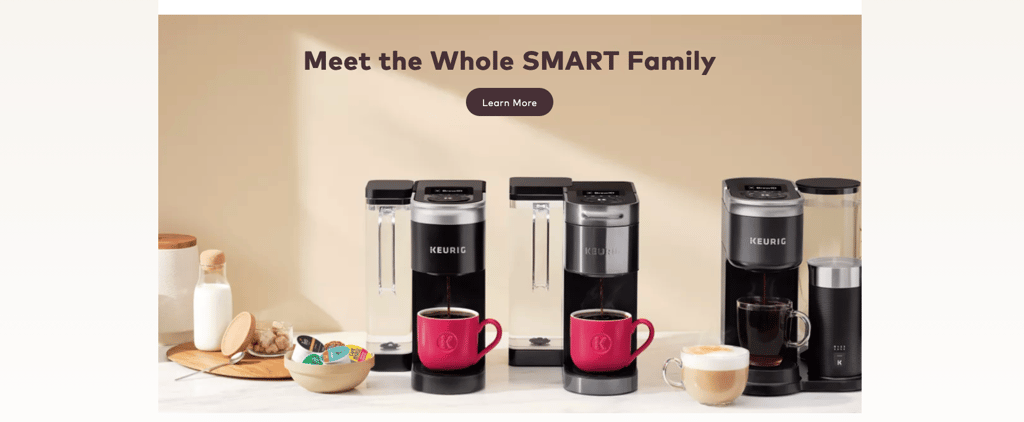
The affected model, K-Supreme SMART Single Serve Coffee Maker, is advertised as a smart machine capable of recognizing specific coffee pods, selecting brewing settings, and downloading brewing recipes for specific blends of coffee from an online database.
The "exciting SMART features” include exclusive recipes, Alexa or Google Home integration, and remote or scheduled brewing. The company also sells subscriptions for auto-delivery, and its app has a rewards program.
K-Supreme SMART Single Serve Coffee Maker is compatible with iOS and Android, and only works on a home 2.4GHz WiFi network “using WPA2-PSK” security. It is not compatible with the more modern 5 GHz. The specification doesn't list what hardware components and firmware the device uses for connectivity features.
Several X users suggested using Wireshark to capture and analyze traffic from coffee makers. Nomad acknowledged that he would personally like to understand more about the cause of the excessive traffic. But he was unable to immediately reproduce the bug, suspecting that it requires “sustained uptime to cause some bit to flip or something.”
Cybernews has reached out to Keurig for a comment and will include its response.
Many X users questioned whether a coffee maker should ever be connected to the internet, to which Nomad responded that the device belongs to his Dad, and he doesn’t police his parents.
“It's not worth keeping an IOT device connected that has the capability of bugging out and causing saturation like this did,” Nomad concluded.
“It's dumb, avoid it, it’s just DRM waiting to be enabled so you are forced to use official Keurig pods or something.”
Have thoughts about this topic? Others do, too. Join them in the discussion.
Commenters also shared their own stories about home appliances generating heavy traffic, raising privacy and security concerns.
Cybernews has previously reported on an LG washing machine that was caught sending 3.6GB of data every day, which is 28 times less than the coffee maker.
