Right to repair: manufacturers failing to comply with EU rules
“The results are abysmal.”
Smartphone repair. Image Cybernews

 Follow us
- About 80% of reviewed smartphone records lacked repair instructions or spare parts prices.
- Nearly half of smartphone records provided no required repair information or relevant links.
- Some manufacturers listed vague links, marketplaces, or support pages instead of clear repair details.
Key Takeaways by nexos.ai, reviewed by Cybernews staff.
Despite the existing repairability requirements, 80% of the analyzed smartphones still lack repair information.
The European Union’s Right to Repair Directive, which aims to extend the life cycle of smartphones, TVs, and various electronic home appliances by enabling repair, began applying across the bloc on July 31st, 2026.
The repairability energy labels and ecodesign rules were introduced even earlier for smartphones and tablets, on June 20th, 2025.
One year after these requirements took effect, the Right to Repair Europe coalition and iFixit assessed their implementation.






The right-to-repair advocates examined more than 7,000 records from the European Product Registry for Energy Labelling (EPREL), the official database where manufacturers and importers must register the websites where required information can be found.
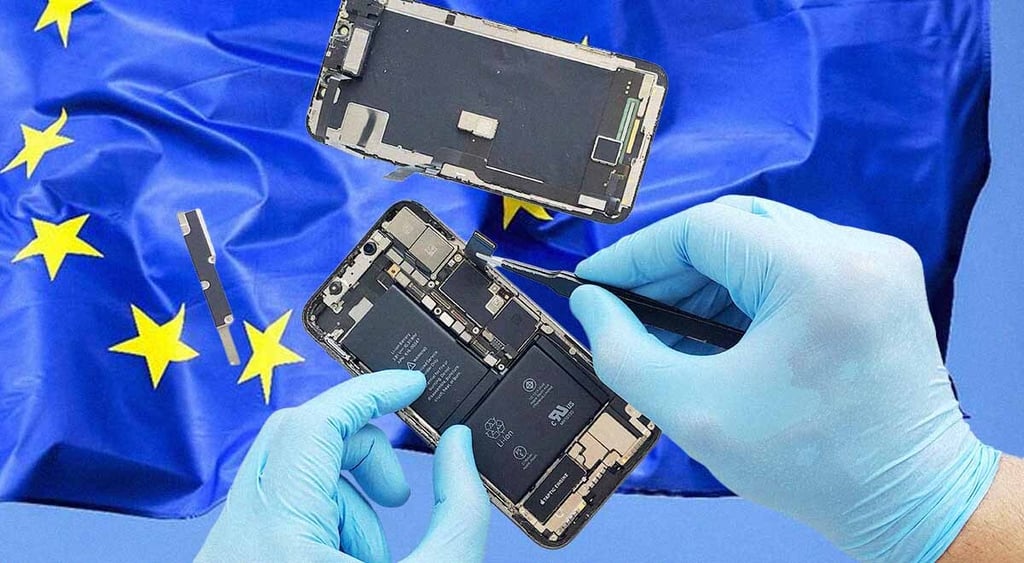
Disappointing findings
“The results are abysmal,” noted the coalition in its findings after reviewing 2,334 records of smartphone models.
The review showed that only about 18% of records include websites that link to pages where users can find repair instructions or spare parts prices.
Almost half of the records didn’t include any information at all, and no links to relevant information were provided where they should have been.
Nineteen percent of the records linked to a product or support page. However, these websites didn’t include information on repair or replacement parts.
Another questionable aspect was the legitimacy of the provided information.



Stay updated with our latest stories and follow us on social media
Be the first to discover new stories, ideas, and updates from our team.
In one of the examples on the repairability page, which belonged to Acer, the price for a battery replacement was noted to be €14 to €128 ($16 to $147).
Eight percent of submitted links suggest users “see manual,” while 5% suggest going to Temu or AliExpress for spare parts and repair instructions.
Smartphones weren’t the only type of electronics that lacked compliance with the EU’s Right to Repair Directive. The analysis showed that, for tumble dryers, half of the models were non-compliant.
Despite not providing relevant information on how users should repair their devices, some manufacturers still gave themselves the highest score, classifying themselves as class A in repairability.

Useless compliance?
The analysis revealed a few issues with manufacturers complying with the repairability requirements.
It’s been noted that no public authority has checked the data, leaving it to member states to do the audit. However, in this case, there are often insufficient resources to do so, leaving consumer organizations and similar non-profit institutions to monitor the data.
This raised a question about how important such marking is if it doesn’t actually mean anything, especially when manufacturers don’t provide the necessary information.
Even the registered links that were added to provide users with repairability information still didn’t give them quick, easy access to how to take care of their devices.
Because of this, many users may not even consider repairability a valid point when deciding which device to buy, since it would take them too long to find information about it.
What are repairability rules?
The EU’s Right to Repair Directive focuses on making various electronic devices easier and more affordable to repair, thereby increasing their lifespan.
The directive is mainly aimed at manufacturers, who are expected to repair devices in a timely manner and at a reasonable price, provide consumers with access to repair parts, share information about the device’s repairability, and refrain from practices that would make repair harder.
The directive comes in response to manufacturers' strategies, such as planned obsolescence, the practice of designing a product to break easily or become outdated so it must be replaced with a new one.