Right to Repair: EU will make it easier and cheaper to repair a smartphone this year
The European Union’s Right to Repair directive aims to make smartphone, tablet, and household appliance repairs easier and more affordable. However, experts say that manufacturers may still be holding the cards.
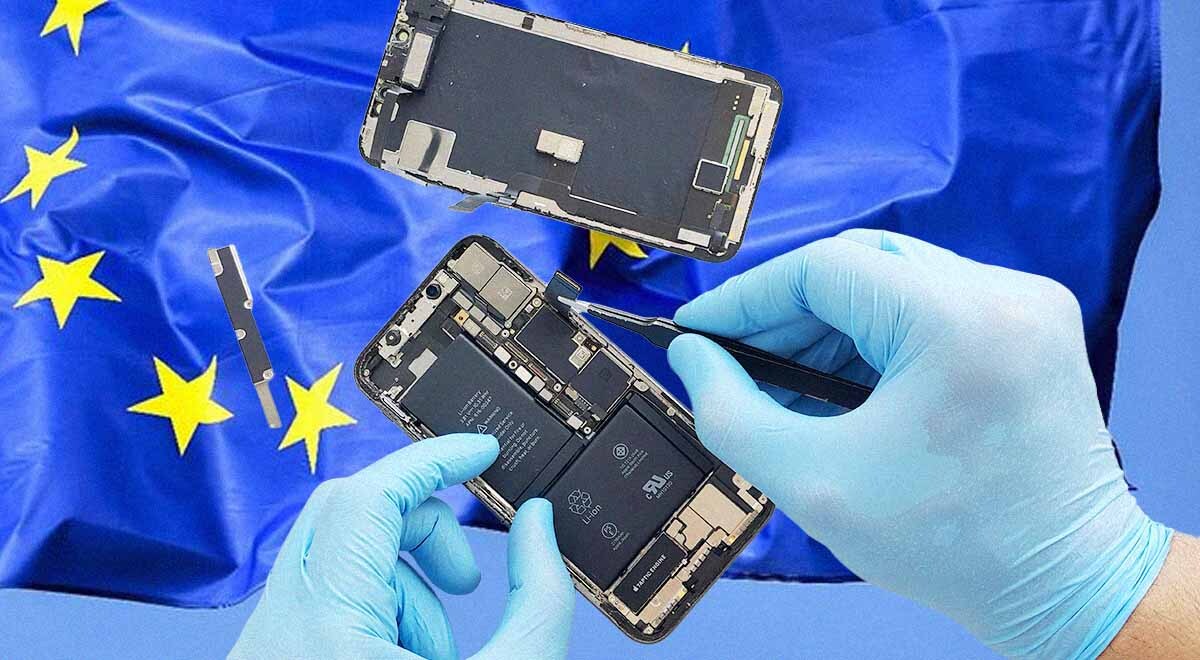
Image by Cybernews

 Follow us
The European Union’s Right to Repair directive aims to make smartphone, tablet, and household appliance repairs easier and more affordable. However, experts say that manufacturers may still be holding the cards.
- The EU Right to Repair directive will be implemented across all EU countries by July 31st, 2026.
- The directive covers products like phones, tablets, and household appliances, such as dishwashers and TVs, making their repair easier and more affordable.
- Manufacturers will be required to provide access to spare parts and prohibited from using techniques that impede the repair of goods.
- Experts say the directive has loopholes that may enable manufacturers to hinder repairs and pressure consumers into upgrading their devices.
Remember the good old days when you could just remove the Nokia phone’s cover and replace the dying battery with a new one? Or repair a PC running on Windows 98 without much hassle?
These days are unlikely to come back, but the EU directive on common rules promoting the repair of goods, widely known as the Right to Repair directive, promises to tame manufacturers’ efforts to make their devices irreparable.
The directive must be implemented across all EU countries by July 31st, 2026. However, experts say there are loopholes in the law that may prevent users from repairing their devices more easily and at a lower cost.










What is the Right to Repair directive?
According to the directive, which covers products like phones, tablets, and household appliances, manufacturers will be obliged to:
- Repair products within a reasonable time and for a reasonable price
- Provide access to spare parts at reasonable prices
- Make available information on their repair services to consumers in an easily accessible manner
- Not to use contractual clauses, hardware, or software techniques that impede the repair of goods unless justified by legitimate and objective factors
In addition, a new online European Repair Platform, which will become operational in 2027, will make it easier for consumers to find repairers.
Why are devices becoming irreparable?
Nearly 8 in 10 (77%) of EU citizens would rather repair their electrical appliances than throw them away, according to a Eurobarometer survey.
This comes as no surprise, given that the repair is becoming increasingly difficult or even impossible, partly due to manufacturers’ strategies like planned obsolescence, which refers to the deliberate design of products to fail, become incompatible, or feel outdated.
For example, manufacturers can glue battery cells into devices using adhesives, which can only be dissolved with specialized solvents. This makes battery replacement expensive – it may cost more than the battery itself – while increasing the risk of damaging the device.
In addition, the strategy may involve tweaking the software to make it obsolete or incompatible over time. Apple settled a lawsuit in 2020 claiming the company deliberately slowed down older iPhone models and paid complainants $500 million.
Manufacturers can also limit access to spare parts or discontinue their production.

Is the Right to Repair directive a solution?
While the EU is known for consumer-friendly regulations – thanks to Brussels, all new smartphones come with USB-C charging ports – experts point out loopholes in the directive.
A paper from the Right to Repair coalition, which represents over 180 organizations, including environmental NGOs and repair actors, notes that spare parts available to end users constitute a minority.
It states that the majority of spare parts are only available to professional repairers who must go through a lengthy administrative process to gain access, if the parts are available at all.
Zach Meyers, a director of research at CERRE, a think tank focused on European regulations, says the directive can help address the issue of planned obsolescence by requiring devices to be repairable and making disassembly easier.
In addition, its requirement to repair in some cases may last up to 10 years, potentially preventing planned obsolescence.
However, Meyers notes that manufacturers can still try to persuade customers to upgrade to a new device through software updates that require newer hardware.
Meanwhile, the requirement to sell spare parts at a “reasonable” price is a vague obligation and may be legally tested, he adds.
Intellectual property rights create a loophole
The Right to Repair paper emphasizes that the directive allows anti-repair practices if “justified by legitimate and objective factors,” leaving a “significant loophole” for manufacturers to prevent third-party repair.
Meyers says intellectual property rights (IPRs) justify manufacturers placing legal or technical obstacles to repairs.
While third parties are allowed to produce compatible spare parts so long as they are safe and don’t infringe upon IPRs, it is unclear yet how far manufacturers will rely on IPR exemptions in practice.

Meyers says the impact is likely to be fact-specific and change depending on the product. For example, software is often protected by copyright law and the EU Information Society Directive, which may preclude third parties from altering it.
For physical goods, once a product is on the market, IPRs may be exhausted, and the consumer is free to use the product as intended as well as to repair it.
Meyers tells Cybernews, “However, this is an area where we are likely to see a lot of litigation.”
Right to Repair in the US
Americans are also fighting for cheaper and easier repairs. According to the Public Interest Research Group, a consumer protection advocacy group, about one-third of Americans live in a state that has passed some form of Right to Repair policy as of February 2026.
There are 57 active bills across 22 states, though the group says most won’t advance far.
Even technological companies, which historically have lobbied against such policies, started supporting them. After spending $9,360,000 on lobbying in 2022, Apple publicly endorsed the Right to Repair bill in the state of California a year later.
There’s no federal Right to Repair law in the US, and the EU directive obliges individual member states to transpose the directive into their national law, Meyers says.
He adds, “We may well see different approaches to implementation questions in different member states. That poses the additional risk of creating fragmentation of consumers’ rights and manufacturers’ obligations across Europe.”
Unlock more exclusive Cybernews content on YouTube.