Researchers come up with a hidden camera detector for just $7
An affordable safety measure in the making.
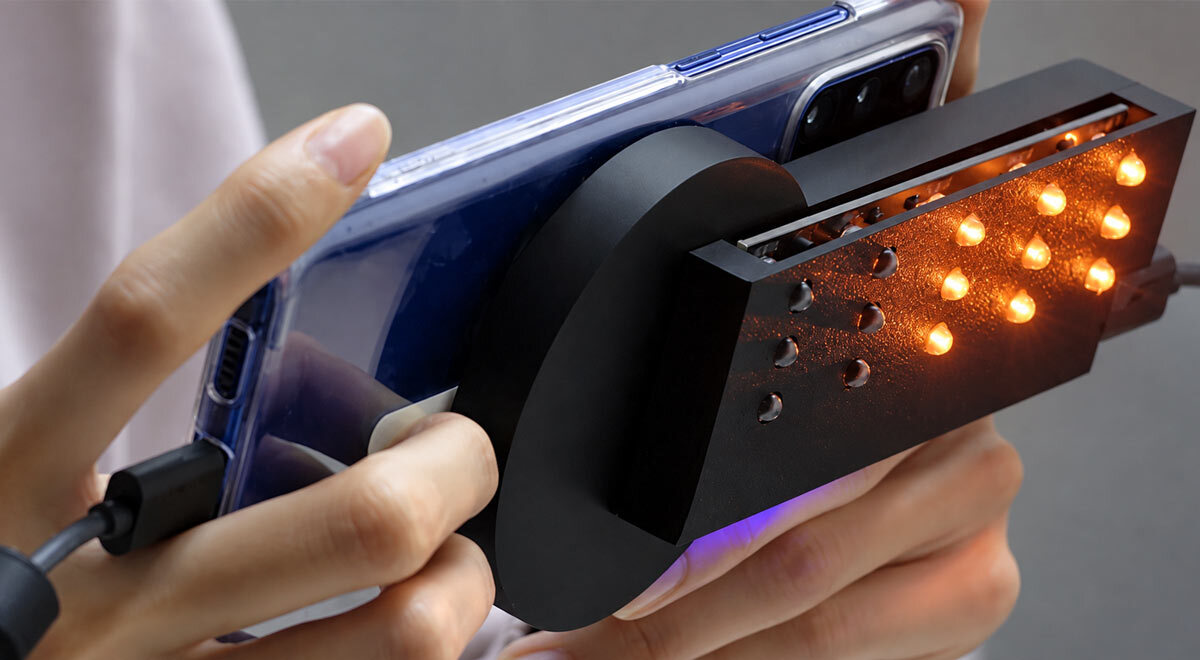
SweepLED technology used to detect hidden cameras. Screenshot from KAIST

 Follow us
- KAIST researchers built SweepLED, a phone attachment that uses LEDs and AI to detect hidden cameras.
- The prototype spots camera lenses by analyzing how light reflections appear through a smartphone camera.
- KAIST says SweepLED reached about 94% accuracy across tests on 30 objects.
- Its LED case components cost less than $7, but the tool is not commercially available yet.
Key Takeaways by nexos.ai, reviewed by Cybernews staff.
Researchers are addressing the stalking problem by creating technology that helps detect secret cameras with a phone.
There have been multiple horror stories where people have been filmed without their consent, including hidden cameras in Airbnbs, changing rooms, and even toilets.
Online tutorials proliferated showing users where to check and how to spot such cameras. However, these searches usually involve a human eye and its perceptual judgment.
Now, researchers at the Korea Advanced Institute of Science and Technology (KAIST) have developed an AI tool that turns a smartphone into a device for detecting hidden cameras.






KAIST’s research team created “SweepLED” technology, which consists of a device with 15 LEDs attached to a phone and an AI-powered processing system.
The technology works by attaching an LED light to a smartphone’s camera, illuminating objects while the camera is on. Then it analyzes the patterns of light reflections that were cast.
While reflections on regular objects move or disappear, hidden camera lenses appear in those reflection patterns.
The SweepLED system has already been used to test 30 objects and achieved approximately 94% detection accuracy, according to KAIST.
The device took around 5 seconds to scan an object.



Stay updated with our latest stories and follow us on social media
Be the first to discover new stories, ideas, and updates from our team.
What makes this technology even more beneficial is that the components in the LED case cost less than $7, making it an affordable solution that more people can use.
The LED light-powered technology isn’t yet commercially available, but it does show potential.
“This research is meaningful in that it combines low-cost smartphone-based hardware with AI analysis to present the possibility of a practical detection technology that even non-experts can use,” Professor Jun Han, who led the research, told Eureka Alert.