US police fear Meta smart glasses may be used against them
They’re raising security and counterintelligence concerns.
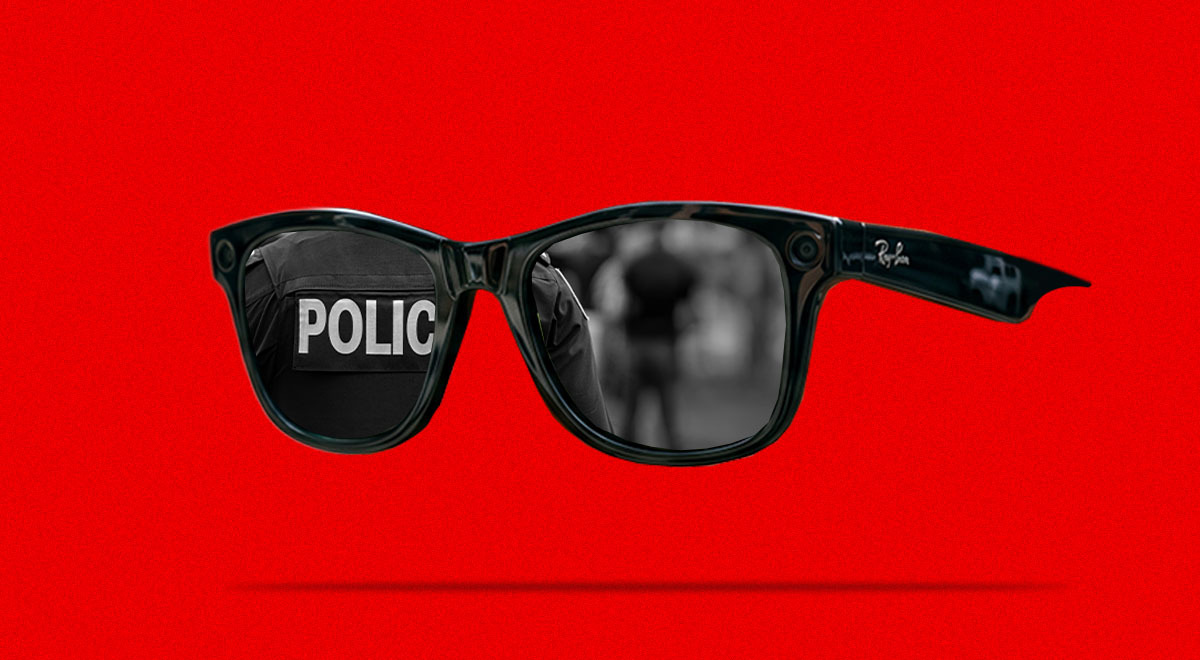
Image by Erman Gunes via Shutterstock/Cybernews

 Follow us
- US police warn that Meta smart glasses could record inside detention facilities and expose security details.
- The NYPD told officers to inspect eyewear in inmate cells for camera- and microphone-equipped devices.
- Researchers say extremists could use smart glasses to film targets or stream attacks hands-free.
- Courts, venues, and some governments are considering or enforcing bans over privacy and safety concerns.
Key Takeaways by nexos.ai, reviewed by Cybernews staff.
Police officers in the US are increasingly worried that smart glasses can be used to record inside detention facilities or commit terror attacks.
The Guardian reviewed a dozen memos from police departments across the US, illustrating growing concerns about camera- and microphone-equipped smart glasses, such as Meta’s Ray-Bans.
For example, the counter-terrorism unit at the New York Police Department (NYPD) warned officers that smart glasses are a potential “security and counterintelligence” risk and instructed them to conduct “thorough inspections” of all eyewear in inmate cells.
In addition, the NYPD cautioned that smart glasses could be used by arrested individuals to record inside law enforcement or detention facilities.




This could result in a leak of information about cell layouts and camera placements, among other things, posing security risks.




Stay updated with our latest stories and follow us on social media
Be the first to discover new stories, ideas, and updates from our team.
Police officers also worry that smart eyewear can be used to facilitate crimes and acts of terrorism, according to memos obtained by the Property of the People, a non-profit organization, and exclusively shared with The Guardian.
James Paterson, a researcher at the Lowy Institute, an independent Australian think-tank, warned in a recent analysis that smart glasses – like many other emerging technologies – may also be adopted by violent extremists.
For example, smart glasses make certain elements of an attack, which are normally done by a smartphone, such as photographing a target or recording video, “hands-free, less conspicuous and increasingly integrated with AI.”
Months before the 2025 New Orleans attack, when Shamsud-Din Jabbar drove a vehicle into crowds, he cycled through the area wearing Meta smart glasses and recording the surroundings.
David Riedman, an assistant professor at Idaho State University, wrote in a recent analysis that smart glasses may be used to facilitate the streaming of school shootings by youths radicalized online.
He argues that smart glasses can reduce the inconvenience of GoPro cameras, smartphones, and other devices that must be held by hand.
By shifting the mechanics of an awkward piece of handheld hardware to an unobtrusive, hands-free glasses frame, devices like Meta Ray-Bans quietly strip away the friction that can interrupt an attack,David Riedman, an assistant professor at Idaho State University
Growing calls for a ban on smart glasses
Law enforcement isn’t alone in its growing discomfort with smart glasses. The general public, too, is increasingly worried about the technology’s risks to privacy.
Smart glasses have been implicated in harassment cases, either by male content creators who covertly film women and share videos online, or teen boys recording peers and teachers at school.
As misuse grows, the technology has been dubbed “pervert glasses,” while their wearers are referred to as “glassholes” online.
Curious what others think about this story? Contribute your thoughts to the debate below.
Bans and restrictions on smart glasses are also on the rise. The devices were banned from all courts across New York State and from judicial buildings in England and Wales.
Private venues in the UK, such as pubs, clubs, and gyms, are also saying no to privacy-endangering tech.
The parliament of Hamburg, Germany’s second-largest city, is considering a motion that would ban smart glasses on public transport, in pools, and in saunas.