A German city may soon ban smart glasses on public transport, pools
No peeping Toms in saunas, either.
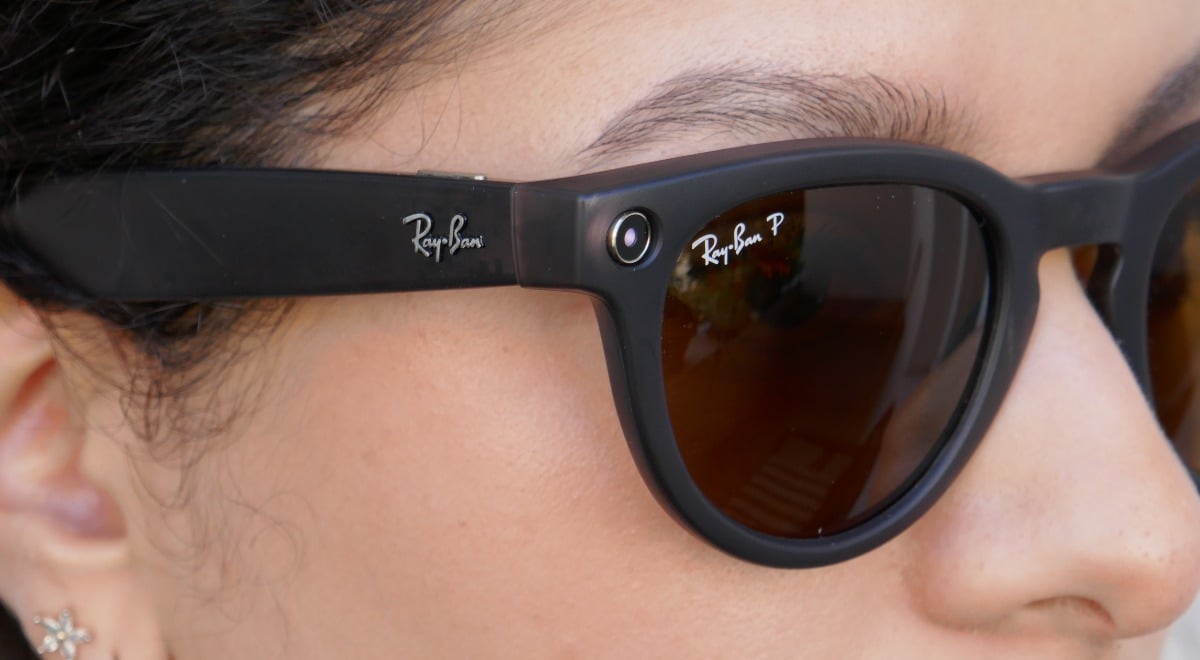
Image by Christoph Dernbach/Picture Alliance via Getty Images

 Follow us
- Hamburg lawmakers are considering a smart glasses ban on public transport, in pools, and in saunas.
- Supporters say people need stronger protection from covert filming in places where privacy is expected.
- Smart glasses have faced growing bans in courts, pubs, gyms, and other public venues.
- Hamburg wants federal rules requiring recordings by smart glasses to be clearly visible to nearby people.
Key Takeaways by nexos.ai, reviewed by Cybernews staff.
The parliament of Germany’s second-largest city, Hamburg, is considering a motion to ban smart glasses from certain public places.
If passed, the motion would ban the wearing of smart glasses on public transport, in swimming pools, and saunas, according to Euractiv.
The motion’s authors, the socialist group of the Social Democratic Party (SPD) and the Greens, argue that public spaces deserve particular protection, because people often have no choice but to use public transport.
In addition, pools and saunas are places where people should expect privacy.






Smart glasses, like Meta’s Ray-Bans, are increasingly implicated in the cases of covert filming of women in public places.
Content creators use the footage to make videos offering advice on how to pick up women. The victims are often unaware of being filmed, and learn about it only when the videos appear online.




Stay updated with our latest stories and follow us on social media
Be the first to discover new stories, ideas, and updates from our team.
Diane Morgan, a famous British actress well known for her Philomena Cunk character, was recently interrupted mid-shoot by a man wearing smart glasses, who asked for her number and ignored pleas to leave the filming area.
The Hamburg parliament has called for federal-level rules in Germany to address the issue of people being unaware when they are being filmed by smart glasses.
“If someone starts recording, this must be clearly visible to those around them,” Hansjörg Schmidt, spokesperson for the Hamburg parliament’s SPD group, told Euractiv in a statement.
Some glasses, like Meta’s Ray-Bans, have a capture LED on the front that blinks when content is being recorded.
In reality, however, the light is not always noticeable, and there are many readily available solutions, such as stickers, to hide it.
Growing bans on smart glasses
The Hamburg parliament adopts the motion as smart glasses are increasingly banned from public places in the US and Europe.
Smart glasses will be confiscated at all judicial buildings in England and Wales, while wearable devices equipped with recording technology were banned from all courts in New York State.
An increasing number of pubs, bars, and gyms in the UK are implementing bans on smart glasses, with cinemas likely to follow soon due to copyright concerns.
Calls are also growing to restrict the sales of these devices to sex offenders, although questions about enforcing the ban remain.
The Norwegian government is considering regulations on the use of smart glasses. The new rules could also include a ban on features enabling facial recognition in public spaces.