European nation considers tightening smart glasses rules, banning facial recognition
Meta is under increasing pressure on the continent.
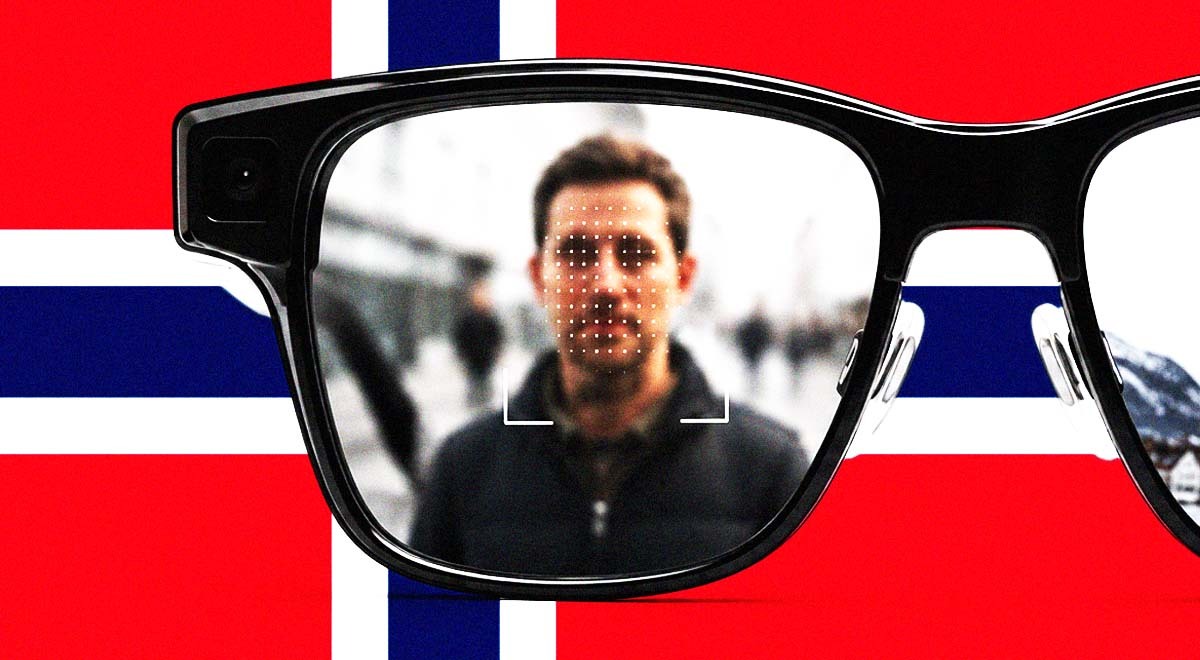
Image by Cybernews

 Follow us
- Norway is considering stricter rules for smart glasses, including a possible ban on facial recognition in public spaces.
- Digitalization Minister Karianne Tung plans an expert group to address privacy risks from AI devices with cameras and microphones.
- The Norwegian Consumer Council urged retailers to stop selling Meta smart glasses while legal questions remain unresolved.
- Critics say covert filming and surveillance risks especially threaten women, prompting bans and investigations in several countries.
Key Takeaways by nexos.ai, reviewed by Cybernews staff.
Retailers across Norway, a northern European country, are advised to stop the sale of Meta smart glasses and other wearables with recording functions amid legal uncertainty.
The country’s Digitalization Minister, Karianne Tung, said on August 25th that the government is mulling over regulations on the use of smart glasses and similar devices that can record and interact with AI assistants.
The new rules could include a ban on features enabling facial recognition in public spaces, according to Norwegian media.
“We can see that people’s private lives and privacy are coming under pressure from new technology, and I therefore want to regulate smart glasses and similar devices more strictly than today,” Tung’s statement reads.





The minister will appoint an expert group to guide the government in implementing stronger consumer protection from new technologies that combine AI with cameras and microphones, such as glasses, earbuds, and caps.
“We must avoid this equipment being used to monitor other people in public spaces,” he said.




Stay updated with our latest stories and follow us on social media
Be the first to discover new stories, ideas, and updates from our team.
Stop the sale of Meta glasses, advocacy says
Finn Lützow-Holm Myrstad, a director of digital policy at the Norwegian Consumer Council, welcomed a possible ban on facial recognition in public spaces, but emphasized that it is not the only problematic aspect of the glasses.
In a LinkedIn post, Lützow-Holm Myrstad wrote that the potential for abuse, including covert recordings and stalking, and commercial exploitation, such as AI training and profiling, is not limited to the use of facial recognition technology.
Meta’s glasses and similar products are a vector for increased surveillance in public spaces, a gift to people with ill intentions, and have a chilling effect on society,Finn Lützow-Holm Myrstad, a director of digital policy at the Norwegian Consumer Council
Lützow-Holm Myrstad urged retailers across the country to stop advertising and selling the glasses while there is legal uncertainty around their use. If the glasses are found to be illegal, they should be withdrawn from the Norwegian market.
Smart glasses aren’t currently equipped with facial recognition technology, which critics say could end privacy as we know it.
In June 2026, Meta removed a complete but inactive facial recognition system, known internally as NameTag, from the companion app for Ray-Ban and Oakley smart glasses following a public backlash.
The system was discovered by Wired and a pseudonymous independent security researcher Buchodi. Meta disputed the claims, calling the coverage “intellectually dishonest” and “pure advocacy-driven clickbait.”
“Glassholes” are targeting women
Smart glasses, such as Meta’s Ray Bans, have earned a controversial reputation and the derogatory term “pervert glasses” for being used to record people without consent.
Women, who are common targets of “glassholes,” report finding themselves in social media videos created by self-proclaimed pick-up artists. Hundreds of such videos, recorded by dozens of influencers, were discovered by BBC investigators in 2026.
Even British actress Diane Morgan, well-known for her Philomena Cunk character in a mockumentary series, recently fell victim to covert filming during a shoot.
Growing privacy concerns have resulted in smart glasses’ bans across all courts in New York State, England, and Wales.
The California Senate is considering a bill that would establish criminal penalties for filming with smart glasses “in any area within a place of business where that person has a reasonable expectation of privacy,” unless explicit consent is given.
Smart glasses are currently being investigated by privacy watchdogs in Germany, France, and the Netherlands, following governments’ requests to determine whether these devices are legal.