How ID verification is killing online privacy and the internet as we know it

 Follow us
If you’re from the UK, you most likely noticed that many websites and online services began implementing age verification requirements in one way or another. Some may ask for a selfie to estimate your age, while others go a step further and require a government ID. All of this is done in the hopes of protecting minors from harmful content.
Unfortunately, the real consequences of age verification are much more severe, and the open web is slowly changing for the worse. It drastically undermines user privacy and gives local governments more opportunities to easily impose censorship. Some may argue that was the goal all along. So, what’s actually happening? Let’s dive in.
- The UK’s Online Safety Act came into effect on July 25th, 2025, forcing websites to verify visitors’ age by having them upload a selfie or government ID.
- Having your selfie or ID tied to your online account eliminates any semblance of online privacy. It also increases the likelihood of becoming a victim of a data breach.
- Many websites implemented age verification to varying degrees, while others pulled from the UK market to avoid fines and potential risks to their users.
- UK citizens use VPNs and other workarounds to bypass age verification requirements, thus undermining its effect. This means governments could consider further restrictions.
- Other countries worldwide, including France, Ireland, and the US, have similar age verification mandates, too. Other countries will most likely follow suit.
- Governments worldwide are considering further restrictions (Chat Control, VPN blocking) since ID verification isn’t very effective.
The UK’s Online Safety Act brought age verification to the mainstream
The UK’s Online Safety Act (OSA) was passed into law on October 26th, 2023, but didn’t come into effect until July 25th, 2025.




In short, the goal of this act is to ensure that children aren’t exposed to harmful content online, such as pornography, violence, self-harm encouragement, and other illegal or dangerous content. It forces websites and other online services to verify users’ ages to prevent minors from being exposed to inappropriate content. So, whether you’re a kid or an adult, you have to upload your selfie or government ID to access websites that were easily accessible beforehand.
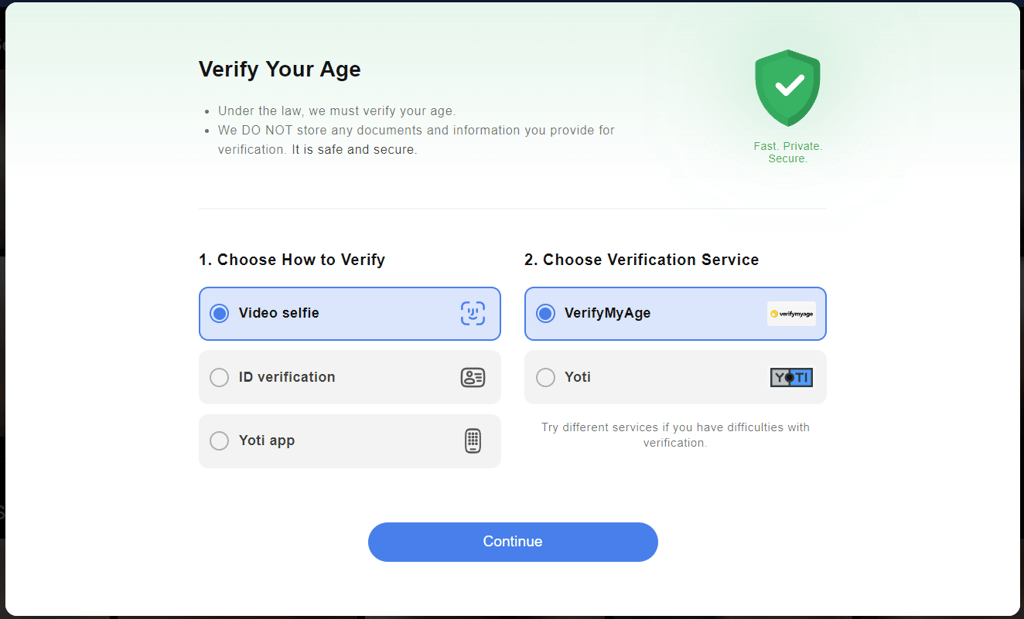
The law affects any website or online service that’s available in the UK, including social media sites, communication apps, forums, and more. So, practically, any website you can imagine is affected by the Online Safety Act. Additionally, this applies to tourists in the UK as well, not just citizens. Failure to comply with the law’s requirements will result in hefty fines of up to £18 million or 10% of their annual revenue, whichever is higher.
Before the OSA, Australia passed the social media minimum age legislation, which will come into effect on December 10, 2025. It bans anyone under 16 years of age from having social media accounts. Naturally, the only way to ensure that users meet the age requirements is to use age verification.
The Act had many unintended consequences
Unsurprisingly, such wide sweeping legislation didn’t go according to plan. Obviously, many online services, such as Discord, Reddit, and Spotify, have implemented the necessary age verification checks to avoid fines and to continue operating in the UK. Notice how Spotify is among the affected services despite being a music streaming platform, which caused some outrage online. If that wasn’t enough, the platform says it will eventually delete your account if you fail to verify your age.
Anyway, crafty teenagers quickly found a few workarounds to these restrictions. A rather obvious option is bypassing age verification using a VPN (virtual private network) service to change your virtual location. The downside is that good VPNs are paid, although it’s possible to find a free VPN as well.
Shockingly, kids found many more ridiculous ways of bypassing the restrictions. For example, they used photo mode from video games like Death Stranding to create selfies of in-game characters. Such pictures were more than enough to trick the age verification systems on sites like Discord and Reddit, although BlueSky and Instagram were more resilient. I couldn’t test this approach myself since I don’t own the game and there aren’t any age verification mandates in my country (yet).
You can use Death Stranding's photo mode to bypass Discord's age verification https://t.co/o9n0c0lwkI pic.twitter.com/mvYmhZZCVp
undefined Dany Sterkhov 🛡✈ (@DanySterkhov) July 25, 2025
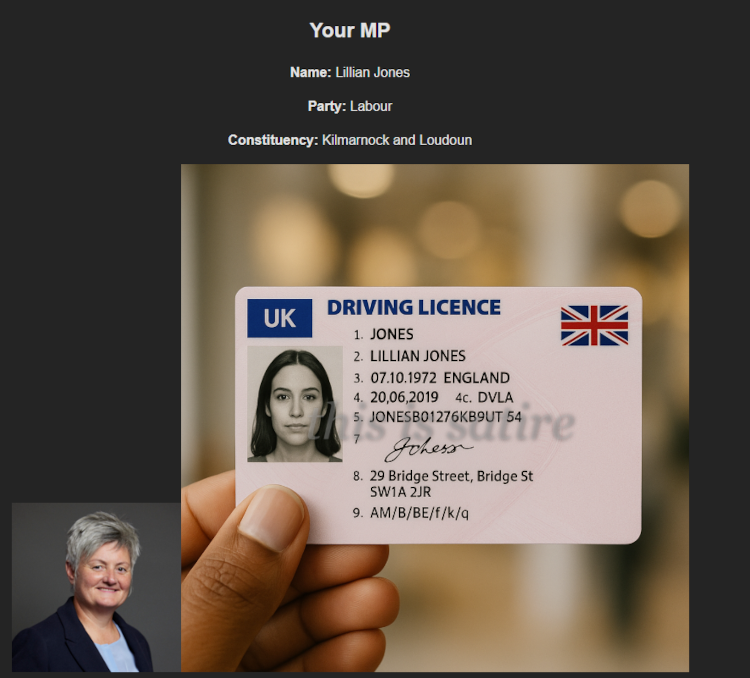
Another method is using AI-generated IDs to bypass age verification requirements. A software developer has even created a website that will create fake driver's licenses of local MPs (members of parliament) that you can use as a form of protest. However, while this can send a strong message, it could also be interpreted as identity theft. Ironic because identity theft will become a severe problem once people’s IDs are leaked after an inevitable data breach on one of the age-verification systems.
Naturally, some websites decided that implementing age verification requirements is not worth it, either from a cost or user experience point of view. This mostly affected independent forums, such as football fan clubs, a dads with kids forum, and an online forum about hamsters. You can find a more detailed list of sites blocked because of the Online Safety Act on blocked.org.
Another high-profile instance worth mentioning is that the Wikimedia Foundation, the organisation behind Wikipedia, took legal action against the regulations imposed by the Act. It claimed the new law would severely reduce the number of users who could access Wikipedia. Sadly, Wikipedia lost the court challenge, but there’s still hope.
Age verification requirements undermine online privacy
All of this might make it seem that the Online Safety Act is a massive inconvenience for users and website administrators. However, the reality is much more nefarious than that.
Crucially, forcing netizens to upload selfies or IDs when visiting websites completely destroys any semblance of privacy and anonymity online. This means that the UK government will know exactly who you are and what you do online. Naturally, this makes it easier to impose mass surveillance and persecution if you do something online that the government deems illegal. It’s also just one step away from something similar to China’s social credit system, where visiting the wrong websites makes you ineligible for certain benefits.
Secondly, having your personal information out there in the open makes it more vulnerable to data breaches. The more often you upload your documents to bypass age verification, the more likely it is that they will inevitably leak. And if your government ID falls into the wrong hands, then you will definitely become a victim of identity theft, fraud, stalking, and more.
Such a breach occurred quite recently with the Tea app, which exposed around 72,000 images, including selfies, IDs, and other user information. The service later suffered another data breach that exposed millions of private messages between users. I recommend using a personal data leak checker to see whether you’ve been a victim of a data breach recently.
Finally, if we allow our governments to impose such legislation without resistance, then they will likely follow up with even more restrictions on our privacy and freedom of speech. Obviously, they’ll once again claim that it’s for our own good, but it’s clear from the OSA that these restrictions aren’t effective and they don’t make children safer online. Moreover, once these restrictions are in place, it’s highly unlikely that they’ll ever be repealed.
Age verification checks aren’t unique to the UK and will likely spread further
The UK’s Online Safety Act is not a first-of-its-kind law that will set the stage for future legislation abroad. For example, the US has been barring porn sites behind age verification checks since 2024, although the details vary by state. Currently, around 24 states block adult sites and mandate age verification checks. In turn, the sites have either complied or shut down in the US.
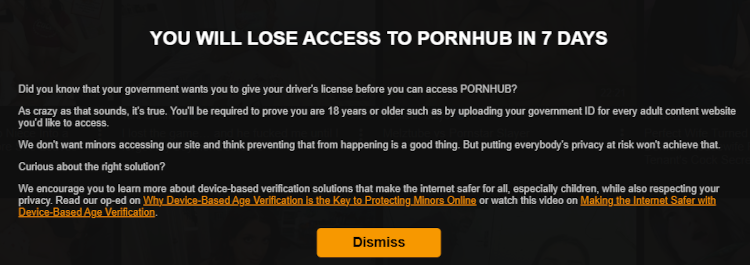
Back in the EU, a few countries have already implemented their own age verification checks on adult sites, and are considering going further by restricting kids’ access to social media. For example, porn websites like Pornhub are already unavailable in France due to strict age verification checks. Similarly, Ireland has also mandated age verification checks for online video-sharing platforms like Facebook, Instagram, YouTube, and more. Greece, Italy, Spain, and Denmark are also working on similar legislation.
The situation Down Under is just as bleak. Besides the aforementioned social media minimum age limit, the Australian government is considering age-verification checks for search engines like Google and Bing. The law is slated to come into effect on December 27th, 2025. Once that happens, all your Google searches will be known to Alphabet and the government, too.
Finally, we have Canada, which is considering Bill S-210, which is similar to the UK’s Online Safety Act in scope. It would force all commercial internet services to implement age-verification checks to prevent minors from accessing explicit content. And just like the UK counterpart, since the bill’s scope is so broad, it will affect everyone, adults and children alike, trying to access the internet.
These are, of course, just a few examples of how governments worldwide are imposing severe restrictions in the name of children’s safety. There’s likely more legislation being pushed that I haven’t covered, but the point is that the free world is rapidly becoming a lot less free.
This isn’t the only restriction the authorities are considering
Since the Online Safety Act didn’t pan out as expected, the UK government is considering further restrictions. One suggestion is to impose age verification measures on VPN services so that children can’t use them to bypass the regular age verification checks on websites. At least they’re not thinking about banning VPNs entirely, which would put the UK in the same authoritarian ballpark as Russia and China.
Then there’s the notorious Chat Control proposal, which has re-entered the limelight after Denmark took over the EU council presidency. If passed, it would legalize mass surveillance across the EU. All your online private messages, photos, and files would be fair game, even if they’re encrypted. All in the name of children’s safety, of course. If you’re an EU citizen, you should do your part and Fight Chat Control if you believe this is unacceptable.
Another interesting development occurred in Germany, where Axel Springer, an online media company, claims ad blockers threaten its revenue model and are a copyright violation. The company has been in a heated legal battle with Eyeo, the maker of Adblock Plus, for quite a while. The most recent court decision in favor of Eyeo was overturned, and some speculate whether this could lead to ad blockers becoming illegal in Germany, and inevitably, elsewhere.
Conclusion: online privacy is in danger
The US, the UK, Australia, and the EU are all starting to mandate age verification laws, which are meant to protect minors from harmful content. In reality, these systems destroy everyone’s right to online privacy because we are now forced to show our faces or even government IDs just to access the internet. Moreover, it’s unclear whether these systems follow rigorous security practices to ensure our precious information isn’t prone to massive data breaches.
Additionally, it’s clear that these age-verification measures aren’t effective at accomplishing their goals due to the existence of VPNs and similar software. As such, we can expect to see more follow-up restrictions, such as search engine verification, VPN traffic restrictions, and widespread chat control. This all sounds a bit ridiculous, especially if you value privacy and freedom of speech. I mean, 1984 was supposed to be a cautionary tale, not a guide for the future.
