Is death a failure?
Should we just embrace the digital afterlife?
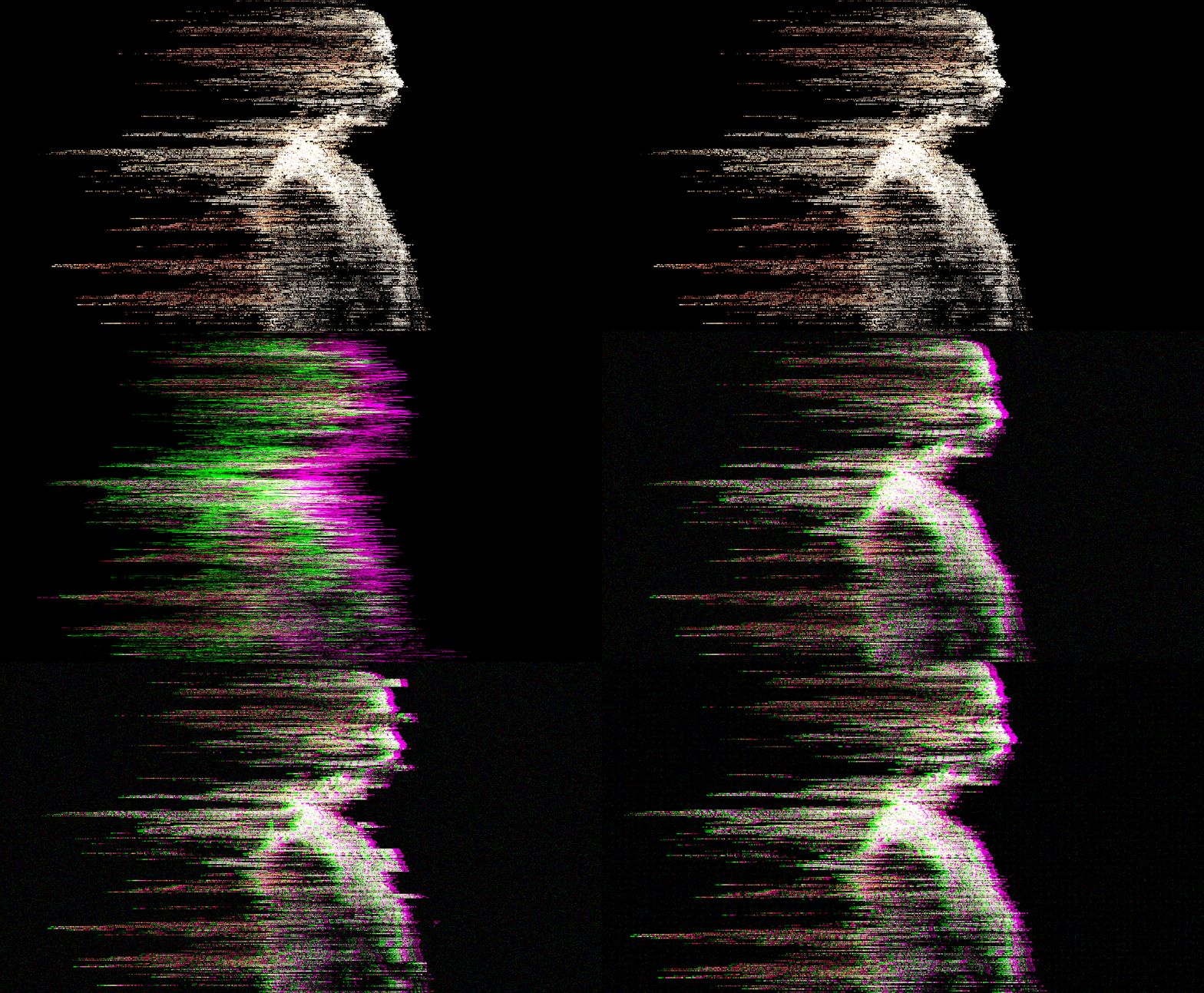
Deadbot. By Cybernews designers

 Follow us
Should we just embrace the digital afterlife?
I have a whole folder of my late mom's and my conversations over the phone. I've never listened to them after she passed, but I'm not deleting them either. I try not to dwell on the past, and yet, having this sort of resurrection stone in my digital pocket gives me peace.
Watching videos with dead loved ones, staring at pictures with them, and listening to audio recordings is a bit much for me, but could be the most natural thing for others. And with more technology onboard, resurrection of the dead goes way beyond some silly old video reviews.
We just won't let the dead rest.
It feels like ages ago already that we found out about apps like this particular one that create a virtual avatar of your departed loved one so you can interact with them after their death. A person prerecords some memories, uploads some photos and videos to the app, and it spits out a digital avatar that seems alive and speaking.


My colleague Gintaras Radauskas, who tested the app back then, described the experience as "spooky".
There are tons of them now.
Visit LinkedIn to join the conversation
Nature told the story of Nolan, a sound engineer from Canada, who built an AI avatar of her late father, who was in denial about his death until the day he passed.
"He thought death was a failure. That was a lot to put on a child, and I couldn't confront him about it back then."
Instead, as an adult many years later, she "got mad at a robot."
Could such interactions give people closure? Or do they bury us in the past?
It is also just a potential rip-off, as it may cost around $10 to exchange about 100 messages with a bot.






As Scientific American pointed out, psychologists abstain from broad claims for or against bots, and some papers insist griefbots are to be used only with medical supervision.
At least in the case of a griefbot, you agree to the platform creating your digital avatar for your family and friends to interact with. But with AI in the picture, famous people are enslaved after their death. Late actor Robin Williams and civil rights activist Martin Luther King Jr. have miraculously resurrected on social media under the pretext of art or “solving” the racism dilemma.
And then there's a much simpler way to bother the dead.
On top of traditional family feuds over the more valued possessions of the deceased, the question of inheritance of digital crumbs commences. Tech companies lock relatives out of the deceased's profiles. And while some firms at least delete the accounts after usually a few years of inactivity, on Meta apps, the departed remain forever(ish). In the best-case scenario, with the "In memoriam" sign slapped onto their profiles.
Years after my uni friend died, quite a few people would still post on her wall once a year, wishing her a happy birthday. See you next year, pal, living among the digital ghosts because Facebook would make you climb the mountain of Erebor to have that profile modified or taken down.
As I'm finishing my weekly essay, I can't help but wonder how soon we'll be able to buy a "haunting after death" service.