“It’s not about cash in suitcases:” here’s how the big tech lobby works in Germany
Researcher Joris Leander Kanowski says tech giants such as Microsoft and Meta can afford to be members of nearly every trade association in Germany, thereby exerting significant influence on the country’s digital laws.

Image by Cybernews

 Follow us
Researcher Joris Leander Kanowski says tech giants such as Microsoft and Meta can afford to be members of nearly every trade association in Germany, thereby exerting significant influence on the country’s digital laws.
- Big tech companies like Google, Microsoft, Meta, and Apple shape German digital laws mainly through networking, trade associations, and providing expertise, rather than direct payments.
- Their widespread membership in key industry groups gives them substantial – though often hidden – influence over regulatory decisions and lawmaking, raising concerns about transparency and true European digital sovereignty.
- Critics warn that American tech firms’ “sovereign” offerings may be misleading and increased public scrutiny is needed to ensure lobbying serves society’s interests, not just big tech’s.
The big tech lobby works differently than you might imagine – it’s not about suitcases filled with cash secretly given to decision makers.
“It’s mostly about networking, providing expertise, and meeting politicians often. Therefore, companies need many partner organizations that help them to stay in touch with politicians,” Kanowski tells Cybernews.
Kanowski, a senior advisor to policy and strategy at the Center for Digital Rights and Democracy, a non-governmental organization, has previously worked in a trade association, and knows “digital big tech lobbying from the inside,” as he puts it.







Check if your data was exposed
Find out if your email and related personal information have appeared in known data breaches.
That’s why he changed career paths to an NGO and created a map detailing big tech lobby efforts to influence the German digital landscape.
The analysis, based on publicly available sources, suggests that Google, Microsoft, Amazon (including Amazon Web Services), Apple, and Meta spent €7.17 million ($8.35 million) and employed 52 people at the federal level in fiscal year 2024.
Kanowski says big tech companies can afford to be members of almost every industry association relevant to German digital politics or policymaking.
He explains that industry associations play an important role in writing laws and influencing politics in Germany.
“When big tech becomes a member of an industry association, it cannot control it, but can impact the organization in a way that it would never really speak out against big tech. Their soft power is vastly underestimated,” Kanowski says.
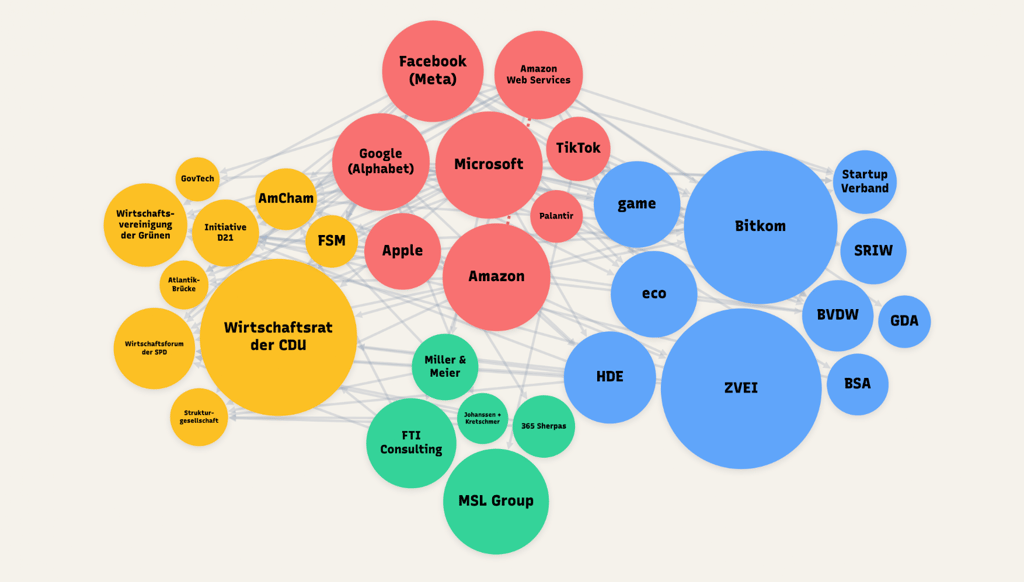
One of the most notable examples is the German Startups Association, which positions itself as the voice of the country’s startups.
However, Kanowski says all big tech companies are its members, preventing the organization from influencing politics in a way that would strengthen European startups against US big tech.
According to the analysis, Microsoft lists 50 memberships in organizations in the German lobby register, while Google lists 28. Such data suggests that these companies are involved in most talks about digital issues in Berlin.
“Only the tip of the iceberg”
The analysis may reveal only the tip of the iceberg, Kanowski says, because it is based on public data that big tech companies choose to disclose to transparency registers.
However, the registers don’t provide insight into meetings between politicians and tech companies or the frequency of such talks. And these meetings are far from the only way to exert political influence.






Kanowski says public-sector procurements, in which big tech companies sell their products to the government that regulates them, are often overlooked and lack transparency.
Then there’s lawfare, or constant legal disputes, where big tech companies work with big law firms to overpower German regulators and competitors in courts.
“It can be really hard to find a good law firm that doesn’t work for big tech companies already,” Kanowski tells Cybernews.
Germany is no exception in the EU. Tech companies spend €151 million ($175 million) each year lobbying the bloc, according to a 2025 analysis by Corporate Europe Observatory and LobbyControl.
It can be really hard to find a good law firm that doesn’t work for big tech companies already.Joris Leander Kanowski
These lobby efforts aren’t limited to meeting politicians or spending money on PR firms. The report suggests that big tech has sharply increased the number of think tanks it is funding.
While lobbying cannot always be easily traced to specific proposals or laws, some are at least partly attributed to pressure from big tech, such as the EU proposal to simplify its AI and data laws in an effort to “boost competition.”
“True innovation means finding ways to ensure that the benefits of new technologies are shared by society at large, and not serve only the interests of big tech oligarchs,” Amnesty International warns.
Contested European digital sovereignty
Europe is heavily dependent on American technologies, especially the giants included in the analysis – Google, Amazon, and Microsoft currently account for about 70% of the European cloud market.
The EU and individual member states have been stepping up efforts to achieve digital sovereignty, either by replacing American software with open-source alternatives or through policies such as the upcoming “Tech Sovereignty Package.”
Citizens are also concerned. Two-thirds of Europeans now support replacing US tech, such as servers and payment systems, with European alternatives.
Kanowski says American companies aren’t happy with the push for digital sovereignty. They try to fight back by engaging in “sovereignty washing.”
Cloud providers, for instance, aim to quell Europeans’ concerns about data leaving the continent by introducing what they call sovereign solutions, with data centers located in European countries and operated by European residents.
However, critics say these sovereign solutions are still part of American companies, which are compelled to provide data stored elsewhere at the request of their law enforcement agencies.
“They try to sell fake sovereignty concepts to the public and politicians in Europe. A lot of lobbying efforts go into the fight over what sovereignty really means,” Kanowski says.
Pressure comes not only from registered lobbyists or trade associations. The Trump administration reportedly ordered US diplomats to fight against attempts to regulate US tech companies’ handling of foreigners’ data, Reuters reported in February 2026.
Kanowski has little hope that the German government would bring more transparency into the lobbying process. Instead, he says the public should demand more of it.
He tells Cybernews, “We wanted to enable journalists and the public to ask the right questions. Ask trade associations who they really represent, so politicians would face more scrutiny over who they meet and how they make decisions.”
Unlock more exclusive Cybernews content on YouTube.