WiFi networks can be used to identify people without cameras, study claims
Simple WiFi networks can be turned into powerful surveillance tools.
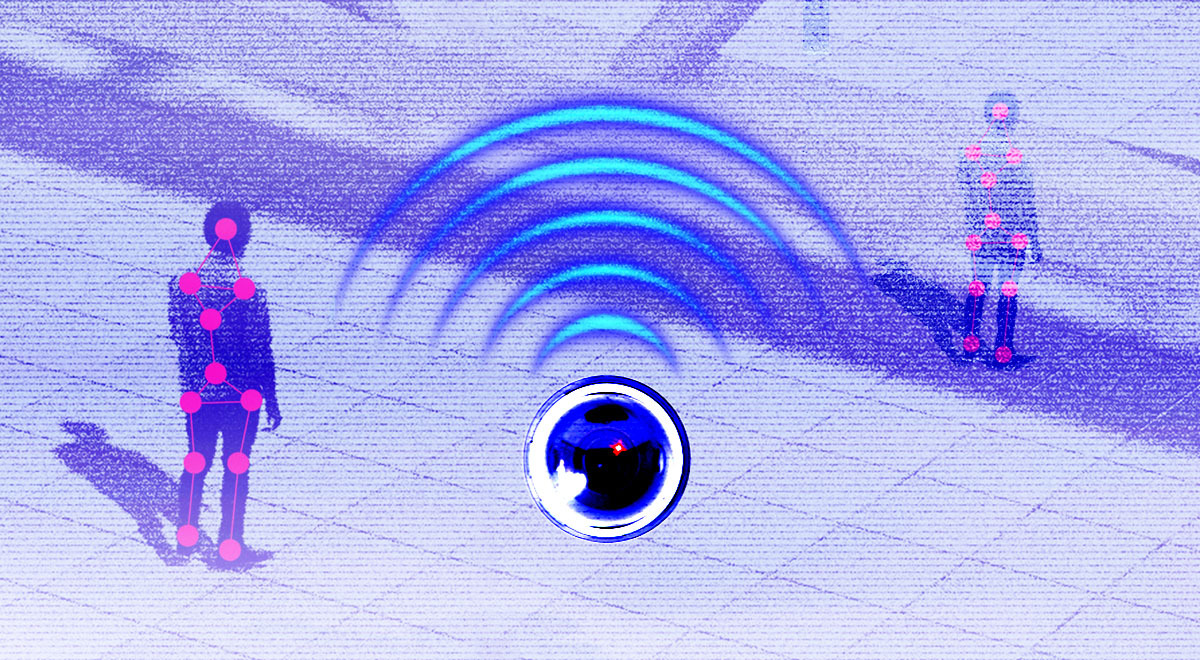
Image by Cybernews

 Follow us
- Researchers say unencrypted WiFi signals can identify people without cameras or special sensors.
- The Karlsruhe Institute of Technology study used WiFi feedback data to create radio-based images and recognize people within seconds.
- The system identified selected student participants with nearly 100% accuracy, but the controlled test may not reflect real-world conditions.
- Researchers warn nearby active WiFi devices could enable tracking, raising privacy concerns and calls for safeguards in future WiFi standards.
Key Takeaways by nexos.ai, reviewed by Cybernews staff.
Unencrypted signals exchanged between WiFi-connected devices and routers may be used to create radio-based images of users and allow their recognition within seconds.
If you thought that putting a sticker on your laptop camera would guarantee your privacy, think again.
A new study by researchers at the Germany-based Karlsruhe Institute of Technology illustrates how simple WiFi networks can be turned into powerful surveillance tools, enabling the identification of people without cameras or special sensors.
The new identification method relies on connectivity to a wireless local area network (WLAN). WiFI is a type of WLAN, which is used by the majority of American households and also ensures internet connectivity in offices, cafes, and other public places




WiFi-connected devices routinely send data to routers to optimize communications. This data, called beamforming feedback information (BFI), is transmitted without encryption.




Stay updated with our latest stories and follow us on social media
Be the first to discover new stories, ideas, and updates from our team.
By analyzing that information, the system can generate images of people from multiple viewpoints, along with their surroundings. The data can then be used to determine a person’s identity.
“This works similarly to a normal camera, the difference being that in our case, radio waves instead of light waves are used for the recognition,” Professor Thorsten Strufe from KASTEL, KIT's Institute of Information Security and Dependability, is quoted in a press release.
Researchers say that once the machine learning model has been trained to recognize individuals, the identification process takes only a few seconds.
In the study, the technique was tested on 197 local students, but only the data of 161 were available to researchers. The system inferred their identities with nearly 100% accuracy regardless of their walking style, such as whether they carried a backpack or walked quickly.
If you regularly pass by a café that operates a WiFi network, you could be identified there without noticing it and be recognized later, for example by public authorities or companies.Julian Todt from KASTEL
However, it is important to note that the test was conducted on selected, known participants rather than entirely random passersby, and the number of participants was relatively small.
They were also instructed not to wear baggy clothes, skirts, dresses, or heeled shoes to ensure an unobstructed gait recording.
Therefore, the system could potentially be less accurate in real-life settings, such as large organizations or smart cities.
Disconnecting from WiFi may not protect you
Despite these limitations, the study still raises important questions about how WiFi can be used for surveillance.
Researchers say that because the technique analyzes radio waves traveling through space, a person does not need a WiFi-enabled device, such as a phone or smartwatch, to be targeted.
Nor would turning off your device necessarily prevent the system from working.
“It's sufficient that other WiFi devices in your surroundings are active,” Strife says.
Researchers warn that the technique can be abused in countries ruled by autocratic regimes. They call for protective measures and privacy safeguards to be incorporated into the forthcoming IEEE 802.11bf WiFi standard.