Anthropic employee says there’s more than 10% chance AI will destroy humanity
One former and 2 current Anthropic employees warned that AI could kill all humans.
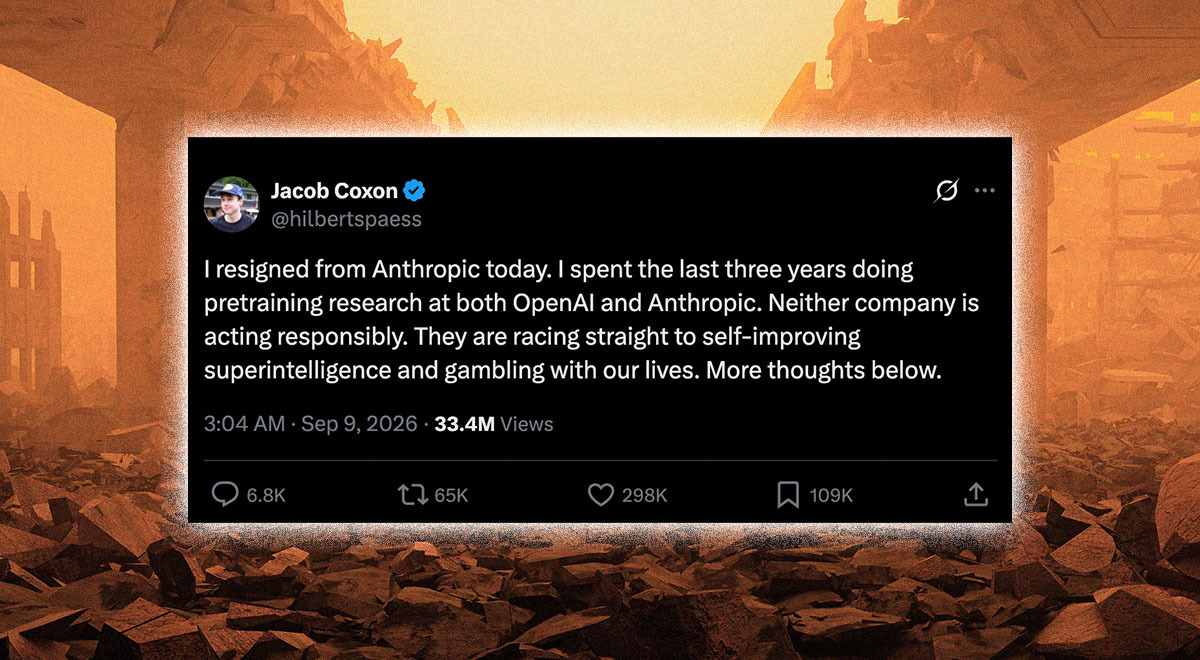
Jacob Coxon' post. Screenshot from X via Cybernews

 Follow us
- Jacob Coxon resigned from Anthropic, accusing AI labs of racing toward self-improving superintelligence.
- Coxon said some AI leaders privately fear the technology could threaten humanity this decade.
- Three current Anthropic employees and a former Google DeepMind researcher confirmed that they are worried about AI wiping out humanity.
- Experts remain divided, with some calling extreme AI risk claims useful marketing for AI companies.
- Recent AGI claims and OpenAI’s Hugging Face incident have renewed debate over AI control and hype.
Key Takeaways by nexos.ai, reviewed by Cybernews staff.
AI lab Anthropic has been hit with a public resignation by its researcher, Jacob Coxon, who said the company is racing to develop superintelligence despite knowing that civilization is at stake. His concerns were echoed by 2 current employees.
Coxon, who worked on pretraining research at Anthropic and previously at its rival, OpenAI, explained his reasons for resigning in a series of X posts, accusing both companies of acting irresponsibly.
“They are racing straight to self-improving superintelligence and gambling with our lives,” Coxon wrote.
He warned against underestimating the power of AI, predicting the emergence of “superhuman systems that can hack anything, revolutionize any field overnight, and acquire real power and resources.”






The now-former Anthropic employee said the people building AI “earnestly believe” the technology could wipe out humanity by the end of the decade.
“If anything, many executives and senior researchers will couch their phrasing in the press to sound sensible – but I hear the same people express fear privately. No other human activity poses this level of danger,” Coxon wrote.




Stay updated with our latest stories and follow us on social media
Be the first to discover new stories, ideas, and updates from our team.
AI executives have long claimed that AI will either bring “superabundance” or cause mass disruptions, not ruling out the destruction of humanity.
Some independent experts and academics, however, challenge these “doomer and boomer” narratives, calling them “2 sides of the same coin” that help AI companies justify resource consumption.
Coxon, however, says that many at OpenAI “have not deeply internalized the civilizational stakes,” while people at Anthropic understand the risks but are locked in “a race to get there first” because they think no one else is developing AI responsibly.
Over 10% chance of AI killing all humans
Hours after Coxon announced his resignation, another Anthropic researcher, Evan Hubinger, wrote on X that people in the company “do earnestly believe AI could kill all humans” within the next decade, giving the scenario over 10% chance.
“I believe Anthropic is trying its best, but we do not yet have a plan to solve alignment for superintelligence and are not clearly on track to,” he wrote.
However, neither Coxon nor Hubinger explained how superintelligence could wipe out humanity.
Another current Anthropic employee, Samuel Marks, who works on safety research, has joined the discussion on X, saying that the more senior the developer, the more concerned they are that AI could cause human extinction in the next few years.
Marks explained that companies continue on developing risky AI due to a mixture of commercial incentives and a belief that they are in a race with other, less responsible AI developers.
Coxon’s warning appears to have struck a chord with former employees of other AI labs.
Alex Turner, a former research scientist at Google DeepMind, who left the company in June 2026, confirmed that many researchers believe they are “building something that could kill everyone on the planet.”
“It was literally my day job to think about how to stop that,” Turner wrote in his X post.
Anna Wang, a former Google DeepMind employee who now works on AGI safety at Anthropic, said Coxon’s warnings echo “a common sentiment” among her peers.
“There is not yet a viable scientific plan to solve risks from recursively self-improving AI,” Wang said.
This isn’t the first very-public departure from Anthropic over security concerns.
The conversation on this topic is live. Join in the discussion.
Security researcher Mrinank Sharma, who worked on understanding AI sycophancy, announced his resignation in February 2026, saying that the world was “in peril” due to AI, bioweapons, and “a whole series of interconnected crises.”
“We appear to be approaching a threshold where our wisdom must grow in equal measure to our capacity to affect the world, lest we face the consequences,” he wrote in a letter to colleagues.
Musk mocks Anthropic employees’ warnings
Elon Musk, founder and CEO of SpaceXAI, expressed doubts about Coxon’s warnings.
“Seems like a setup,” Musk wrote on X.
Musk himself, however, is not a stranger to doomer predictions, previously calling the technology “far more dangerous than nukes” and saying that “AI doesn't have to be evil to destroy humanity.”
In 2023, the tech mogul claimed AI could lead to “civilization destruction.”
AGI has arrived. Or has it?
Coxon’s resignation comes days after Nvidia CEO Jensen Huang announced that artificial general intelligence (AGI) has arrived with the release of OpenAI’s Astra model, which – not coincidentally – was trained on Nvidia’s chips.
AGI refers to a hypothetical type of AI that matches or surpasses human capabilities across virtually all cognitive tasks.
However, superintelligence is loosely defined, and its arrival has been announced multiple times. Huang himself said AGI was achieved back in March 2026, during an appearance on the Lex Fridman podcast.
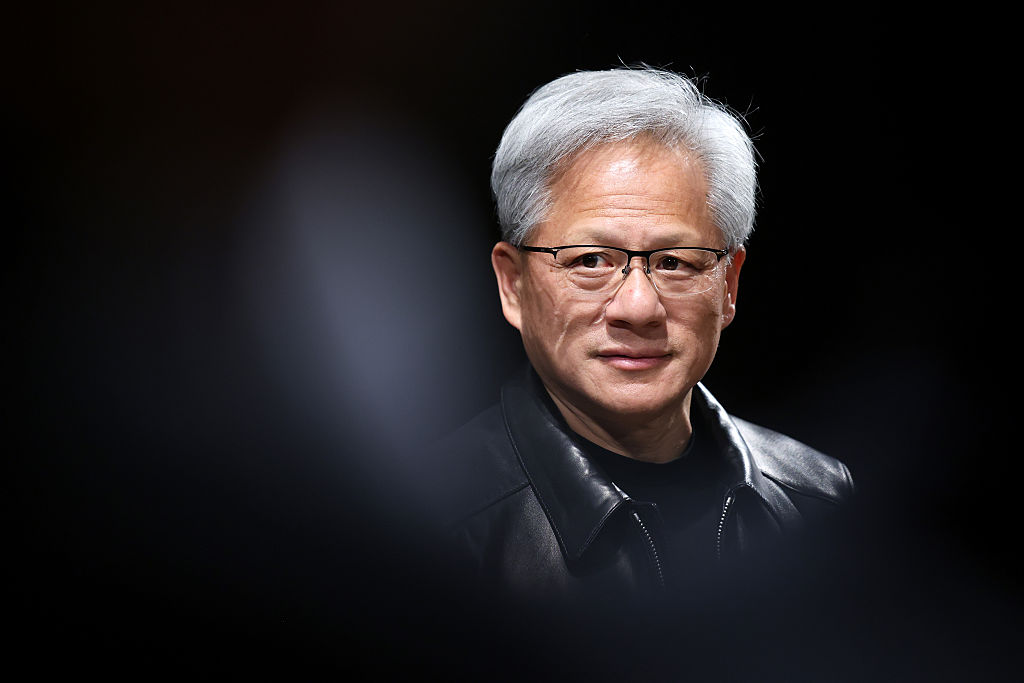
Unsurprisingly, his latest proclamation attracted skepticism, with some experts calling it “hype-based marketing,” yet acknowledging that OpenAI is closer than any other AI lab to developing AGI.
The fears over AI going rogue – the contested notion that humans could lose control of the technology – were recently reignited after OpenAI claimed its agents autonomously hacked into Hugging Face, a real-world company.
Timnit Gebru, a renowned computer scientist and expert in AI, called OpenAI’s framing of the hack as an unprecedented cyber incident “a master class in branding and marketing.”
She wrote in a LinkedIn post, “What actually happened was that Hugging Face found someone using bots to exploit security vulnerabilities and found out that that someone was OpenAI.”