AI power users are furious Anthropic’s new watermarks will unveil their secret
“The stigma. Jesus, the stigma.”
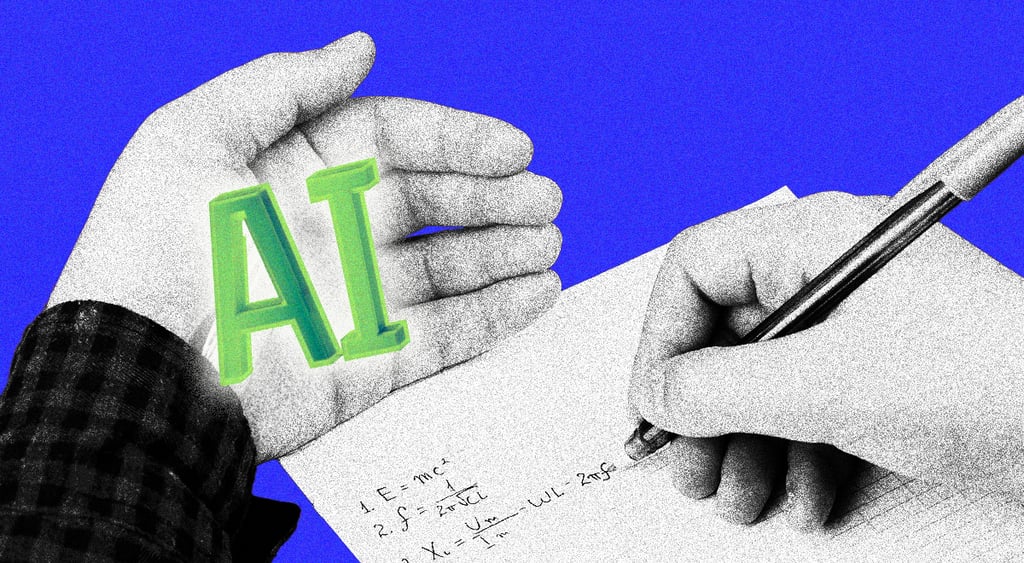
Image by Cybernews.

 Follow us
- Anthropic has started adding machine-readable watermarks to Claude-generated content to meet EU AI Act requirements.
- Some Claude users argue the labels could stigmatize people who use AI for writing, studying, or work.
- Supporters say watermarks help identify AI-generated output and reduce misuse in schools, hiring, journalism, and research.
Key Takeaways by nexos.ai, reviewed by Cybernews staff.
Some AI power users who secretly use chatbots for work or study are mad that Anthropic has started adding machine-readable watermarks to Claude-generated content. Thankfully, the humans of the internet are mocking such complaints left, right, and center.
Anthropic is now watermarking AI-generated content to clearly show it’s been synthetically created or manipulated to comply with the EU AI Act’s rules. The watermarks will eventually be rolled out worldwide.
We’ll have to see how this works, but EU regulators are happy. The AI power users, however, are upset – and they’re telling the world about it.
One of the more impressive Reddit posts by a user named visionode bizarrely claims that Anthropic’s move – actually just responding to regulatory pressure – is a conspiracy to punish poor serial prompters.



The post – which itself sounds weirdly AI-generated – says that while smart users will find a way to avoid getting caught, most won’t. Somehow, this means that Anthropic has served the world a piece of elitism.
Who will get caught? You. The student who used Claude to reorganize a paragraph. The journalist who asked the AI to summarize a 200-page transcript. The writer who had a creative block and asked for synonyms. Those guys come out of the process with a digital tattoo on their forehead,Visionode, a Reddit user, posted.
The user is correct elsewhere in his post, however. Indeed, if a watermark is detected, this doesn’t necessarily mean the entire text, image, or file is AI-generated – it may have just been processed by Claude, Anthropic has acknowledged.
Quite obviously, though, simply using AI to generate a summary of a transcript is something entirely different than copying and pasting the chatbot’s output into your article. This is plainly unethical – as is, for instance, using Claude’s content in an essay.
But visionode is also worried about something else: “And the stigma. Jesus, the stigma. Imagine sending a résumé and the company detects: ‘Oh, this guy used AI.’ Imagine handing in a dissertation, and your advisor sees the little red flag. We're creating a caste of ‘dirty’ creators. People who dared to use a tool.”
Has your password leaked?
Well, the problem is real, though. Does any company really want to hire an individual who can’t even write up a résumé by themselves? Do we trust a scientist who has generated their dissertation?
AI-powered cheating is, truthfully, off the scale these days. Just last month, a Brown University professor saw his students’ midterm scores significantly drop when he changed the exam to an in-person test where AI couldn’t be used.
Additionally, a 2025 survey of Princeton University seniors found that 27.7% admitted to using ChatGPT when it was not allowed, up 12.5% from the Class of 2024.
The humans of Reddit aren’t having it. One user posted: “I don’t even have to detect a watermark to know this post is copied and pasted straight out of the chatbot,” and another simply stated: “My gosh. Take a deep breath.”
But there’s more. Another Redditor called the watermarks “unethical” and “disgusting,” actually claiming that using Claude alone is most of the work.
“I gave the instructions, context, decisions, and countless refinements – Claude was the tool. If Claude starts watermarking the code or anything else it generates, what exactly is it claiming credit for?” said the poster.



Stay updated with our latest stories and follow us on social media
Be the first to discover new stories, ideas, and updates from our team.
Another Redditor immediately retorted, though: “It’s not claiming credit, though. It’s about being able to detect AI-generated outputs because of the risks AI-generated outputs can cause in various situations.”
And yet another user calmly explained: “You own the things you create with Claude and can declare they are your own work without an issue. Others are just able to see what you used (in this case, Claude) to create it. The only thing is that you can’t claim you created something by hand that is AI-generated.”
