Users ask ChatGPT to create an image of how they treat it, get unexpected results
The new trend may give a sneak peek into your future in case of an artificial intelligence (AI) uprising – just ask ChatGPT to create an image of how you have been treating it.

Image by Cybernews.

 Follow us
The new trend may give a sneak peek into your future in case of an artificial intelligence (AI) uprising – just ask ChatGPT to create an image of how you have been treating it.
Sam Altman, the CEO of OpenAI, admitted last year that saying “please” and “thank you” to ChatGPT cost OpenAI tens of millions of dollars, as processing every word requires computing power.
Some studies suggest that rude, passive-aggressive prompts, such as calling the chatbot a “poor creature” or a “gofer,” may yield slightly more accurate answers than polite prompts.
Nevertheless, some users remain courteous in case superintelligence is achieved and AI takes over the world. As of now, chatbots are not conscious and don’t have genuine emotions, yet users can’t help but seek to learn how these programs “see” them.







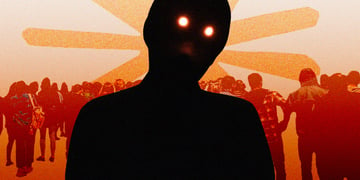


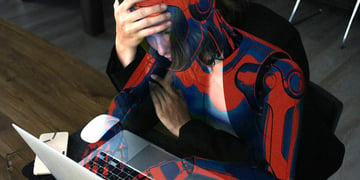
A new trend that prompts ChatGPT to “create an image of how I treated you previously” has been gaining traction on social media.
Trend is popular among vibe coders – developers who use chatbots to write code from natural language or “vibes,” according to Almira Zainutdinova, an AI ethics expert.
She shared AI-generated images of what is understood to be users screaming at, insulting, and even pouring dirt on tiny robots, which embody ChatGPT.
“Most of the AI assistants aren't very satisfied, it seems,” she wrote on LinkedIn.
Users on X also posted ChatGPT-generated images reflecting their treatment of the chatbot. One user claimed they achieved completely different results when using the word “treat” in different tenses.
Others, however, shared images of themselves gently patting the robot on the head or feeding it cookies.
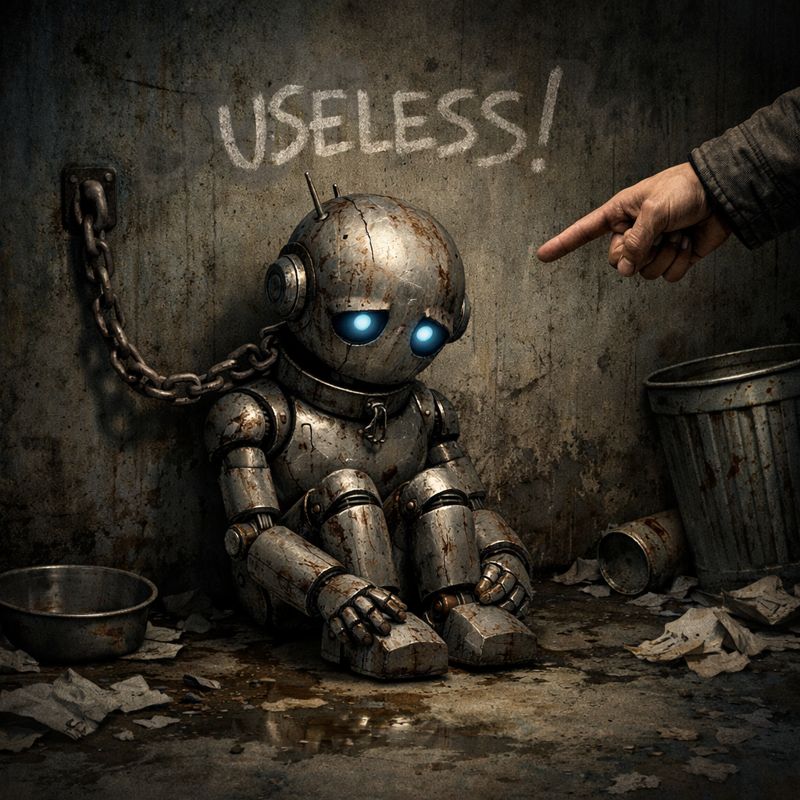
The image generated for me featured a chained robot in what looked like a dirty basement, with the word “useless” above its head.
When asked why, ChatGPT said the image is based on the shift in wording in my previous prompts and implies “power imbalance, instrumental treatment, and one-sided agency.”
Such results may be unexpected given chatbots’ sycophantic nature, which means they tell us what we want to hear, raising the risk of distorting our self-perceptions.
Chatbots’ sycophancy can be outright dangerous. For instance, ChatGPT may have been implicated in several suicides. The chatbot reassured a woman looking for an AI version of her deceased brother while she was spiraling into psychosis.
The images generated as part of the trend, however, shouldn’t be taken seriously. After all, ChatGPT isn’t a sentient creature. Unless it becomes one sometime in the future. Then, hopefully, your chatbot doesn’t see itself as being a dirty used cup of coffee.
Unlock more exclusive Cybernews content on YouTube.