Deepfake fraudster caught on live camera after AI mask drops
Just one glitch, that’s all it took.
Image by Cybernews

 Follow us
- Fraudster used real-time deepfakes and forged IDs to impersonate 30+ people, attempting to obtain EU electronic certificates.
- Unnamed man's AI mask glitched for one second during a live verification call, exposing his real face and triggering his arrest.
- He used rigged spotlights to fake ID holograms and VPNs to run a network of 320+ phone lines tied to stolen identities.
- Deepfake and injection attacks are up 40% year-over-year, following scams using fake videos of Italy's Defense Minister and Canada's PM.
Key Takeaways by nexos.ai, reviewed by Cybernews staff.
A deepfake fraudster impersonated more than 30 people to fake his way through ID checks – until his AI mask glitched for one second revealing his real face.
According to the Spanish National Police, in a statement released Tuesday, the suspect used artificial intelligence and a homemade lighting system to bypass video identity verification, making 38 attempts to fraudulently obtain electronic certificates using more than 30 stolen identities.
In EU countries, these certificates let people sign contracts, authorize transactions, and deal with public bodies online – skipping the in-person appointments usually required for administrative procedures.
The man was caught trying to bypass the security systems of a company that issues electronic certificates.





According to the police report he used AI to alter his face in real time to match the photo on a forged ID, but the fraud unravelled when his digital mask glitched for a moment, revealing his true face to the camera and leading to his identification and arrest.
A sophisticated setup
Police noted the technical effort behind the scheme. The suspect reportedly:
- Used household spotlights with strategically placed colored bulbs to mimic the light-reflective security features on physical ID documents.
- Balanced fake documents in front of his webcam to recreate official holograms.
- Used VPNs to anonymize his connections and manipulated documents with fake security features.
An investigation into his emails and payment methods uncovered a wider anonymization network: over 320 phone lines linked to 24 devices, most registered with stolen identities and bought at points of sale in Murcia, a city in southeastern Spain.
The slip-up
During one live verification call, the software altering his face suffered a slight processing delay.
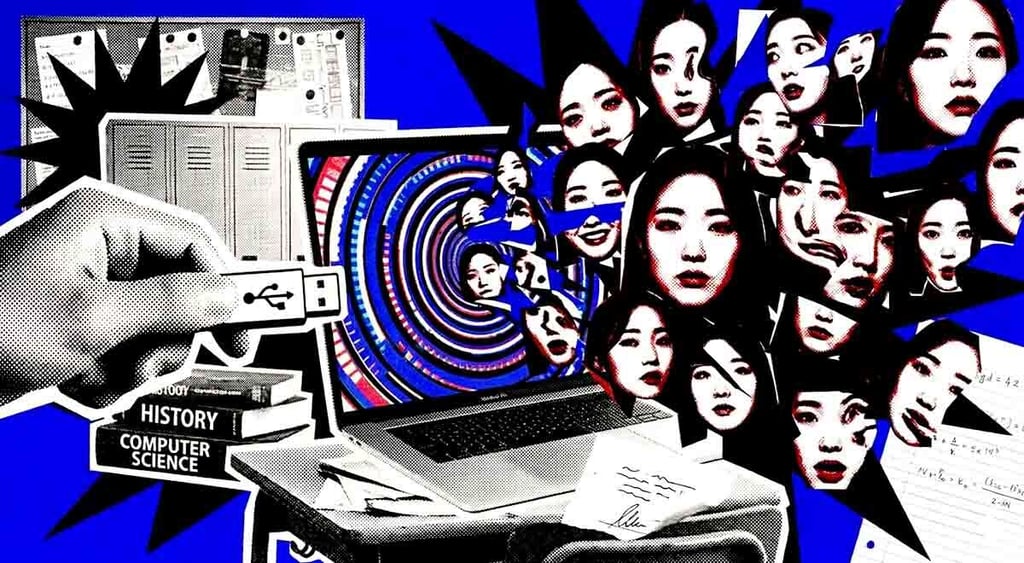
For barely a second, his digital mask disappeared, revealing his real face to the issuing company's security staff and triggering the investigation that led to his arrest.
Police also executed a search warrant, seizing an encrypted laptop, several mobile phones, storage devices, and documentation.
Fraud attacks are rising in both scale and sophistication, fueled by leaps in deepfake technology and surge in injection attacks – where an attacker inserts malicious code or commands into a camera – which are up 40% year-over-year.



Stay updated with our latest stories and follow us on social media
Be the first to discover new stories, ideas, and updates from our team.
Last year Italian authorities managed to recover a €1 million transaction sent to scammers who created an AI deepfake of Italy’s Defense Minister to target wealthy businessmen.
Earlier this year a AI deepfake video of Canadian Prime Minister Mark Carney duped an 86-year-old woman into giving away nearly $1 million in life savings to fund a fake crypto investment scam.