How India is using AI to advance its military
AI is emerging as a key force multiplier for India as it prepares for the next generation of warfare. From real-time battlefield awareness during its recent Operation Sindoor to AI-driven logistics and predictive maintenance, the nation’s military is rapidly integrating AI into its strategic and tactical core.

 Follow us
AI is emerging as a key force multiplier for India as it prepares for the next generation of warfare. From real-time battlefield awareness during its recent Operation Sindoor to AI-driven logistics and predictive maintenance, the nation’s military is rapidly integrating AI into its strategic and tactical core.
Artificial Intelligence (AI) has swiftly moved from being a buzzword to a battlefield reality for countries worldwide, and India is no exception.
According to military strategists and defense analysts, the next war will be about systems of systems, and AI will provide the connectivity and intelligence needed to turn a collection of disparate systems into a cohesive, coordinated force.
"AI will enhance battlefield awareness and decision-making at the tactical level in a complex battlefield environment. At the strategic level, threat perception will turn to threat detection, thus reducing the element of surprise and better utilization of available resources," says Lt. Col. Abhaya Mahajan (Retd.) in an email exchange with Cybernews.
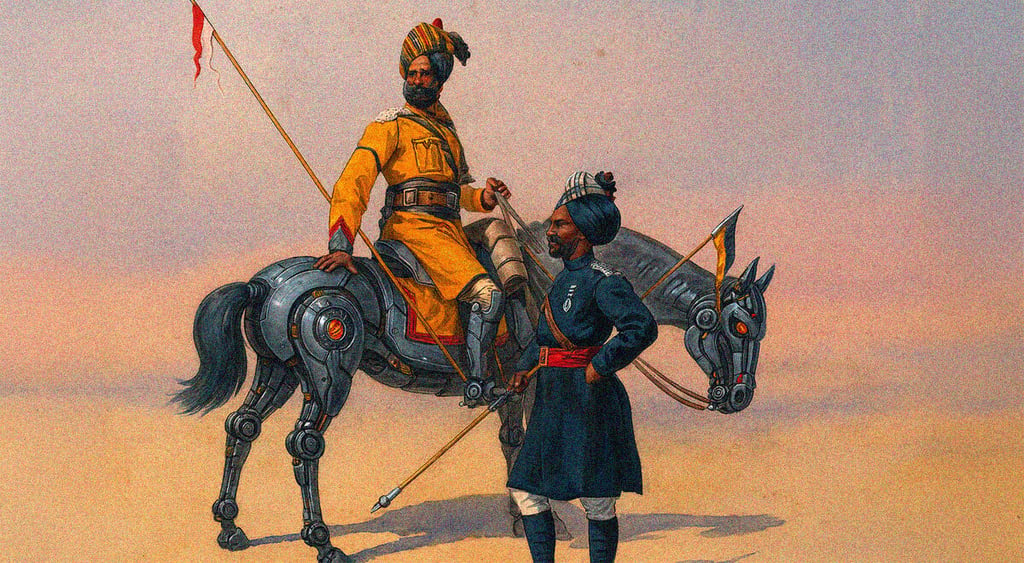
Lt. Col. Mahajan who has served as the 2IC (2nd In Command) at Skinners Horse, one of India’s oldest armoured regiments, believes [India’s] defense modernization and security strategy is going to be built around AI in the future.





"Integration of AI will act as a deterrent initially. However, in case a conflict does break out, then the application of AI from tactical to strategic levels will enhance the response in terms of time, resources, and application of weapon systems," asserts Lt. Col. Mahajan.
Building an AI-enabled ecosystem
India’s adoption of AI in defence has slowly been moving from policy documents to operational platforms. According to experts, over the past few years, the Indian military has been integrating AI into operations, logistics, and decision-making.
In fact, as per an India Strategic report, the Indian government has allocated INR 100 crore (about $11.3 million) to military AI projects from its INR 6.81 lakh crore (about $77.5 billion) defence budget for FY 2025-26.
“Indian Armed Forces, always a forerunner in putting technology to use, wasted little time in setting respective centres for AI integration to its needs,” says Cdr. JS Minhas (Retd.) in a chat with Cybernews.
Former maritime reconnaissance pilot Cdr. Minhas shares that all three services have set up their respective Centers for Research and Incubation Excellence.
India’s Ministry of Defence formally embraced AI in 2019 with the formation of the Defence AI Council (DAIC) and the Defence AI Project Agency (DAIPA). They were tasked with guiding and implementing an AI strategy across the three services.
At the forefront of actualizing the strategy is the Centre for Artificial Intelligence and Robotics (CAIR), a Defence Research and Development Organisation (DRDO) lab, which has since been developing autonomous systems, cybersecurity solutions, and AI-assisted reconnaissance technologies.
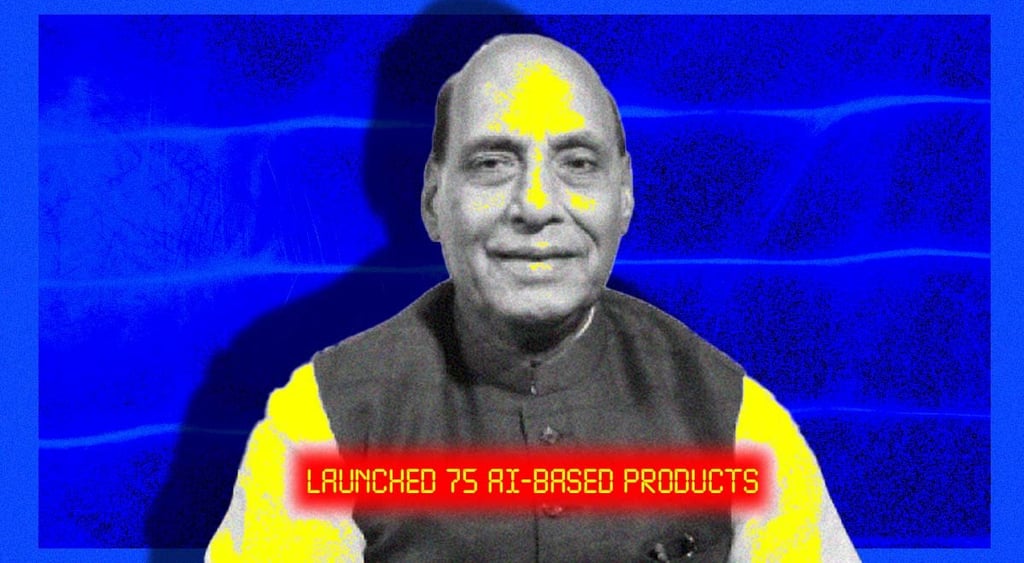
In July 2022, India’s defence minister Rajnath Singh launched 75 AI-based products at the first-ever AI in Defence symposium in New Delhi, calling AI a “revolutionary step in the development of humanity” and urging its “democratic use for peace and security.”
These products ranged from autonomous vehicles and predictive maintenance systems to AI-enabled monitoring and speech recognition tools, developed jointly by DRDO, Defence PSUs, startups, and academia.
AI in Action
India put its AI capabilities to the test during May 2025’s Operation Sindoor, its cross-border mission against terrorist infrastructure.
“AI was extensively used for multi-sensor data fusion and real-time intelligence during Operation Sindoor,” shared Lt. Gen. Rajiv Kumar Sahni, who was the Director General of Information Systems during the operation, with the Times of India.






He added that the Army deployed as many as 23 AI-driven apps for everything from intelligence analysis and predictive modelling to weather forecasting.
He specifically mentioned the use of the Electronic Intelligence Collation and Analysis System (ECAS), which helped identify and prioritize critical threats. Then there was the Trinetra platform, integrated with Project Sanjay, which offered a unified operational view, enhancing coordination, situational awareness, and decision-making.
Commenting on the use of AI in the operation, Cdr. Minhas says that based on the information in the public domain, it appears these AI systems helped provide commanders with real-time battlefield awareness, reducing human workload and enhancing decision speed.
"AI, with its unlimited ability to handle data, is aggressively deployed in the assimilation of both strategic and tactical pictures for better situation awareness and understanding of the Commander. Input of retaliatory weaponry and other means helps him arrive at the optimal solution to an evolving scenario," shares Cdr. Minhas.
Following Operation Sindoor, the Army has accelerated its AI roadmap for 2026-27, reports the Indian Express. Key areas it’ll focus on include drone swarming, combat simulation, and predictive maintenance. The roadmap includes deploying large language model-based text summarizers, AI chatbots, and facial recognition systems to streamline intelligence and logistics processes.
The plan also calls for embedding AI into the General Staff Qualitative Requirements (GSQRs), which specify the technical specifications for new defense procurements. This will help ensure that future weapons and systems are AI-ready.
All things considered, Cdr. Minhas believes the Indian Military has transitioned from a digital-enabled to an AI-enabled force.
"With growing comfort in the deployment of AI, and as output of the research and incubation centers of the three services, it is only to be expected that AI will go much further in adding punch to the joint military might of the nation,” he concludes.
Unlock more exclusive Cybernews content on YouTube.