Another billionaire announces the arrival of AGI, says it is not “evenly distributed”
Silicon Valley venture capitalist Marc Andreessen has announced the arrival of general artificial intelligence (AGI).
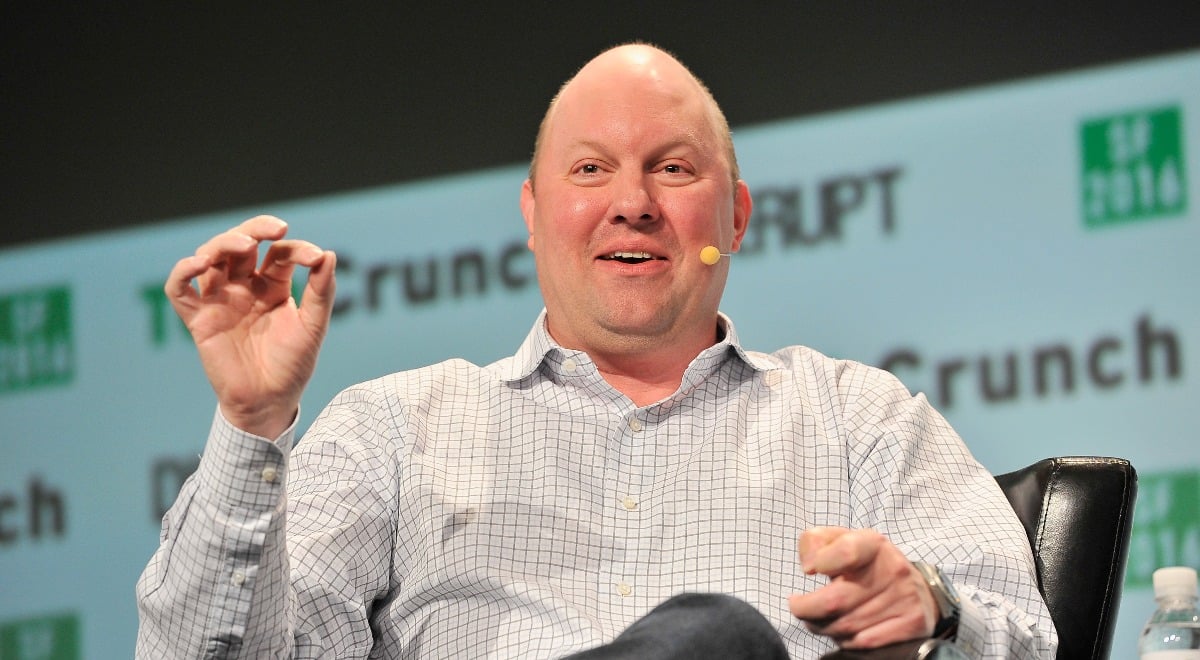
Image by Steve Jennings/Getty Images for TechCrunch

 Follow us
Silicon Valley venture capitalist Marc Andreessen has announced the arrival of general artificial intelligence (AGI).
“I'm calling it. AGI is already here – it's just not evenly distributed yet,” Andreessen wrote on X.
In his post, which garnered over 2 million views, Andreessen didn’t elaborate on the definition of AGI or provide any evidence.
Andreessen is a cofounder and general partner at the venture capital firm Andreessen Horowitz and a pioneer of the early internet. He co-authored the first widely used web browser, Mosaic, and co-founded Netscape.












The post attracted both criticism and praise from industry insiders, with proponents suggesting that 2025 was the year of AI emergence.
However, Lars Christensen, CEO and head of analysis at PAICE, a Danish AI advisory firm, called Andreessen’s claim “bullshit.”
Peter Wilderfordus, a head of policy at advocacy, the AI Policy Network, wrote that just because AI is smarter, it “doesn’t mean it is AGI.”
AGI is a loosely defined term to describe superintelligence that matches or surpasses human capabilities across most, if not all, intellectual tasks.
Currently, there’s no consensus among scientists on when – or whether at all – AGI can be achieved.
However, CEOs of technology companies developing AI have repeatedly claimed that superintelligence is either here already or just around the corner.
The Cybernews community is talking about this. Be a part of the conversation.
CEO of Nvidia Jensen Huang recently said that AGI was already achieved, when described as a system able to do his job – to start, run, and grow a successful technology company that is worth more than a billion dollars.
OpenAI co-founder and president Greg Brockman said in early April that he believed that AGI would be developed within the next couple of years, meaning that AI will be utilized “for any intellectual task of how you use your computer.”
Whether superintelligence or just generative AI, the technology is concentrated in the hands of several major companies – OpenAI, Anthropic, Amazon, and Google’s Alphabet, with Nvidia as a major hardware supplier.
Amid rising concerns over AI oligopoly, OpenAI CEO Sam Altman recently faced major backlash for predicting that, in the future, intelligence will be a utility, like electricity or water, and that people will buy it from his company “on a meter.”
Unlock more exclusive Cybernews content on YouTube.