Meta employee rallies troops to help protect their privacy, while still working for data hungry giant
An internal chat from inside Meta has gone viral after one employee attempted to start an uprising over the use of surveillance software in Mark Zuckerberg’s offices.

Image by Shutterstock.

 Follow us
An internal chat from inside Meta has gone viral after one employee attempted to start an uprising over the use of surveillance software in Mark Zuckerberg’s offices.
- Meta is tracking its UK and US employees’ mouse movements, clicks, keystrokes, and taking screenshots under the guise of training its AI.
- One employee protested this in internal Meta chats, believing that their privacy is being violated while still working for a company that collects a massive amount of user data.
- Meta CEO Mark Zuckerberg defends the use of surveillance software, arguing that Meta’s AI needs to learn from its above intelligence employees.
- These highly intelligent employees are also being laid off, as 10% of the company will be fired and 7,000 employees will be reassigned to AI-related initiatives.
A Meta employee, outraged by Zuckerberg’s idea to enforce workplace surveillance on employees to train its AI model, has attempted to rally their colleagues.
The employee declared that they “don’t want to live in a world where humans, employees, or otherwise, are exploited for their training data.”
While understandable, this employee-wide protest seems tone deaf, given that the person is working for a tech company that popularized data collection, so they could do whatever they wanted with it.






“Selfishly, I don’t want my screen scraped because it feels like an invasion of my privacy,” the employee wrote in an internal chat seen by Wired.
While fair enough, this is indeed selfish, as the employee is seemingly happy to have Meta scrape data from the recesses of their app, may it be Instagram, Threads, or Facebook, to sell to advertisers and use to train their AI models.
It would be interesting to know whether this employee uses any Meta services, as this issue would be largely moot, as the company they work for is already scraping their personal information daily.

Meta isn’t exactly known for its commitment to user privacy
Meta has also never been a champion of protecting people’s personal information, what with data breaches and illegally tracking users.
It does make you wonder, what are they viewing on the company computer that they wouldn’t want their employer to see?
Meta simply wants to know how users really interact with tech so that it can train its AI accordingly, or so it says.
The tech giant uses tracking software on US and UK employees to capture mouse movement, clicks, and keystrokes.

Meta claims to use its surveillance software for AI training
The tool, Model Capability Initiative, will capture activity in work-related apps and websites, while taking infrequent screenshots of employees’ screens.
This falls under the guise of training AI, as Meta wants its own tools to perform work tasks autonomously.
“This is where all Meta employees can help our models get better simply by doing their daily work,” the memo said.
So, could you even call this workplace surveillance?
Secret audio raises fresh concerns for Meta employees
The media has also reported an alleged secret recording from inside Meta, which is supposedly raising new concerns surrounding employee surveillance.
The clip, which has since gone viral, shows Zuckerberg defending the use of workplace surveillance software in the name of AI training, according to NDTV.
While the legitimacy of this audio recording can’t be confirmed, as users are unclear whether it’s real or an audio deepfake, Zuckerberg allegedly claims that Meta’s AI needs to learn by watching smart Meta employees do their jobs.
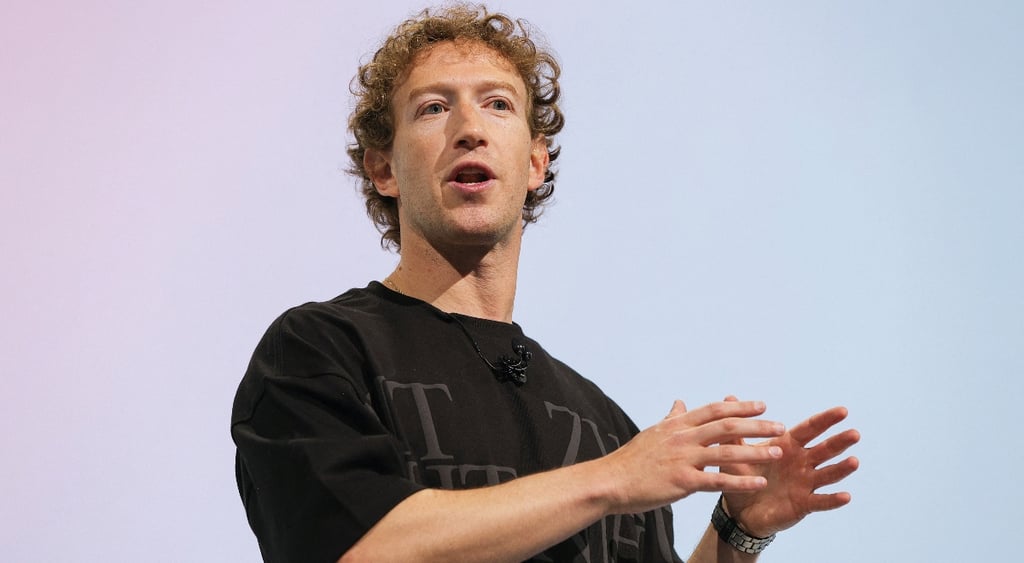
Meta employees’ big brains won’t save them from AI
Zuckerberg has boasted that the average intelligence of his employees is “significantly higher than the average set of people that you can get to do tasks,” according to Futurism.
However, the master behind Meta has also sacked his intelligent employees in favor of cheaper, faster, and less emotional labor.
Meta Chief People Officer Janelle Gale told employees the company plans to move 7,000 employees to new initiatives related to AI workflows and to eliminate managerial roles.
A whopping 10 percent of its intelligence will potentially become artificial, as Meta’s shift to an AI-first organization means the “Great Flattening” is no longer a concept, but a reality.






Unlock more exclusive Cybernews content on YouTube.