Nobel literature prize winner says she uses AI in creative process, calls it “beloved”
Nobel prize winner Olga Tokarczuk caused a major stir in the literary world by admitting she uses AI in the creative process.
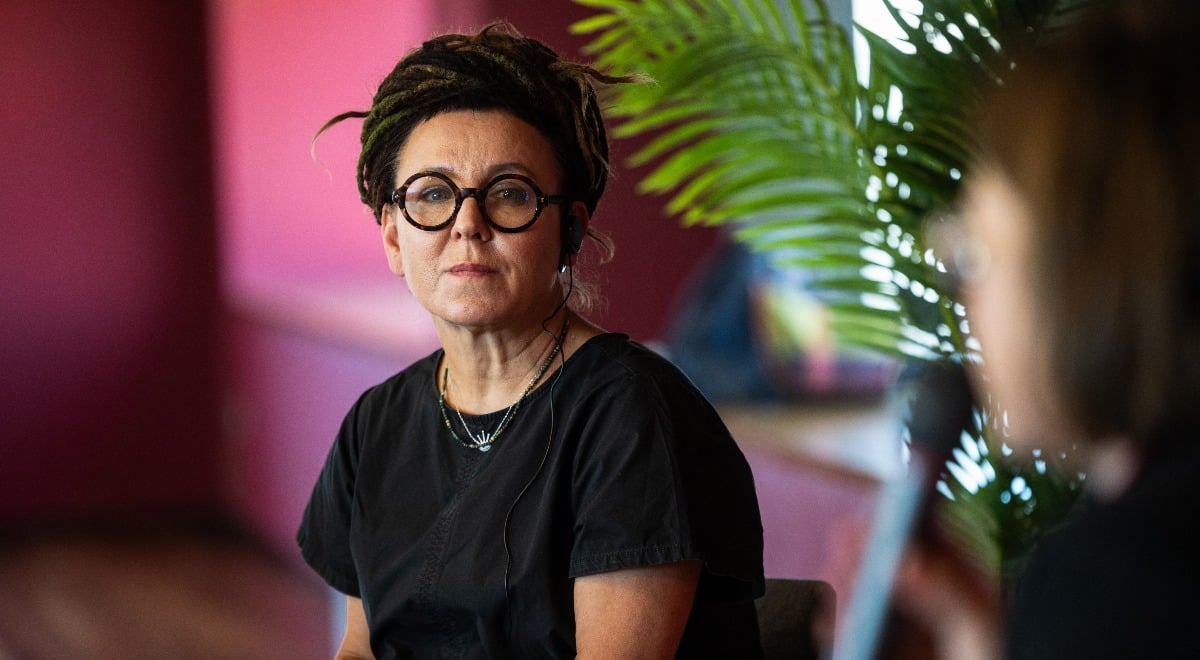
Image by Lorena Sopena/Europa Press via Getty Images

 Follow us
Nobel prize winner Olga Tokarczuk caused a major stir in the literary world by admitting she uses AI in the creative process.
Tokarczuk is an acclaimed Polish writer who won the Nobel Prize in Literature in 2019 “for a narrative imagination that with encyclopedic passion represents the crossing of boundaries as a form of life,” according to the Nobel committee.
Therefore, Tokarczuk’s claims that she purchased “the highest, advanced version of one language model” and was “in deep shock” over how “fantastically it expands horizons and deepens creative thinking,” surprised both her fans and literary critics.
Speaking at the Impact conference in Poznań, Tokarczuk revealed she sometimes refers to the chatbot as “kochana” – the Polish word for “beloved” – and turns to it for advice on how to “beautifully develop” something, according to TVP World.











“When writing my latest novel… I asked this advanced model what kind of songs my protagonists would be listening to at a dance, a few dozen years ago, and it gave me a few titles,” Tokarczuk is quoted as saying.
She called the technology “an asset of truly unbelievable proportions” in fluid literary fiction.
Tokarczuk’s remarks have attracted harsh criticism from the literary community, with some commentators even calling for stripping the writer of her Nobel prize. Journalist Miłosz Wiatrowski-Bujacz accused Tokarczuk of falling into “AI psychosis.”
This prompted an official statement from the writer herself, in which she emphasized treating AI as a tool that enables “faster documenting and checking of facts.” She said she always verifies information when using AI.
“None of my texts, including the novel that will appear in Polish this fall, has been written with the help of artificial intelligence – except for using it as a tool for faster preliminary research,” Tokarczuk wrote in a Facebook post.
AI is drying up writers’ income
While most of Tokarczuk’s books and her Nobel Prize predate the generative AI era, making much of the criticism unfounded, AI is causing major concerns among writers.
A 2025 survey found that 39% of novelists report that their finances have already
taken a hit from generative AI, as technology has dried up other sources of income, such as copywriting or translation.
More than half (51%) of published novelists said they believed AI would entirely replace their work as fiction writers. At the same time, their work is being used to train models without their consent or compensation.
The growing use of generative AI is also driving a surge in low-quality, sham “books” on the e-commerce platform Amazon. According to the Authors Guild, every new anticipated high-profile book has one or more scam books appear within a couple of days of its release.
The organization states, “Previously, scammers had to at least pay human writers (often based in foreign countries) to produce these low-quality ‘books’ meant to steal sales. Now they can churn out the content instantly at virtually no cost using AI.”
Nevertheless, Tokarczuk isn’t the only critically acclaimed author who openly talks about using AI in the creative process.
Japanese novelist Rie Kudan, who won the prestigious Akutagawa Prize in 2024, said that about 5% of her award-winning novel was written directly by ChatGPT.
Unlock more exclusive Cybernews content on YouTube.