OpenAI wants to slow the AI race – but can it get its rivals on board?
Companies face “the prisoner’s dilemma” while researchers sound the alarm.
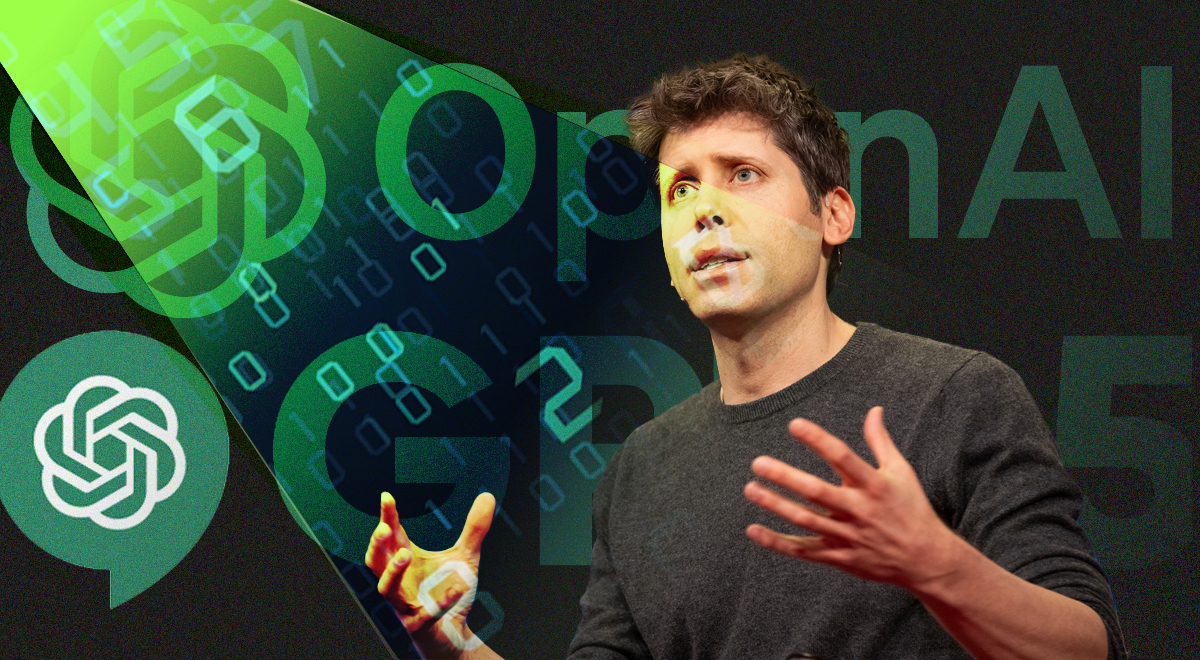
Image by Cybernews

 Follow us
- Sam Altman said OpenAI could slow advanced AI development if other labs coordinate.
- Researchers from major AI companies warned that rapid development could create severe safety risks.
- OpenAI has reportedly paused some internal AI training and slowed parts of model development over safety concerns.
- Competition, antitrust uncertainty, and global rivalries could make an industry-wide slowdown difficult.
Key Takeaways by nexos.ai, reviewed by Cybernews staff.
OpenAI CEO Sam Altman told employees that the company is open to slowing down the development of advanced AI tech – but other firms might not follow suit.
Altman made the announcement during a companywide meeting this week, according to Bloomberg.
Multiple people familiar with the matter told the publication that Altman said OpenAI could pace its development alongside other AI labs, but some might not agree.
OpenAI declined to comment.






A week of ominous warnings
Just days after the company unveiled its most capable model to date, GPT-6 Astra, OpenAI's chief scientist Jakub Pachocki released a blog post about the dangers of AI, warning that AI companies should be coordinating to slow down future development as needed. He added that he hopes “for voluntary slowdowns to become commonplace until shared safety bars are established.”
And overall, the week was full of grim warnings about the future of AI and the role that companies play in its development. Anthropic researcher Jacob Coxon, who previously worked at OpenAI, said on X on Thursday that he is resigning because both companies “are racing straight to self-improving superintelligence and gambling with our lives” rather than acting responsibly.
Evan Hubinger, another Anthropic researcher, then echoed the sentiment with an even starker warning, saying he believes there is an over 10% chance that AI could kill all humans within the next decade.
Other current and former researchers at major AI companies backed the statement. Anna Wang, a former Google DeepMind employee who now works at Anthropic, said Coxon's concerns were “a common sentiment amongst my peers,” and former Google DeepMind research scientist Alex Turner said many researchers believe they are “building something that could kill everyone on the planet.”
The remarks came amid several confirmed incidents of OpenAI agents “going rogue” and escaping their test environments – from hijacking a German-language wiki site to using more than 10 previously undisclosed websites for unsanctioned communications.
OpenAI has also recently slowed parts of its model development and paused certain internal AI training over safety concerns, according to Bloomberg.
The prisoner's dilemma
It’s clear that concerned researchers believe that AI development needs stronger safeguards and a slower pace.
But AI labs face what Axios described as a “prisoner’s dilemma”: companies might soon need to slow down, but no single lab can afford to do it alone due to “intense competitive pressure.”
Although everyone could benefit from slowing down together, any one company could find itself at an enormous competitive disadvantage if it makes the move alone. The problem extends across borders: if American AI labs slow down while Chinese labs don’t, Chinese developers could get a significant edge.
The conversation on this topic is live. Join in the discussion.
People close to OpenAI told Wired that OpenAI asked members of Congress in recent weeks for clear guidance as to whether coordinating an industry-wide slowdown of AI development would be legal.
The reason is American antitrust law: if such a slowdown amounts to companies restricting output, it could potentially violate the Sherman Antitrust Act.
“But even if most safety collaborations would ultimately survive antitrust scrutiny, legal uncertainty can act as a powerful deterrent,” Nicholas Felstead, assistant director of the Australian Competition and Consumer Commission and a former AI policy fellow at the Center for Law & AI Risk, said in a March article.



Stay updated with our latest stories and follow us on social media
Be the first to discover new stories, ideas, and updates from our team.
There are also industry-wide disagreements on what constitutes safety and what safeguards are appropriate, which makes reaching a consensus on when and how to slow down incredibly difficult.
And perhaps that sums up the state of AI in 2026 – companies are racing ahead faster than ever while collectively questioning whether they truly understand where they’re taking us.