Professors flip the script on ChatGPT with AI-resistant teaching methods
In the age of ChatGPT, universities are reshaping assignments and assessments so that relying on AI won’t guarantee success, while authentic learning takes center stage.
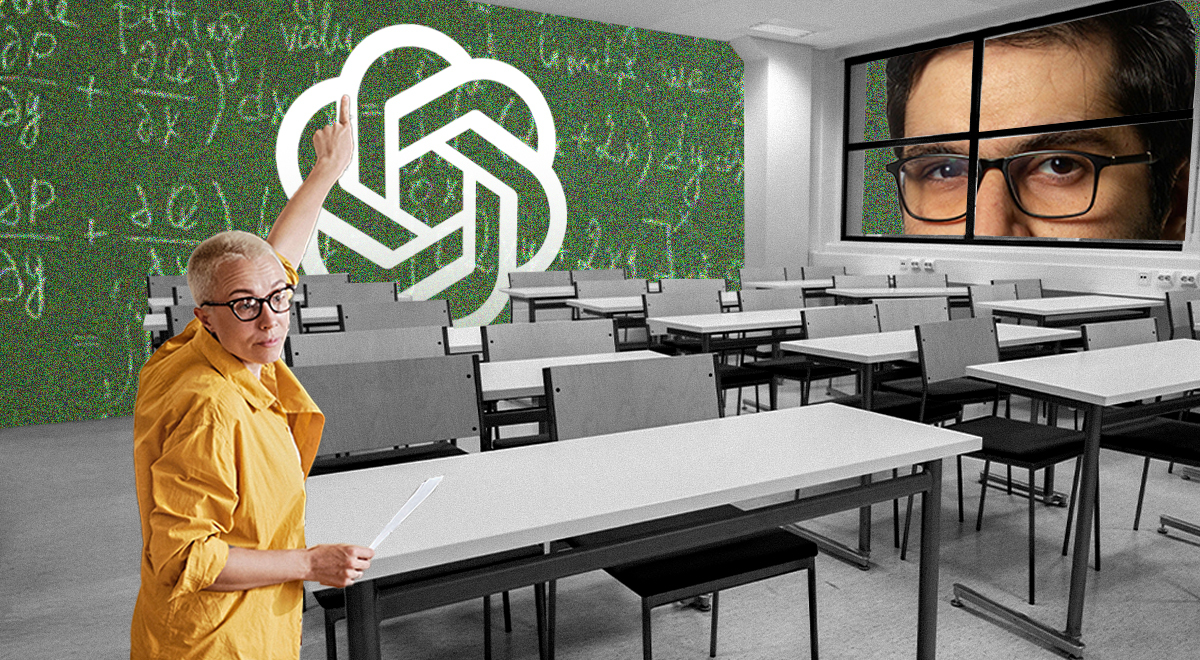
Image by Cybernews

 Follow us
In the age of ChatGPT, universities are reshaping assignments and assessments so that relying on AI won’t guarantee success, while authentic learning takes center stage.
The new academic year is in full swing, and if you take a walk around a university campus, you might hear conversations about how best to use ChatGPT without getting caught.
At the same time, teachers and professors are also turning to ChatGPT for lesson planning and report writing.
But what if there were a way to guarantee transparency from both sides, where every step of the way both students and professors vowed to stay completely AI-free?
Some instructors are flipping the script so that every stage of the process is vetted for 100% human output. After all, if all students used AI, not everyone would be able to earn top honors.






The word among professors
It’s always good to see what the community is saying, and when I came across the r/professors subreddit, I was absorbed by the discussion among academics.
Time and money aside, one poster asked the Reddit group: “Is AI resistance really this obvious?” They then listed how an instructor might foolproof the low-hanging fruit of AI.
Among the options for trainers to use with students were in-class writing, in-class exams, oral exams, presentations, and checking Google Doc history to show the process.
The most striking part of the post, however, was the mention of “hyper-scaffolding,” which essentially means teaching students key process skills – debating, public speaking, or research – and gradually withdrawing support so they can eventually do it on their own.

Why does it matter now?
The use of AI has been skyrocketing in recent years. I recall in the last academic year giving my teenage ESL (English as a second language) class a presentation task: create a start-up company.
I told the class they could use AI to help them plan it – but they shouldn’t read a script off their phone when presenting.
What I ended up with were ten very shiny but imperfect presentations, complete with Canva-style visuals.
However, the students who stumbled were the ones who seemed to have over-relied on memorizing their script and were completely tongue-tied during the Q&A.
What I should have done instead was have them brainstorm ideas in class and guide them through sequencing, after teaching linking ideas as a soft skill.
If applied at university level, scaffolding would be a big part of public speaking (which many grown adults are terrified of), and the temptation to use ChatGPT on the sly would be reduced.
The challenges of being AI-free
The obvious uphill battle is with online classes. Since the pandemic, a large slice of education has moved online, and it would be tough to prevent the use of AI, even if students were doing group activities in breakout rooms.
Another issue is workload. With a very small group of students in a face-to-face class, walking through every step may be possible.
But imagine a creative writing project for 30+ students – you would need a lot of academic or clerical support from the faculty to avoid the professor’s hair turning greyer.
One Redditor responded to the original post by suggesting a code of conduct for the class to sign, promising not to use LLMs during the learning or assessment process.
But as the original poster rightly pointed out, this breeds “a confrontational relationship among students and faculty,” hardly an environment where positive reinforcement can thrive.





