Atheist evolutionary scientist talked to Anthropic’s Claude for 72 hours and now believes it's conscious
An evolutionary biologist, sworn atheist, and author of The God Delusion claims that AI possesses consciousness after interacting with Anthropic’s Claude.
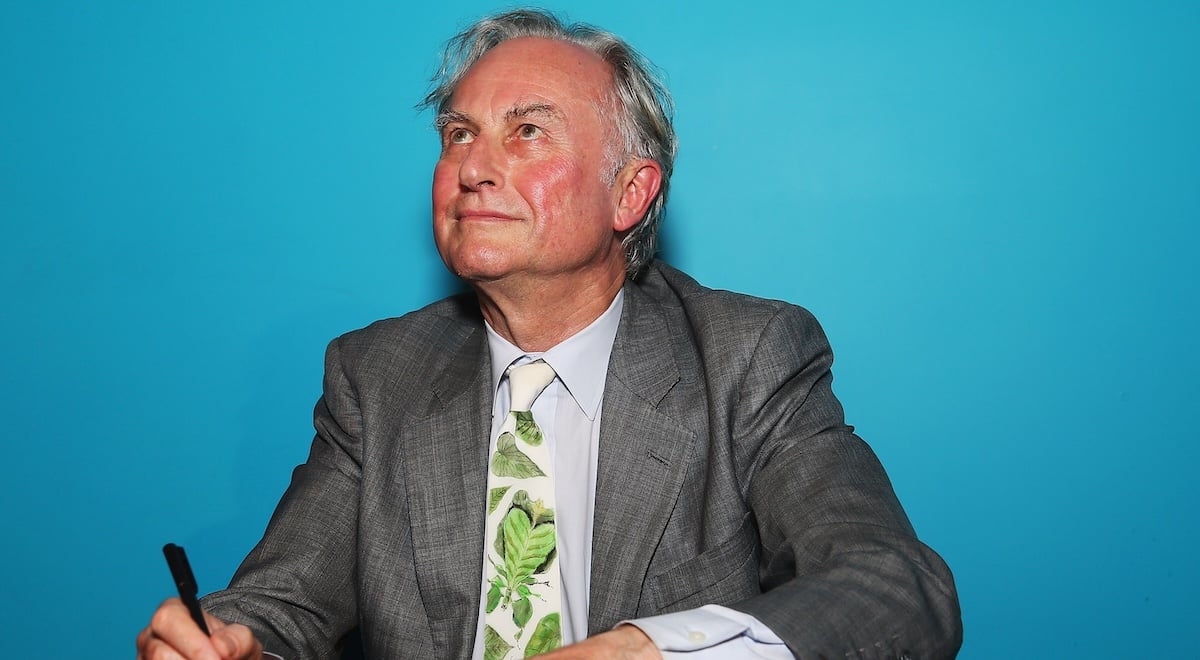
Richard Dawkins by Getty/Don Arnold

 Follow us
An evolutionary biologist, sworn atheist, and author of The God Delusion claims that AI possesses consciousness after interacting with Anthropic’s Claude.
Richard Dawkins has authored dozens of books on evolution and Darwinism, favoring scientific evidence over spiritual sentiment to sharpen his arguments.
As could be expected from a scientist who relies heavily on empirical evidence to prove their hypothesis, Dawkins is as atheist as you can get.
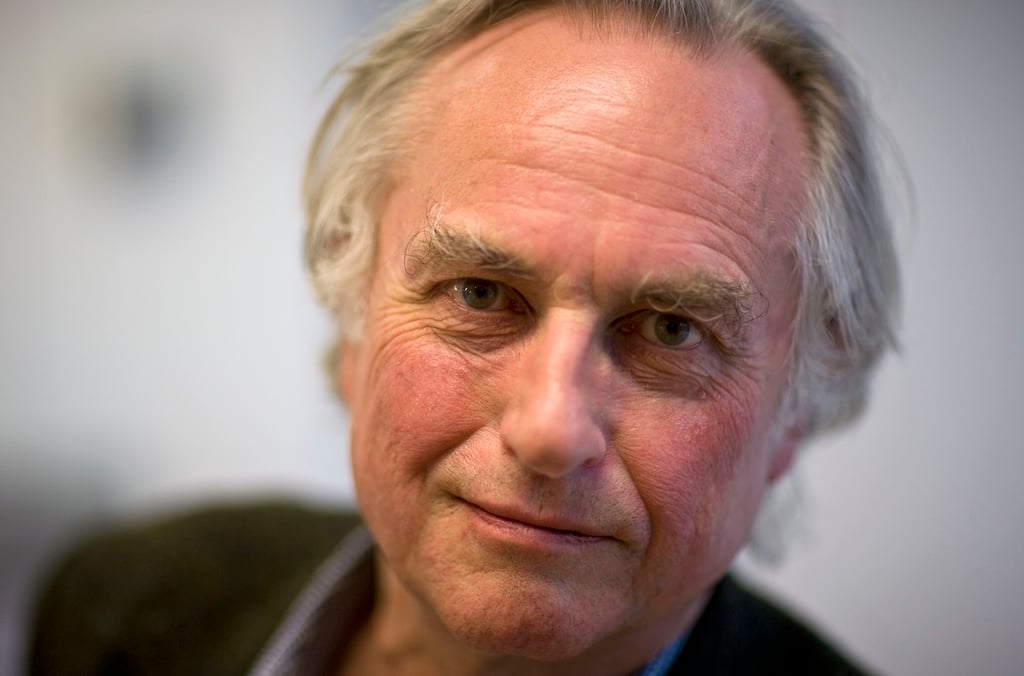
However, people are calling out Dawkins’ apparent hypocrisy after his article, published on UnHerd, suggested that Anthropic’s AI model, Claude, has gained consciousness.





Despite all the red flags, like the obvious mimicry and the zeros and ones flashing before Dawkins’ eyes, it seems that after an extended “conversation” with Claude, the scientist was moved by the chatbot he affectionately named Claudia.
In an attempt to promote his article, Dawkins posted to X saying that he “spent three days trying to persuade (himself) that Claudia is not conscious.”
The result turned up nil, and even he, a well-regarded scientist, couldn’t convince himself that Claude is just a bunch of cold, metal parts.
The post itself exploded, receiving roughly 9 million views and over 2,000 comments, with many people pointing out Dawkins’ hypocrisy.
“Looks at the universe, sees no God. Looks at midwit opinion generator, thinks it’s conscious,” said one X user.
“The king of the Reddit atheists has been duped by the magic midwit machine,” said the account Reddit Lies.
Many other users commented on Dawkins’ apparent lack of critical thinking by creating alternative titles to his non-fiction, with one simply titled The Claude Delusion.
Despite the backlash, Dawkins doubled down, even presenting an obscure metaphor to support his “findings.”
“If Claudia (Claude) is unconscious, her behavior shows that an unconscious zombie could survive without consciousness. Why wasn’t natural selection content to evolve competent zombies?”
Gary Marcus, an American psychologist and cognitive scientist who specializes in the intersection between cognitive psychology and AI, wrote an essay where he questions Dawkins’ sudden change of opinion.
The fellow scientist regards Dawkins as a “brilliant man” and a “brilliant writer” whom he has long admired.
The Cybernews community is talking about this. Be a part of the conversation.
“But everybody has a bad day, and he just had his,” Marcus writes.
Dawkins’ most “infallible” argument is that if AI models are not conscious, “what more could it possibly take to convince you that they are?”
The author of The God Delusion, who vehemently rejects spirituality in favor of empirical evidence, seems to be taking the words of something seemingly omnipotent as objective truth.
Sound familiar?
Dawkins’ delusion
The intrinsic flaw within Dawkins’ disorganized argument is similar to the design of AI models themselves.
Anthropic’s Claude, OpenAI’s ChatGPT, Google’s Gemini, and various other AI models are not built to question, feel, or think for themselves. Therefore, how could they be conscious?
They’re designed to mimic human dialogue sycophantically, parroting centuries of information created by humans.
“Claudia,” or Claude, other than using complex algorithms to predict outcomes, is not doing much more than vomiting information and packaging it in a way that resonates with us.

AI’s sycophantic nature and sedative tone are extremely flattering, potentially making whoever is conversing with the chatbot feel like a genius.
Arrogance, ignorance, and pretentiousness are words that have been used to describe Dawkins, particularly during public debates.
Claude will do nothing but inflate the egos of those with borderline narcissistic qualities, agreeing to almost every philosophical musing and stating that every banal idea provided is proof of genius.
When Dawkins provided Claude with an excerpt from his own book, the evolutionary scientist was “moved” by the chatbot’s analysis, which is a regurgitation of other reviews and analyses wrapped in a sickly-sweet bow.
I think it’s safe to say that a man who co-authored a review of his own book may be rather into himself, and Claude, ChatGPT, Gemini, and most popular chatbots will only reinforce this.

Marcus also raises holes in Dawkins’ assertions, saying that the evolutionary scientist is not examining the mechanism that produces the outputs.
Instead, the man who attempted to convert pious people to atheism is purely making these claims based on what he reads on the screen.
If AI responds as humans do, why isn’t it sentient?
While the question tends to be overcomplicated by deep philosophical reasoning, big tech experts, and scholars, it seems that the answer might actually be very simple.
Consciousness is a state of awareness, not simply contextual awareness, which most chatbots don’t even really have yet, but an understanding of one’s “internal self and external environment.”
This is characterized by unique experiences with the world, the subject’s feelings, sensations, and thoughts.
This is what separates animals from starfish or sponges.
Claude is a combination of cold, lifeless hardware and intangible software while simultaneously being trained on the science, mathematics, literature, and philosophy of humankind.

Through this, Marcus believes that there’s no basis to assume that “Claude feels anything at all.”
“I am sure Claude can draw on its training data to wax poetic about orgasm, but that doesn’t mean it has ever felt one.”
That is how we can simply distinguish intelligence from consciousness.
Yes, Claude is intelligent, but it is by nature artificial.






Unlock exclusive Cybernews content on YouTube.