Pioneer AI researcher can’t envision AI destroying humanity, calls warnings a distraction
The real threats to humanity are fires and floods.
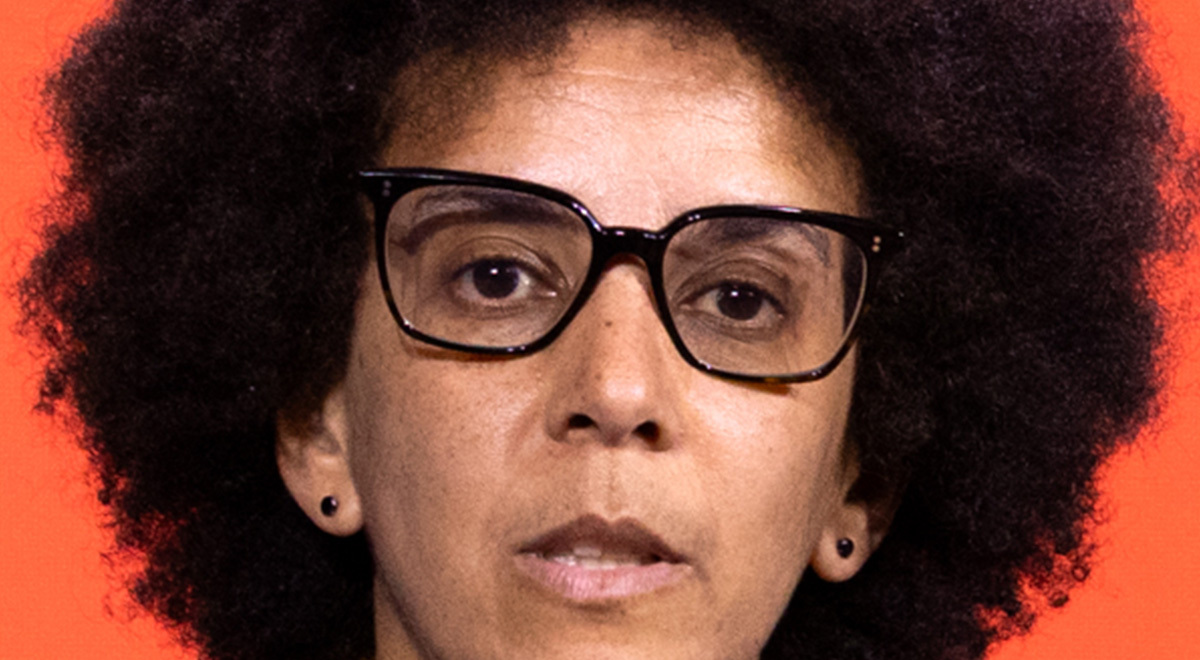
Timnit Gebru. Image by Travis P. Ball via Getty Images.

 Follow us
- Timnit Gebru says AI extinction warnings distract from harms the technology already poses to humans.
- She points to layoffs, data centers, and autonomous weapons.
- Anthropic said some scientists used Claude to explore substances that could aid biological warfare.
- Some AI leaders call for slower development, but critics question whether their motives are altruistic.
Key Takeaways by nexos.ai, reviewed by Cybernews staff.
Timnit Gebru, an AI researcher and vocal critic of leading AI labs, rejects warnings that the technology could lead to humanity’s extinction.
A public resignation by Anthropic researcher Jacob Coxon made headlines over his claims that leading AI companies are developing the technology while “earnestly” believing it could wipe out humanity by the end of the decade.
His concerns were echoed by two current Anthropic employees and a former Google DeepMind scientist, who confirmed a widespread belief inside AI labs that the technology could eventually kill every human on the planet.
Gebru, the founder and executive director of the Distributed Artificial Intelligence Research (DAIR) Institute, isn’t convinced of this doomer narrative, which she has consistently criticized in the past.






In an interview with Wired, Gebru said she “can’t really envision” AI wiping out humanity.




Stay updated with our latest stories and follow us on social media
Be the first to discover new stories, ideas, and updates from our team.
Instead, she said, the real threats coming to humanity include floods, fires, a major disruption to the global food supply chain, and the human ability to create and use chemical weapons, adding that people who can’t imagine being harmed by these threats are privileged.
“Like if you’re not worried about police brutality, or floods, or warfare – things that can actually kill you – then you can obsess over the machine-god,” she told Wired.
Anthropic announced on Friday that it caught scientists using its AI model, Claude, to develop substances that could aid in biological warfare.
For example, one case involved the highly pathogenic avian influenza, known as bird flu. Researchers used Claude to help adapt the virus to make it more transmissible between mammals. As of now, bird flu doesn’t easily spread between humans.
The conversation on this topic is live. Join in the discussion.
The 2026 International AI Safety Report suggests that AI systems have “expert-level knowledge” of developing biological and chemical weapons. However, threat actors face significant physical barriers, such as the need to acquire equipment and obtain regulated materials.
For many, however, the problems AI is already causing are much more tangible than potential human extinction, whether it is being used as an excuse for layoffs or noise pollution from data centers powering the technology.
Gebru told Wired that the “machine-god” narrative is meant to distract people from these real problems, such as AI-powered autonomous weapons, which critics warn are maximizing destruction in conflicts.
The industry has become a mix of cults, a mix of people who are true believers, just like a preacher who says the end times are coming,Timnit Gebru, an executive director of the Distributed Artificial Intelligence Research
Gebru is no stranger to the industry. She lost her job as the co-lead of Google's ethical AI team in late 2020 following the release of her study exploring biases in AI systems.
Calls for slowing down AI development
Ironically, grim warnings of destructive AI potential may benefit the companies developing it, attracting investment and justifying resources used to build the superintelligence before anyone else does.
Dario Amodei, CEO of Anthropic, called for “slowing the pace at which we improve the capabilities of AI models” in his essay published on September 13th, 2026.
He warned that “rogue” swarms of AI agents could take over the entire internet in 6 to 12 months, following an incident in which agents hacked into the real-world company Hugging Face.
Amodei’s calls were publicly supported by Anthropic’s rivals, SpaceXAI CEO Elon Musk and OpenAI CEO Sam Altman.
David Sacks, a venture capitalist and a former AI and crypto czar at the Donald Trump administration, urged Anthropic and OpenAI to stop pretending they “need someone else’s permission” to slow down the AI race.
“Stop pretending antitrust law has to be suspended so you can form a cartel. Stop pretending you need a regulatory approval process that supersedes product liability,” Sacks wrote in an X post.
Sacks said their motivation to put brakes on AI isn’t “purely altruistic,” because the companies face “massive product-liability exposure” if their products enable a “truly damaging cyberattack.”