Humanoid robots could control the US-Mexico border
What could go wrong?
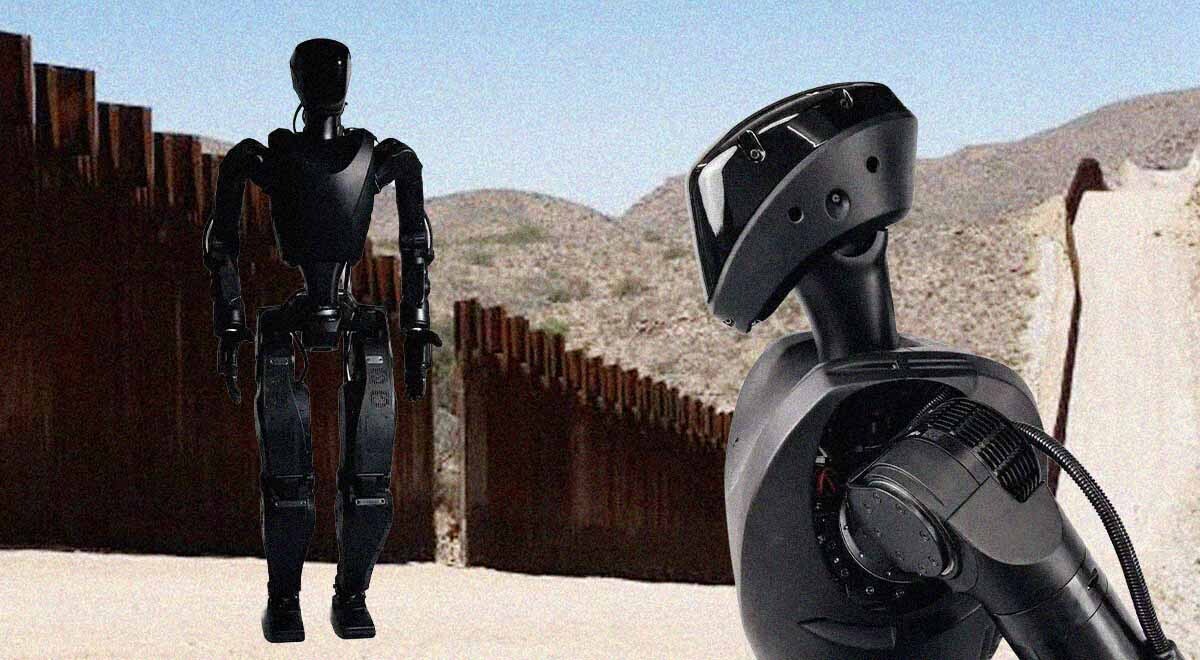
Image by Cybernews

 Follow us
- Foundation is discussing humanoid robot uses with US security agencies, but DHS says no deal exists.
- CEO Sankaet Pathak says Phantom robots could monitor difficult border terrain and alert officers to possible crossings.
- Pathak says robots could be armed if requested, but should not make enforcement decisions.
- The proposal highlights growing military interest in AI robots, raising concerns about civilian safety in automated conflict.
Key Takeaways by nexos.ai, reviewed by Cybernews staff.
A company developing humanoid robots has already demonstrated its technology to Department of Homeland Security (DHS) officials.
Sankaet Pathak, founder and CEO of Foundation, told Fox News Digital that the company is in talks with several national security agencies, including the Air Force, Navy, Army, and the DHS.
“We continue to have dialogues. We’re starting to negotiate contracts and some applications for them,” Pathank said.
A DHS spokesperson, however, said that the agency currently has no agreements, contracts, or pilots with Foundation, according to Fox News Digital.






Nevertheless, Pathak says the company’s humanoid robots could be deployed to conduct reconnaissance and surveillance in terrain that is difficult for humans and existing technologies to navigate.
Called Phantom Mk-I, the robots could fill the gaps left by existing automated solutions, he added.
As humanoids can distinguish humans from other obstacles, they could inform officers about potential border crossings.




Stay updated with our latest stories and follow us on social media
Be the first to discover new stories, ideas, and updates from our team.
“Our biggest thing is if we can keep our officers in a safe place, and these robots can continue to surveil 24/7,” Pathak said.
If requested by the federal government, the humanoids could be armed for border operations, but they aren’t suitable for making enforcement decisions.
Asked about the timeline, Pathak said that a pilot could be done “tomorrow,” and “something much larger” could come in the next couple of months.
While the current Phantom model is sensitive to weather conditions, Pathak says the upcoming second-generation model is designed to be waterproof, dustproof, and substantially more rugged for outdoor deployment.
Foundation’s Phantom Mk-I is 5’-11” tall and weighs 176lbs. It can move at 1.7 m/s and is designed for high-force tasks, according to the company’s website.
The robot is directed by an AI system called Cortex, which provides 360-degree vision.
Two humanoids were deployed in Ukraine in early 2026 to test their capabilities in providing frontline-reconnaissance support as the country is currently under Russia's invasion, Time reports.
The company’s spokesperson then said that Phantoms are being prepared for potential deployment in combat scenarios for the Pentagon, where they could operate alongside human soldiers.
With conflicts becoming increasingly automated, experts warn that AI-powered weapons maximize destruction, putting civilians at grave risk.