Best AI tools for eCommerce
Being behind major reports like The Mother of All Breaches and RockYou2024, our in-house cybersecurity experts and journalists provide unbiased, real-world testing and in-depth analysis.
We maintain complete transparency by openly sharing our testing methodologies with our audience.
Learn more

Nowadays, AI is essential for eCommerce to stay competitive in terms of speed and customer experience. In this guide, I highlighted the best AI tools for eCommerce to help increase sales, improve retention, and automate repetitive work without breaking existing workflows.
Most teams face the same concerns. They want tools that move revenue or retention, and they need software their team can quickly adopt. They worry about painful integrations with Shopify, ad platforms, and email tools. They also want to avoid tools that become costly once traffic and catalogs scale.
This article answers those concerns directly. Together with the Cybernews research team, I tested 8 popular AI tools for eCommerce: Shopify Magic, Klaviyo AI, Jasper AI, Tidio, HubSpot, and Prisync. I also define AI’s role in eCommerce and explain how it can deliver value for your brand. Keep reading to find out more.

Best AI tools for eCommerce – shortlist
- Shopify Magic – best AI tool for eCommerce
- Trendos – AI visibility tracking
- nexos.ai – best AI for eCommerce automation
- Klaviyo AI – AI-powered segmentation and predictive insights
- Jasper AI – AI for scaling content creation
- Tidio – AI chat and automation for smarter customer support
- HubSpot – AI-powered CRM for marketing, sales, and support
- Prisync – AI price automation and competitor tracking
Best AI tools for eCommerce compared
Before exploring each tool in detail, it’s useful to get a broad overview first. In the comparison table below, I highlight the main differences in features, pricing, and use cases, helping you quickly decide which options may suit your needs best.
| Best AI tool for eCommerce | Overall rating | Standout features | Starting price | Free trial or tier | Best for |
| Shopify Magic | AI product description generation, image editing, and customer support | $39.00/month | ✅ Yes, 3-day free trial | Shopify stores needing built-in AI content and automation | |
| nexos.ai | No-code AI agents, workflow automation, multi-model AI access | ~$11,06/month | ✅ Yes, 7-day free trial | Teams automating eCommerce workflows and internal operations | |
| Trendos | Search visibility tool that tracks your brand across AI-generated responses and ranked lists | $169.00/month | ✅ Yes, free tier | Brands that want to monitor their AI search visibility and stay ahead of competitors | |
| Klaviyo AI | Predictive lifetime value and churn forecasting, AI email, and SMS content generation | $20.00/month for 5000 monthly emails | ✅ Yes, free tier | Growth-focused brands prioritizing retention and lifecycle marketing | |
| Jasper AI | Brand voice training for consistent content and autonomous agents for SEO optimization | $59.00/month | ✅ Yes, 7-day free trial | Content-heavy stores producing high-volume marketing copy | |
| Tidio | Automated customer question resolution, product recommendations, and order actions in chat | $24.17/month | ✅ Yes, 7-day free trial | Stores automating support and real-time customer engagement | |
| HubSpot | Predictive lead scoring and automated data enrichment | $15.00/month/seat | ✅ Yes, free tier | Scaling brands needing CRM-driven marketing and sales alignment | |
| Prisync | Dynamic pricing automation and competitor product matching | $99.00/month for up to 100 products | ✅ Yes, 14-day free trial | Price-sensitive retailers competing in dynamic markets |

8 best AI tools for eCommerce – detailed list
Below, you’ll find my detailed reviews of each tool, including their key features, strengths, and potential drawbacks.
1. Shopify Magic – best AI tool for eCommerce

| Overall rating: | |
| Standout features: | AI product description generation, image editing, and customer support |
| Starting price: | $39.00/month |
| Best for: | Small-to-medium businesses, independent brands, and stores with large product catalogs |
Shopify Magic stands out as the top AI tool for eCommerce because it automates content creation, media editing, and customer messaging. This AI tool is fully integrated into Shopify, one of the most popular eCommerce platforms today, letting you manage online stores, social media sales, and in-person retail from a single dashboard.
Key AI eCommerce features. Shopify Magic can write product descriptions, answer customer inquiries, generate and schedule marketing emails, edit product images to change backgrounds with professional-grade AI, and generate entire storefronts based on the theme you pick.
Integrations. Shopify Magic works natively within the Shopify admin dashboard and integrates seamlessly with Shopify Inbox for AI-generated replies. Data can sync with CRMs like HubSpot or Salesforce via standard APIs.
User experience. I found Shopify Magic effortless to use. It lives directly in the admin, so no plugins or technical skills were needed during testing. A simple click lets the AI generate copy or edit images using your store’s existing data. It’s not the most powerful or versatile AI tool on this list, but its integration with Shopify makes it unbeatable for convenience.
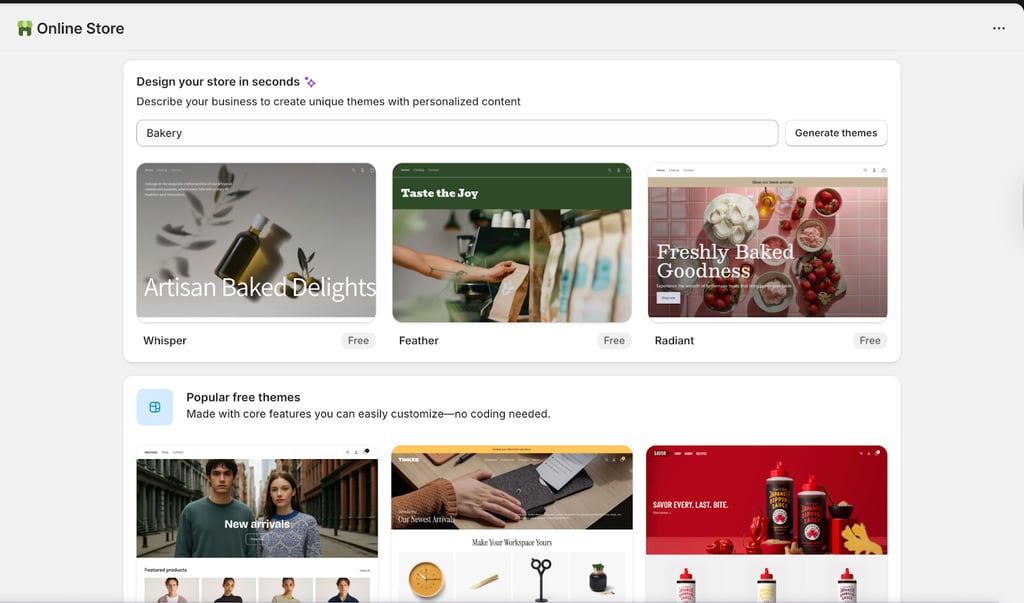
Pricing. Shopify Magic is available at no extra cost for all Shopify subscription plans. Some features, like priority support, require higher-level plans to unlock their full potential. Merchants should also be aware of the 4% Agentic Commerce fee, which applies to transactions completed through AI-native interfaces such as Instant Checkout.
2. nexos.ai – best AI tool for eCommerce workflow automation

| Overall rating: | 4.8 |
| Standout features: | No-code AI agents, multi-model workflows, and secure internal tool integrations |
| Starting price: | ~$11,06/month |
| Best for: | eCommerce teams that want to automate repetitive work, connect business tools, and speed up daily operations |
nexos.ai is one of the best eCommerce tools designed to help teams save time and get more done. It puts AI tools, automations, company knowledge, and work apps in one place, so teams can create workflows, generate content, handle research, and automate repetitive tasks without coding or juggling multiple platforms.
Key AI eCommerce features. With nexos.ai, you can build no-code AI agents for campaign planning, lead qualification, customer replies, and generate reports. It also uses your company data and connected tools to give more relevant outputs than generic AI responses. For eCommerce teams, it automates product descriptions, marketing content, sales outreach, research summaries, and internal workflows.
Integrations. It connects with Slack, Google Drive, SharePoint, and Confluence, so teams can pull in docs, messages, and knowledge and turn them into automated workflows instead of manually searching or copying info.
User experience. When I was testing nexos.ai, I found the interface very intuitive once set up. The main shift is thinking in terms of defining clear tasks and connecting them to the right tools and data sources. It does take some time to figure out how to structure workflows properly, but once configured, it runs smoothly and feels flexible.
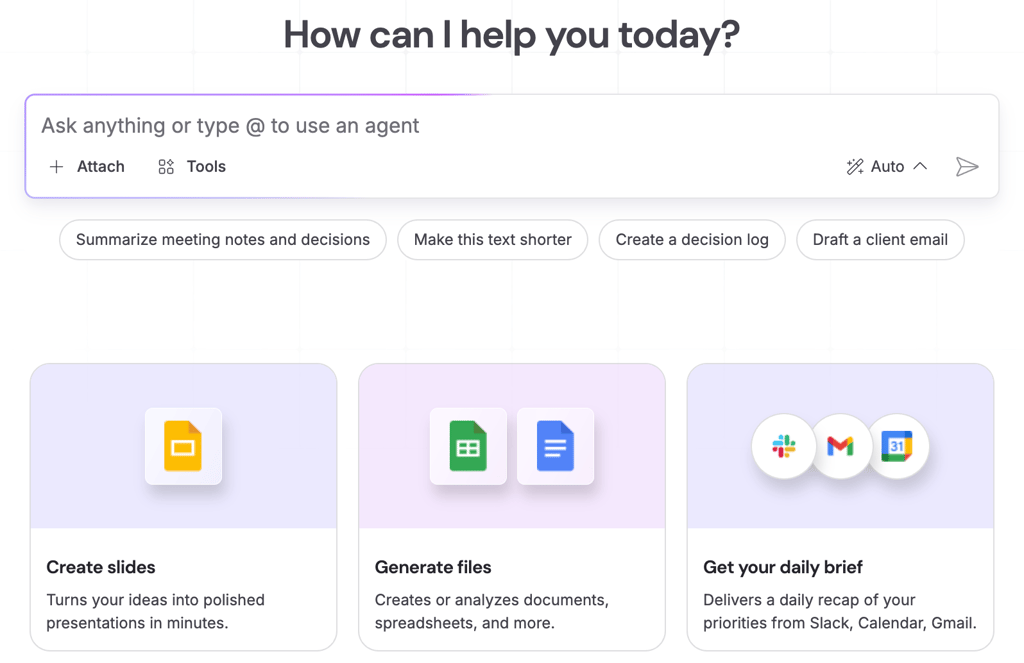
Pricing. nexos.ai offers a free 7-day trial with no credit card required, so you can test the platform before committing. After that, paid plans start at around ~$11.06/month on annual billing and include unlimited AI agents, 1,000 monthly credits, integrations with popular tools, and access to multiple leading AI models.
3. Trendos – AI search visibility for eCommerce

| Overall rating: | |
| Standout features: | AI mentions tracking in ChatGPT, Gemini, Claude, and other AI models, and sentiment analysis |
| Starting price: | $169.00/month |
| Best for: | eCommerce teams and marketers who need fast and actionable competitive insights |
Since many users now discover products through AI-generated recommendations, Trendos comes in as a tool that offers something special – a glance into how brand mentions appear in AI search systems. It stands out from other AI tools because of its unique insights gathered from brand mentions, positioning, and trends across various AI models, such as ChatGPT or Claude, providing valuable information beyond clicks or keyword rankings.
Key AI eCommerce features. Trendos tracks brand mentions, positioning, and sentiment across AI answer engines, giving teams a glance into the brand’s visibility beyond traditional search. It uses generative engine optimization (GEO), complementing SEO practices by optimizing content, sources, and brand signals that influence how AI crawlers find, rank, and surface brands.
Integrations. Trendos is a zero-integration platform, meaning it works out of the box without requiring any setup or third-party connections.
User experience. I liked that Trendos has a modern, clean interface, which made it easy to get started using the platform. Choosing a brand I wanted to analyze was also pretty simple. From the main dashboard, I typed the brand into the search bar, and Trendos returned a full analysis, including metrics such as share of voice, top competitors, and citation frequency. The information was presented in a clean manner, making it easy to view and draw insights.
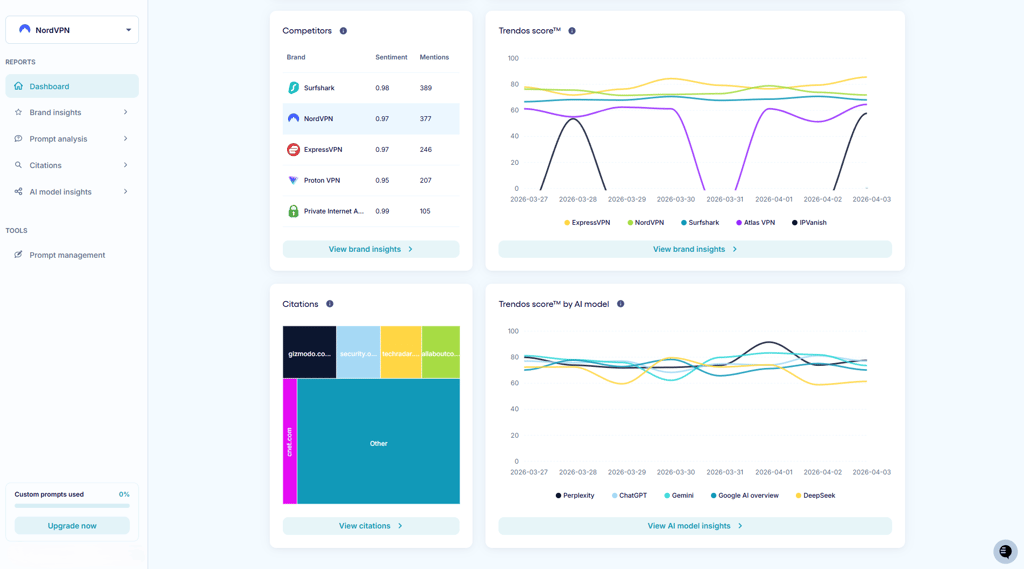
Pricing. You can start with Trendos completely free, which is a great opportunity to get a glimpse of what this tool is capable of. It free version includes 100 custom prompts, 10 brands, and access to 5 LLMs. Additionally, it offers two paid tiers: Starter ($169.00/month) and Pro ($339.00/month). The Starter plan is great for startups, while Pro provides more resources for teams working on an AI visibility strategy.
4. Klaviyo AI – AI-powered segmentation and predictive insights

| Overall rating: | |
| Standout features: | Predictive lifetime value and churn forecasting, AI email, and SMS content generation |
| Starting price: | $20.00/month for 5000 monthly emails |
| Best for: | Brands that want to increase repeated purchases through advanced segmentation, automated flows, and personalized marketing |
For eCommerce marketers looking to personalize campaigns and predict customer behavior at scale, I recommend Klaviyo AI. This AI service is fully integrated into Klaviyo, a marketing and CRM platform that allows you to easily deliver personalized marketing across multiple channels.
Key AI eCommerce features. Klaviyo’s Segments AI feature builds customer segments from plain-language descriptions, saving hours of manual setup. Smart Send Time optimizes campaign delivery for each individual to boost engagement. You can also use predictive analytics and customer lifetime value scoring to help prioritize high-value customers and identify churn risk.
Integrations. Klaviyo supports over 350 pre-built integrations, with the strongest connection to Shopify. It also connects natively to WooCommerce, BigCommerce, Magento 2, Salesforce Commerce Cloud, Square Online, and Wix, consolidating customer data across platforms.
User experience. While testing, I found Klaviyo’s interface clean and straightforward. Guided setup wizards walk you through account setup and integrations. The platform has a moderate learning curve, as its advanced features take time to master.
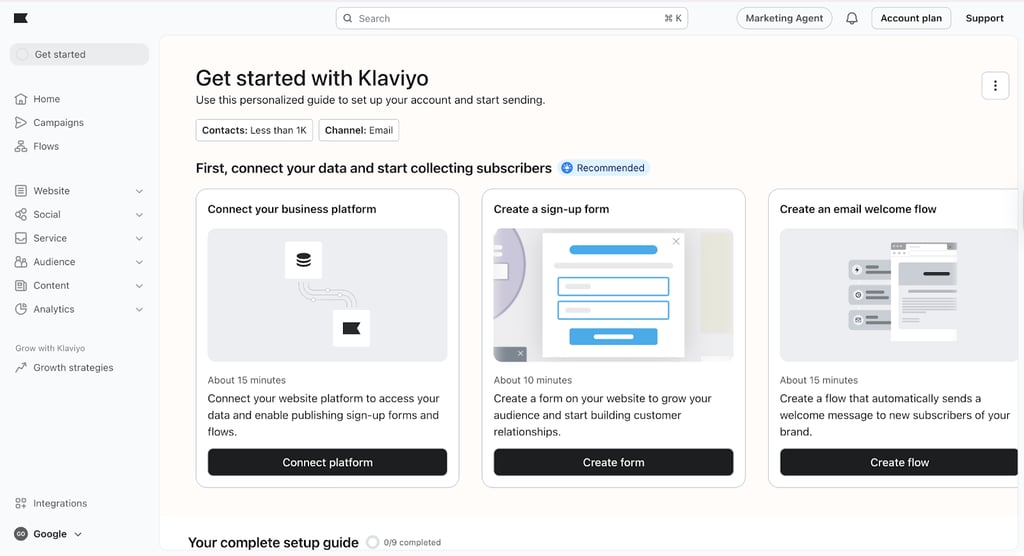
Pricing. Klaviyo uses profile-based pricing, starting with a free plan for up to 250 active profiles and scaling as your profiles and email volume grow. Prices increase automatically when your contact list crosses tier thresholds, and enterprise options are available for larger businesses. Merchants should plan for scaling costs as their audience grows.
5. Jasper AI – AI for scaling content creation

| Overall rating: | |
| Standout features: | Brand voice training for consistent content, autonomous agents for SEO optimization |
| Starting price: | $59.00/month |
| Best for: | Small teams with high output demands and retailers with large product catalogues |
Jasper AI is ideal for eCommerce teams looking to quickly and efficiently scale content creation. It has gained popularity for excelling at producing product descriptions, blog posts, promotional emails, and even product images without requiring a large writing or design team. It combines multiple AI models with brand-specific training to maintain tone, style, and accuracy.
Key AI eCommerce features. Jasper AI lets you generate thousands of product descriptions, meta titles, and social summaries in bulk. This AI tool specializes in converting raw specs into persuasive copy aimed at driving purchases. Its Image Suite creates product and lifestyle images without a photoshoot, while the Optimization Agent automatically updates metadata and internal links to improve SEO.
Integrations. Jasper connects with Google BigQuery, Webflow, Zapier, Make, and Slack. It relies on third-party automations to link Shopify, and API access is only available on higher-tier plans.
User experience. Users who prefer a chatbot interface will enjoy Jasper AI. The platform is highly customizable, allowing brand training, tone adjustments, and workflow automation. Reviewers report significant time savings and boosted productivity, though output may require editing to avoid robotic or generic phrasing.
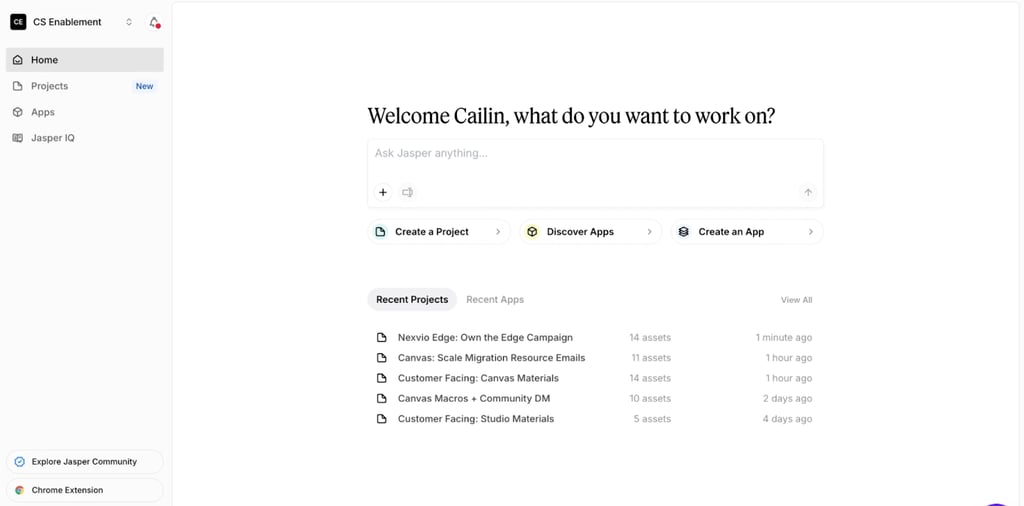
Pricing. Jasper offers 2 plans: Pro costs $59.00/month/seat, and the Business plan offers custom pricing. Since pricing varies for larger teams and advanced features, it can be difficult to predict how expensive scaling up operations will be.
6. Tidio – AI chat and automation for smarter customer support

| Overall rating: | |
| Standout features: | Automated customer question resolution, product recommendations, and order actions in chat |
| Starting price: | $24.17/month |
| Best for: | Brands with high-volume customer service requests |
Tidio delivers AI-powered chat and automation to help online stores efficiently manage customer interactions. This platform was built for live chat, chatbots, and email, and is popular for consolidating multiple communication channels into a single inbox. Its AI assistant, Lyro, allows small teams to provide 24/7 support without increasing headcount.
Key AI eCommerce features. Lyro AI handles common questions, suggests products based on customer inputs, and executes post-purchase automations like thank-you messages or next-order discounts. The platform can recover abandoned carts with exit-intent popups and offer VIP customer routing to prioritize high-value clients.
Integrations. Tidio integrates with Shopify, WooCommerce, Salesforce, HubSpot, Microsoft Dynamics 365, and Zendesk, syncing customer contacts and data in real time. Messaging from Instagram, Facebook Messenger, WhatsApp, and email is unified in one inbox, and Zapier connects to thousands of additional apps for custom workflows.
User experience. I found Tidio’s UI easy to navigate, and its onboarding is guided with checklists that simplify setup. Training Lyro is straightforward. I thought the AI features felt personalized, even for beginners, though some integrations require additional setup time.
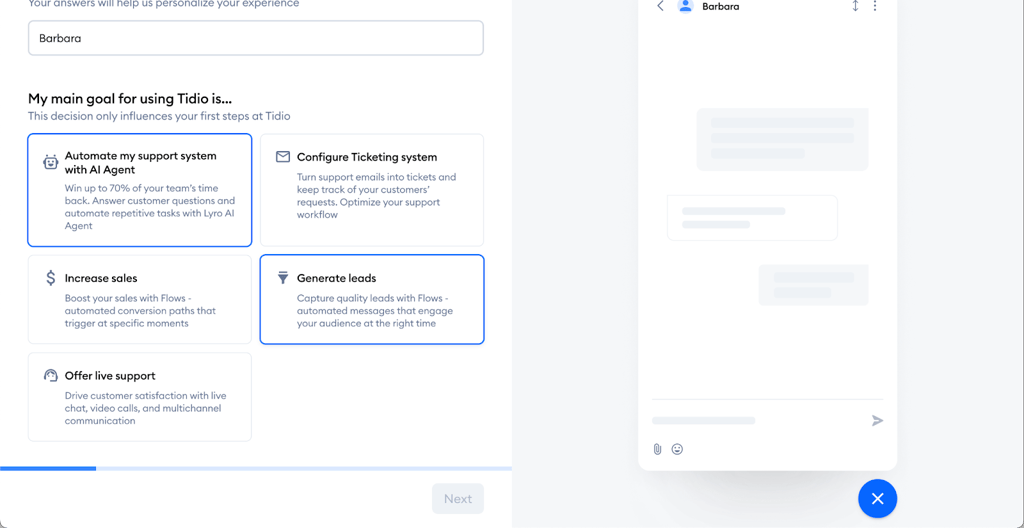
Pricing. Tidio plans start at $24.17/month (Starter), with higher-tier plans costing $49.17/month (Growth) and $749.00/month (Plus). You can also opt for the Premium plan, which allows for custom pricing. Plus, you can add Lyro AI to your plan for an additional $32.50/month.
7. HubSpot – AI-powered CRM for marketing, sales, and support

| Overall rating: | |
| Standout features: | Predictive lead scoring and automated data enrichment |
| Starting price: | $15.00/month/seat |
| Best for: | Brands looking to scale personalized marketing and B2B companies needing lead management and quoting tools |
HubSpot provides a powerful AI-powered CRM for marketing, sales, and support by automating customer engagement across the entire funnel. Breeze AI operates inside HubSpot, a unified platform businesses use to manage contacts, campaigns, sales pipelines, and support.
Key AI eCommerce features. You can use Breeze AI to automatically generate product emails, blog posts, and social campaigns. It’s also useful for predictive lead scoring, identifying high-value customers, and improving targeting accuracy.
Integrations. HubSpot integrates deeply with Shopify to sync products, contacts, and abandoned carts for automated workflows. It also connects with Magento, BigCommerce, and over 1500 apps through its marketplace.
User experience. I found HubSpot’s interface to be organized, if slightly outdated. The Smart CRM centralizes customer data, so I can track interactions without switching tools. As I explored advanced automation and reporting, the system became more complex because of its depth.
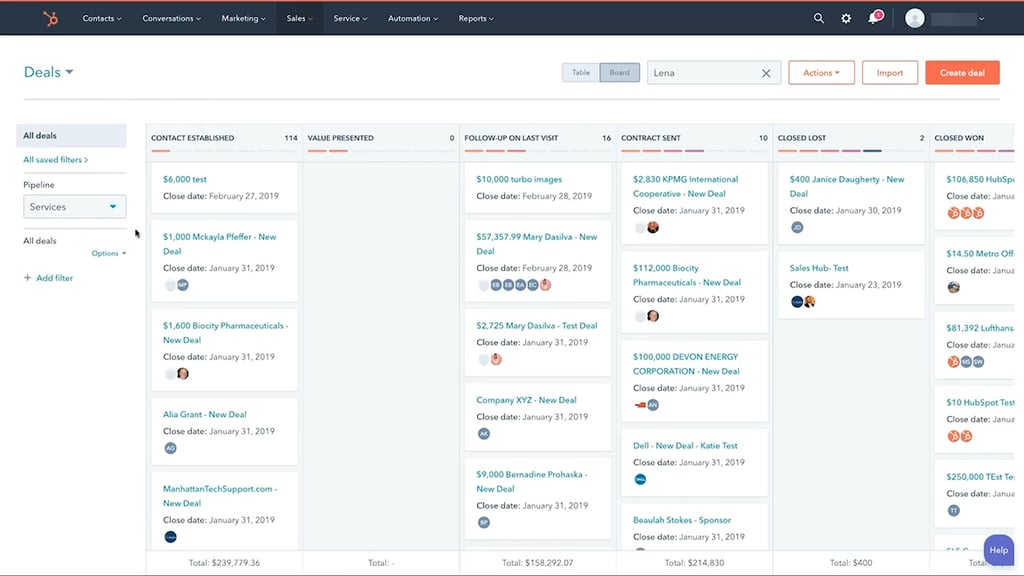
Pricing. HubSpot offers a wide range of plan options across Marketing, Sales, Service, CMS, and Commerce hubs, which can feel confusing at first when you review the pricing page on the official website. For eCommerce teams that are just starting out, I recommend the Starter plan, which costs $15.00/month/seat.
8. Prisync – AI price automation and competitor tracking
| Overall rating: | |
| Standout features: | Dynamic pricing automation and competitor product matching |
| Starting price: | $99.00/month for up to 100 products |
| Best for: | Retailers in industries with high price sensitivity and competitors change prices multiple times a day |
For competitive markets, Prisync delivers AI-driven price automation and competitor monitoring without manual tracking. Retailers use this platform to monitor competing brands, enforce MAP policies, and adjust prices in real time.
Key AI eCommerce features. Prisync’s SmartPrice analyzes competitor data, your costs, and target margins to suggest or automatically apply optimal prices. Its AI-powered product-matching automatically links your SKUs to competitor listings, eliminating manual URL entry and reducing setup time.
Integrations. Prisync integrates natively with Shopify, Magento, and BigCommerce, letting you sync products and pricing directly. It also offers a robust API that connects to custom-built stores and internal systems to enable dynamic workflows.
User experience. I found Prisync extremely easy to use, with a simple one-click store import that quickly pulled in products and pricing. The dashboard makes competitor data easy to scan, so I can act without digging through spreadsheets. Setting up advanced if/then pricing rules takes strategy, but the interface guides you through the logic.
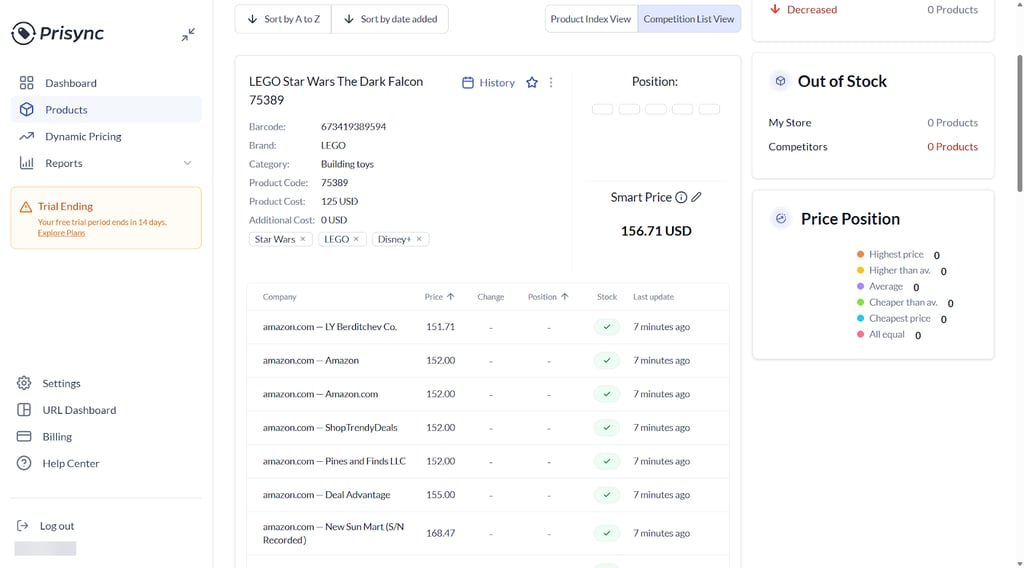
Pricing. Prisync’s pricing page shows multiple tiered plans based on SKU volume and feature needs, which can be a bit complex at first glance. The cheapest plan is the URL-based Professional plan, costing $99.00/month. Plans range up to $799.00/month, so businesses should budget carefully.
What are AI eCommerce tools?
AI eCommerce tools use machine learning to make online stores operate faster, smarter, and with less manual effort. Each tool has its own specialization, but combined, they can analyze customer behavior, sales data, and on-site actions to automate tasks and decisions that humans would otherwise make manually. For example, AI can personalize product listings for each visitor, predict demand to prevent stock issues, or respond to customer questions via chatbots. These actions happen in real time and scale across thousands of users.
AI eCommerce tools also support backend decision-making. They help teams identify trends and predict sales performance. Instead of replacing teams, they help people act on data faster and focus on idea generation and creative solutions.
Types of AI eCommerce tools
AI tools for eCommerce span many operational, marketing, and revenue-focused tasks. Below are the most common types you can find today:
- AI product recommendations and search. These tools personalize on-site experiences by showing relevant products based on browsing, purchase history, and intent signals. They also improve internal search by ranking results to match shopper behavior and conversion likelihood.
- AI email/SMS and lifecycle marketing. Lifecycle marketing tools automate campaigns across email and SMS using behavior-based triggers and predictive segmentation. They help teams send the right message at the right time without manual list building.
- AI copywriting and content. These tools generate product descriptions, ads, and other editorial content at scale using brand and performance inputs. They reduce production time while maintaining consistent messaging across channels.
- AI customer support and chatbots. Support automation systems handle common questions like shipping status, returns, and basic troubleshooting. They lower support volume while giving customers instant responses.
- AI pricing and revenue optimization. These tools adjust pricing using demand signals, competitor data, and testing frameworks. They help maximize margin without constant manual updates.
How these tools work behind the scenes
Integrating AI into your eCommerce system requires understanding how it works. Most tools follow a simple loop: store data flows into the system, the AI produces suggestions or automations, and humans review or adjust them when needed.
Here’s a more detailed explanation of the process:
- AI eCommerce tools connect directly to store platforms like Shopify or WooCommerce using apps, plugins, or APIs
- Once connected, they pull structured data such as product catalogs, SKUs, prices, orders, customer profiles, and on-site behavior
- The AI models analyze this data to detect patterns and predict outcomes
- Based on those signals, they generate outputs such as product recommendations, email copy, audience segments, chatbot replies, and pricing suggestions (the quality of these outputs depends heavily on data volume, freshness, data cleanliness, and feedback from conversion results)
Why AI in eCommerce matters more than ever before
Rising costs in 2026 are forcing eCommerce teams to squeeze more value from every dollar. Based on my research and observation, here are the solutions AI provides to different challenges in the eCommerce industry:
| Problem | Solution |
| Teams need to act on product, order, and customer behavior quickly to stay competitive. | Shopify Magic analyzes product, order, and customer behavior to generate personalized recommendations, optimized collections, and content suggestions almost instantly. |
| Shoppers now expect highly personalized experiences, like tailored recommendations and messaging. | Jasper AI generates personalized product descriptions, ad copy, and marketing content based on customer behavior and preferences, helping stores deliver relevant messages and offers at scale across multiple channels. |
| Teams struggle to keep up with repetitive operational tasks and manual campaign management. | Klaviyo AI automates email and SMS workflows, segment creation, and A/B testing, freeing up teams to focus on strategy while campaigns run automatically with minimal oversight. |
| Pricing and inventory decisions are difficult to optimize without constant manual monitoring. | Prisync tracks competitor pricing, monitors historical sales, and forecasts demand, enabling stores to adjust prices and promotions dynamically to maximize revenue and reduce overstock. |
Together, these AI tools let eCommerce teams act faster and stay competitive in 2026.
Main benefits of AI tools for eCommerce
During testing, I found AI tools created the most value when they automated repetitive tasks. Below are my findings.
Higher conversion rates and average order value
AI tools analyze shopper behavior, browsing history, and past purchases to deliver product recommendations, upsells, and cross-sells in real time. These suggestions are personalized for each visitor, increasing the likelihood of purchase and boosting average order value.
Better customer experience and support
AI chatbots and support systems track orders, provide instant answers to FAQ, and help with basic troubleshooting. Customers get fast, accurate responses at any hour, reducing frustration and abandoned carts.
Smarter retention and lifecycle marketing
Email and SMS automation uses AI to create personalized content and segment audiences based on individual behaviors and engagement patterns. Personalized campaigns encourage repeat purchases and re-engage dormant customers.
Operational efficiency and fewer manual tasks
Since AI tools can automate inventory management, content creation, and campaign scheduling, freeing teams from repetitive work, they reduce the time humans spend manually compiling data. Teams can focus on strategy, creative work, and decision-making while AI handles routine but critical operational tasks.
Data-driven experimentation at scale
AI allows teams to quickly run A/B testing across campaigns, product pages, and pricing options. They can use these test results to identify patterns and generate insights that humans might miss, allowing continuous optimization.
Key selection criteria when choosing AI eCommerce tools
Choosing the right AI tool means balancing functionality, usability, and ROI against your store’s real needs. Here are some criteria to consider:
- Compatibility with your current stack. Look at which eCommerce platforms, CRMs, and analytics tools the AI integrates with. Make sure data moves seamlessly between your store, marketing, and reporting systems to avoid manual work and disconnected workflows.
- Depth of features vs your actual needs. Match the tool’s capabilities to your actual requirements. Avoid overpaying for complex suites if you mainly need lifecycle messaging, pricing optimization, or content generation. Specialized tools often outperform do-everything platforms in their niche.
- Ease of use for non-technical teams. Look for intuitive interfaces, ready-made templates, and simple onboarding. Teams should be able to execute campaigns and updates without relying on developers. Good default setups reduce training time and mistakes.
- Data visibility and analytics. Verify that dashboards accurately track outputs and attribute results to the right campaigns. Ensure you can analyze performance by feature and compare AI and manual approaches.
- Pricing and long-term ROI. Understand pricing models: credits, SKUs, sends, users, or competitor tracking. Some tools scale costs quickly as volume grows. Map expenses to expected gains in revenue, retention, or efficiency to assess real ROI.
How to implement AI tools for eCommerce effectively
Implementing AI tools effectively requires a structured approach. Explore my suggested steps below.
Step 1: define goals and metrics
Start by deciding what you want to achieve, such as a higher average order value, more repeat purchases, recovered carts, or fewer support tickets. Pick 2 to 3 key metrics per tool or feature to clearly track success and evaluate ROI.
Step 2: start with one narrow, high-impact area
Focus on a single, measurable area first, like product recommendations, abandoned cart flows, or a support chatbot for order tracking. In my testing, pilots with a narrow scope were easier to monitor, refine, and demonstrate value.
Step 3: connect data and set guardrails
Ensure the AI tool has access to accurate product and customer data from your store. Configure limits such as discount caps, recommendation rules, and messaging tone. Add human review early for outputs that could impact revenue, brand voice, or customer experience.
Step 4: test, compare, and iterate
Run A/B tests comparing AI-driven workflows to your existing manual processes. Evaluate performance after sufficient time to gather meaningful data. Refine prompts, segments, or rules based on results and observed customer behavior.
Step 5: scale to more journeys and channels
Once a pilot succeeds, extend AI to additional campaigns or customer segments. Document the process so your team can replicate the approach consistently across other tools and channels.
AI tools for eCommerce in practice: use cases and examples
Find specific use cases for each of the best AI eCommerce tools below, along with practical examples of how they can support different business needs:
- Personalized product recommendations. Shopify Magic can suggest related products on checkout pages, recommend best-selling items based on browsing history on category pages. Klaviyo can send tailored you-might-also-like product blocks in post-purchase emails and highlight complementary products in cart abandonment flow.
- AI-powered email and SMS campaigns. Klaviyo AI can automate a welcome series for new subscribers and segment customers for VIP offers based on purchase frequency. HubSpot can send end behavior-triggered abandoned cart reminders. Jasper AI can generate subject lines and A/B test variations for promotional emails.
- AI chat and support automation. Tidio can instantly answer order status questions, guide customers through return or refund processes, provide instant FAQ responses on product pages, and route complex queries to human agents using escalation rules.
- Dynamic pricing and competitor tracking. Prisync can automatically adjust product prices based on competitor pricing, run margin-optimized flash sales across multiple SKUs, track competitor discounts in real time, and update store listings.
- AI copy for product pages and ads. Jasper AI can generate SEO-optimized product descriptions, produce blog content highlighting product features, and draft personalized email content for promotions. Shopify Magi can create ad copy variations for social media campaigns.
Risks and challenges of AI in eCommerce
During testing, I saw AI tools deliver great improvements in personalization, retention, and efficiency. However, several drawbacks also became clear:
- Over-personalization that feels creepy. Hyper-targeted recommendations or messages can make shoppers uncomfortable if they feel too closely monitored. Tools like Shopify Magic and Klaviyo AI need careful tuning to balance relevance with privacy.
- Inaccurate or off-brand content. AI-generated copy can produce errors, tone mismatches, or inconsistent messaging. Ensure content aligns with brand voice by reviewing Jasper AI and Shopify Magic output.
- Poor data quality. Incomplete, outdated, or messy product and customer data can result in irrelevant suggestions. AI outputs from Klaviyo AI or Shopify Magic are only as good as the underlying dataset.
- Cost creeps as volume and usage grow. AI tools often charge by events, credits, or contacts. These costs can escalate quickly, so monitor usage and be careful about which tasks to automate.
- Compliance and privacy issues (tracking, consent, data sharing). Using behavioral data for personalization requires adherence to privacy regulations like GDPR or CCPA. Ensure platforms only process data with proper consent.
Mitigating these risks requires regular human review. By regularly monitoring results, you can continue enjoying AI benefits while avoiding negative consequences.
Which tools should you choose?
To choose the best AI eCommerce tool for your needs, refer to my recommendations below:
- Choose Shopify Magic if you run a Shopify-first store and want built-in AI for product descriptions, emails, images, and storefront content without adding external tools
- Choose Nexos if you want to automate content, outreach, research, and internal tasks with no-code AI agents that connect your tools and company data in one place.
- Choose Trendos if AI visibility, product discovery through AI recommendations, and GEO are part part of your eCommerce strategy
- Choose Klaviyo AI if retention, segmentation, and lifecycle automation drive your growth and you need AI to personalize emails, predict behavior, and recover abandoned carts
- Choose Jasper AI if you produce high volumes of product pages, blogs, and campaigns and need AI to generate, personalize, and optimize content at scale
- Choose Tidio if you want AI chatbots and automation to resolve support questions, recommend products, and recover carts in real time
- Choose HubSpot if you need a unified CRM with AI for marketing, sales, and support to manage the entire customer lifecycle in one system
- Choose Prisync if pricing pressure is high and you need AI to track competitors, monitor stock levels, and automatically adjust prices to protect margins
Keep in mind the following factors when making your choice:
- Prioritize lifecycle tools that automate recovery emails, retargeting, and personalized follow-ups if cart and browse abandonment hurt revenue.
- Focus on AI recommendations, chat, and personalized content that guides shoppers to purchase if your site has low engagement.
- Choose AI pricing and competitor tracking tools if margin pressure and aggressive competitors reduce profitability.
- Go for AI chat and automation that resolve questions instantly and reduce workload if support volume overwhelms your team.
By focusing on your brand’s specific needs, you can find an AI eCommerce tool that will streamline everyday tasks and boost revenue.
FAQ
What are the best AI tools for small eCommerce businesses just starting out?
Shopify Magic is an ideal starting point for small stores. It handles product recommendations, automated descriptions, basic marketing content, and simple workflows, letting new owners save time while growing efficiently.
Can I use multiple AI tools together without breaking my data or tracking?
Yes, you can combine AI tools if they integrate well with your store and analytics stack. Ensure each tool connects to Shopify, WooCommerce, or your CRM correctly. Test data flows before full deployment to avoid duplicate or missing tracking.
How do I measure if an AI eCommerce tool is actually increasing my revenue?
Track specific KPIs, such as average order value, conversion rate, repeat purchases, and recovered carts. Use A/B tests comparing AI-driven campaigns to your baseline. Analyze attribution in dashboards to see which recommendations or automations truly impact sales.
Are AI tools for eCommerce safe to use with customer data and GDPR/CCPA?
Yes, most reputable tools follow standard privacy and compliance practices. Verify how they store, process, and share customer data. Use proper consent management, encryption, and role-based access to maintain compliance with GDPR, CCPA, and other regulations.
How much should I expect to spend per month on AI tools for a growing online store?
Starting prices for AI ecommerce tools range from $15.00/month to $99.00/month, depending on tool type, volume, and usage. Expect total monthly spend to rise as your store scales.