DJI Osmo Nano vs Insta360 Go Ultra: which mini camera is better?


Recording your experiences on the go has never been easier thanks to compact action cameras. Whether you’re hiking, traveling, or documenting daily adventures, these lightweight devices make it simple to capture smooth, high-quality footage hands-free. Their portability and ease of use have made them a favorite among travelers, vloggers, and content creators.
Two standout options in this category are the DJI Osmo Nano and the Insta360 Go Ultra. Both cameras are designed to be small, versatile, and powerful enough to record impressive video, but choosing between them can be challenging.
To help you decide, I worked together with the Cybernews research team to compare the DJI Osmo Nano vs Insta360 Go Ultra, analyzing their design, performance, battery life, features, and user feedback. This guide will walk you through the key differences so you can find the mini camera that best fits your adventures.
The DJI Osmo Nano is the better choice for creators who want professional-grade stabilization, longer battery life, and built-in storage for a reliable, all-around camera. The Insta360 Go Ultra is ideal for casual users seeking a compact, fast-charging camera with AI-powered editing and high-resolution photos.
DJI Osmo Nano vs Insta360 Go Ultra overview
Before you dive into the details, here’s an overview table comparing the DJI Osmo Nano vs Insta360 Go Ultra. It provides a quick look at how these cameras compare in design, performance, and everyday use, making it easier for you to decide which one is right for you:
| Feature | DJI Osmo Nano | Insta360 Go Ultra |
| Max video resolution: | 4K/120fps | 4K/60fps |
| Max photo resolution: | 35MP | 50MP |
| Sensor size: | 1/1.3″ | 1/1.28″ |
| Video bitrate: | 120Mbps | 180Mbps |
| Battery life: | 90mins (camera only) | 70mins (camera only) |
| Waterproofing: | 10m (camera only) | 10m (camera only) |
| Lens replaceability: | Modular, fixed lens | Modular, detachable |
| Low-light performance: | SuperNight mode | PureVideo AI |
| Stabilization: | RockSteady 3.0 | FlowState stabilization |
| Storage: | 64 or 128GB built-in + microSD | microSD only |
| Price range: | Budget-conscious | Premium |
Our methodology
For this DJI Osmo Nano vs Insta360 Go Ultra review, I used four key criteria to create a clear and thorough comparison. Each criterion is ranked based on its impact on the overall user experience. They include:
- Specs and features (40%). Technology and features are at the heart of any product, so I looked at the technical details of both compact cameras, performance claims, and how useful the features are in daily situations.
- Customer feedback (30%). Reviews from verified buyers were studied to see how each product performs over time. This highlights common strengths and weaknesses, giving a clear picture of what to expect in regular use.
- Software ecosystem (20%). Both the DJI Osmo Nano and Insta360 Go Ultra rely on apps and connected tools. Hence, this evaluation considers software support, device compatibility, available editing options, and how smoothly each product integrates with other tools.
- Brand reputation and support (10%). A product’s performance goes beyond features. So, I considered the warranty, updates, and customer service experience to understand how dependable the brand is and how well it supports its customers.
DJI Osmo Nano vs Insta360 Go Ultra: design and build quality
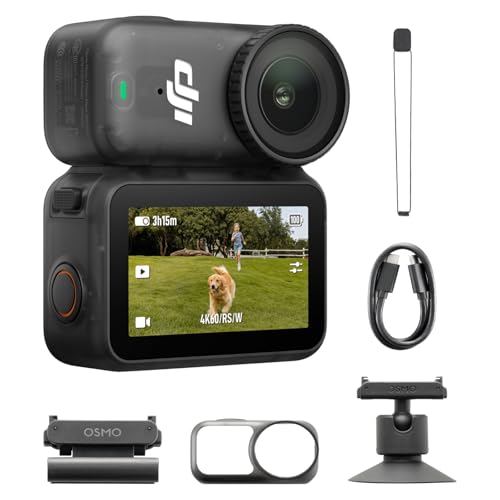
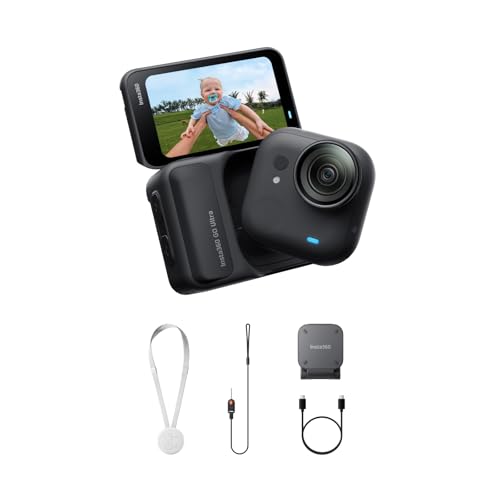
These devices each have two main parts. The DJI Osmo Nano has an oblong camera unit that snaps onto a Multifunctional Vision Dock, while the Insta360 Go Ultra has a box-like standalone camera that attaches to an Action Pod. On their own, both cameras are very portable – the Nano weighs about 52g and the Go Ultra around 53g, so the difference is barely noticeable. With the dock or pod attached, however, the gap becomes clear: the Nano with its Vision Dock weighs 124g, while the Go Ultra with the Action Pod is heavier at 161g.
The Nano’s plastic body feels light yet sturdy, while the GO Ultra has a thicker, more rugged casing. The Osmo Nano’s Vision Dock features a 1.96-inch touchscreen that works well for quick previews, but the Ultra’s Action Pod goes further with a larger 2.5-inch flip-up screen that’s more convenient for selfies or vlogging. Both cameras use magnetic mounts, allowing you to easily snap them onto clips, lanyards, or other surfaces. Both camera units themselves are waterproof up to 10 meters, but their docks and pods are only splash-resistant and shouldn’t be submerged.
After comparing the DJI Osmo Nano vs Insta360 Go Ultra in terms of design and build quality, I’d say the Nano wins for being lighter and easier to carry anywhere.
DJI Osmo Nano vs Insta360 Go Ultra: performance and usability
Both cameras provide excellent stabilization, keeping footage smooth in most situations. The DJI Osmo Nano features RockSteady 3.0 and HorizonBalancing for professional-grade video, while the Insta360 GO Ultra uses FlowState stabilization to deliver gimbal-like smoothness even during intense action.
When it comes to usability, the GO Ultra has an advantage with playback, allowing you to watch clips without attaching the camera to its screen module. The Osmo Nano, on the other hand, must be connected to its dock to view footage, making the process slightly less convenient.
In terms of mounting, the GO Ultra supports a wide range of accessories, including clips, magnetic mounts, straps, and tripods. The Osmo Nano offers fewer first-party accessories but features a reliable magnetic mount system. For storage, the Nano comes with 64GB or 128GB of built-in memory plus a microSD slot in the dock, while the GO Ultra records directly to microSD cards up to 2TB and has no internal memory.
The winner in this category is the DJI Osmo Nano, thanks to its professional-grade stabilization and built-in storage.
DJI Osmo Nano vs Insta360 Go Ultra: battery life
Battery life matters a lot when you’re filming outdoors or away from your charger. The Osmo Nano’s camera unit on its own can record for up to 90 minutes, while that of the Go Ultra lasts about 70 minutes. When their docks or pods are attached, both devices are rated to record for up to 200 minutes (the Nano’s Vision Dock adds 110 minutes and the Ultra’s Action Pod adds 130 minutes). However, real-world results showed that the Nano with its dock performed close to expectations, while the Ultra with its Action Pad fell short of its rated performance.
The Go Ultra may not last as long as the Nano, but it recharges much faster, so you can get back to recording sooner. Both cameras support fast charging, but the Insta360 Go Ultra standalone camera reaches 80% in just 12 minutes, while the DJI Osmo Nano takes around 20 minutes to reach the same level.
DJI Osmo Nano vs Insta360 Go Ultra: image quality
When it comes to image quality, both the DJI Osmo Action Nano and the Insta360 Go Ultra deliver strong results, but in different ways. The Go Ultra has a slightly larger 1/1.28-inch sensor, shoots 50MP photos, and records video at a higher 180Mbps bitrate. This means pictures show more fine detail and videos look a bit crisper, especially in low light or shadowy scenes. Its auto-exposure also tends to keep skies and bright areas well balanced, so straight-out-of-camera shots look polished.
The Osmo Action Nano uses a 1/1.3-inch sensor with 35MP photos and 120Mbps video, which is a step behind in sheer resolution and bitrate. However, it stands out for creators because it supports 10-bit recording and DJI’s D-Log M profile, giving you much more flexibility to adjust colors, highlights, and shadows when editing. If you like to fine-tune your footage, this is a big plus.
In this DJI Osmo Nano vs Insta360 Go Ultra matchup for image quality, the Insta360 Go Ultra is the winner with sharper, cleaner results. The Osmo Nano, however, is the better choice if you want editing flexibility.
DJI Osmo Nano vs Insta360 Go Ultra: sound quality
The Insta360 Go Ultra records at 48kHz with 32-bit depth, while the DJI Osmo Nano records at 48kHz with 16-bit depth. This means the Go Ultra can capture more audio detail. In real-world use, both handle indoor speech clearly, and outdoor recordings sound good as long as there isn’t strong wind. When wind is present, both can reduce noise, though this can also make background sounds feel a bit flat or less natural.
The DJI Osmo Nano has better internal audio capability because its two built-in mics record true stereo sound. The Insta360 GO Ultra, however, records in mono with its single internal mic. The GO Ultra makes up for this with advanced software features like Voice Enhancement and user-controlled Weak/Strong Wind Noise Reduction modes.
Both cameras support external microphones: the Nano works with up to two DJI Mic transmitters, while the Go Ultra can connect to Bluetooth earbuds or wireless mics such as the DJI Mic Mini, Mic 2, or Insta360’s own microphones.
DJI Osmo Nano vs Insta360 Go Ultra: companion apps
Insta360’s app focuses on being user-friendly and fast, letting you easily turn your clips into polished videos with transitions, music, and effects using AI or templates. It also includes tutorials and creative tools that make editing approachable even for beginners. DJI’s Mimo app, on the other hand, takes a more professional approach, offering tools like Color Recovery for fine-tuning and One-Tap Edit for fast content creation.
Both apps make it easy to export videos, update firmware, and share clips on social media. Insta360 uses AI to automatically pace edits, add music, and turn raw footage into ready-to-post videos, saving time. DJI Mimo gives you more manual control, letting you adjust colors, exposure, and audio exactly how you want.
There is no outright winner here. Insta360’s app is best if you value speed and simplicity, while DJI Osmo Nano works better if you want detailed editing control.
DJI Osmo Nano vs Insta360 Go Ultra: user reviews
To get a better sense of how these cameras perform in real life, I looked through user feedback on Reddit. Many people highlighted the DJI Osmo Nano’s size and affordability compared to the GO Ultra as major advantages. Users switching from earlier Insta360 models often said the Osmo Nano feels more reliable, with fewer issues related to overheating or battery drain. Several comments pointed to the Nano as the better all-around option for those who value consistency.
The Insta360 Go Ultra also has its fans, especially among first-time buyers. Some liked the way the Go Ultra fits into the Action Pod, calling it neat and practical. Others appreciated the removable storage and said it feels more like a full-featured action camera. Several users mentioned that the Go Ultra’s videos look good straight out of the camera and don’t need much editing.
Still, both devices received some negative feedback. Complaints about the Go Ultra appeared most often, including overheating during longer sessions, shorter battery life, and frustration with the return process when buying directly. A few people also noted that the Nano looks slightly bulky compared to the Ultra, though this was generally seen as less of a concern than reliability issues.
If you are deciding between the DJI Osmo Nano vs Insta360 Go Ultra based on user reviews, you should know people lean toward the Nano for its stability and everyday dependability.
DJI Osmo Nano vs Insta360 Go Ultra: pros and cons
Like every gadget, both of these cameras come with things you’ll love and a few things you might not:
If you want a camera that’s lighter, easier, and more reliable day to day, the DJI Osmo Nano is the better choice.
DJI Osmo Nano vs Insta360 Go Ultra: which one should you choose?
If you are a vlogger or a casual user, the Insta360 Go Ultra may feel like the friendlier option. The AI editing in the app, quick charging, and helpful tutorials make it easy to create polished videos without needing many technical skills.
However, for action enthusiasts and frequent travelers, the DJI Osmo Nano is the smarter pick.
It’s lighter, lasts longer on a charge, and keeps your footage steady, while its built-in storage and smooth mic setup work well if you already use DJI gear or want a more serious workflow. The price also works in your favor, since the Nano is cheaper than the Go Ultra and still delivers great footage. Both cameras are capable, but it really comes down to what fits your needs and shooting style.
Other reviews you might be interested in:
GoPro Max 2 review: expert insights from Cybernews
GoPro Max 2 vs Insta360 X5 – which is the best 360 camera?
Insta360 GO Ultra review 2026 - compact camera, big upgrade
FAQ
Is the DJI Osmo Nano better for beginners than the Insta360 Go Ultra?
No. The Insta360 Go Ultra is generally easier for beginners because of its AI editing tools and app tutorials, while the Osmo Nano suits users who prefer more control.
Can I livestream with both DJI Osmo Nano and Insta360 Go Ultra camera?
Yes. Both support livestreaming through their companion apps, though setup is simpler on the Go Ultra.
Which camera – DJI Osmo Nano or Insta360 Go Ultra – handles low-light conditions better?
The Insta360 Go Ultra. Its larger sensor captures more detail and color accuracy in darker environments.
Are there accessories available for DJI Osmo Nano and Insta360 Go Ultra?
Yes. Both have a range of mounts, cases, and mic options, though Insta360 offers a wider accessory ecosystem.
Which one – DJI Osmo Nano or Insta360 Go Ultra – offers better value for its price?
The DJI Osmo Nano. It costs less while still delivering strong image quality, stabilization, and longer battery life.