Can you completely switch to eSIM in 2026? Pros, cons, and what nobody tells you
Our in-house expert researchers and journalists conduct independent, unbiased testing of eSIM services, assessing their real-life effectiveness and usability.
By staying current with industry developments and openly sharing our transparent testing methodologies, we ensure readers receive accurate, up-to-date insights so they can make informed choices about eSIM solutions.
Learn more
eSIM is no longer a “future tech concept” – it’s already here, and it’s staying. In fact, with Apple removing the physical SIM slot from US iPhones starting with the iPhone 15, millions of users don’t even have a choice anymore. But while the shift is happening fast, going fully eSIM may still feel like a gamble to some. What happens if your plan doesn’t activate? What if you lose signal abroad? Can you really rely on a digital-only setup with no physical backup?
In this guide, we’re not glossing over those concerns. We’ll walk through the real eSIM pros and cons, the actual limitations in 2026, and where things still fall short. This isn’t about preaching eSIM, but a practical breakdown based on how eSIM works in the real world today. The takeaway? For most people, making the switch to eSIM in 2026 is the smarter move. That is, if you’re using the right setup.
What "completely switching to eSIM" actually means
Before weighing the eSIM pros and cons, it helps to define what “going all-in” actually looks like in practice. There are three common setups:
- First, the hybrid approach. You keep your physical SIM for calls and texts, and add an eSIM as a secondary data line – an option popular for travel.
- Second, a full switch on a dual-capable phone. Your device still has a physical SIM tray, but it’s empty, and your primary plan runs entirely on an eSIM profile.
- Third, the true end state. An eSIM-only device, like newer US iPhones, where no physical SIM slot exists at all.
This guide focuses mainly on the second and third scenarios, where you’re relying on eSIM for everything. At a technical level, an eSIM profile is embedded into your phone’s chipset and activated digitally, often via QR code. You can’t physically remove it or swap it between devices, which makes it more secure. That said, it also introduces friction when switching phones or troubleshooting connectivity.




Our team of researchers thoroughly tests eSIM services using a clear and consistent process. We combine first-hand experience with expert analysis to evaluate features, performance, coverage, and pricing - so you can make confident decisions before your trip. Learn how we test eSIMs.
The pros: why switching to eSIM in 2026 makes sense
Once you move past the hesitation of change, the case for eSIM becomes surprisingly strong. This isn’t just about convenience, but about how mobile connectivity is evolving. eSIM is becoming faster, safer, and far more flexible than the old plastic SIM ever allowed. The benefits show up quickly in real-world use, especially if you travel often or switch networks regularly. And while no system is perfect, the advantages of choosing to switch to eSIM in 2026 are tangible enough. That’s why, for many users, going back simply doesn’t make sense.
Bulletproof security against physical SIM theft
One of the most underrated advantages of eSIM is how it simply removes an entire category of risk. With a physical SIM, anyone who gets hold of your unlocked phone can eject the card in seconds. Then, it’s a matter of inserting it into another device, and potentially accessing calls, texts, and SMS-based verification codes. That’s the weak point many SIM swapping attacks rely on. With eSIM, there’s nothing to remove, as your mobile identity is embedded directly into the device’s chipset.
Even if your phone is stolen, the attacker can’t simply transfer your number elsewhere without going through your carrier’s full authentication process. This has a direct impact on two-factor authentication security. When your SIM can’t be physically separated from your phone, intercepting those one-time login codes becomes significantly harder. For travelers carrying banking apps, work accounts, and sensitive personal data, this shift isn’t just technical. Rather, it’s the practical peace of mind you notice the moment you stop thinking about where your SIM card is.
Instant multi-country connectivity, and why Yesim does it better
The moment it clicks is usually at the airport gate. You install a plan before takeoff, land in Lisbon, Chiang Mai, or Medellín, and you’re instantly online. There are no longer kiosks, swapping plastic, or guessing which carrier to trust. That’s where eSIM really proves its value, and where some providers go further than others.
In my experience, Yesim stands out because it removes friction you didn’t even realize you were dealing with:
- Its SwitchLess technology automatically connects you to the strongest available network from 800+ operators worldwide, so you’re not manually hopping between carriers trying to fix a weak signal.
- Coverage spans 200+ destinations, which realistically means you’re set almost anywhere you go.
- On iOS, the built-in VPN adds an extra layer of encrypted protection without needing a separate app.
- The option to use virtual phone numbers (US, UK, Canada, and more) is genuinely useful for handling 2FA while abroad.
- Add in flexible plans (fixed or pay-as-you-go) and Ycoins cashback, and it feels less like a temporary travel hack and more like a long-term setup.
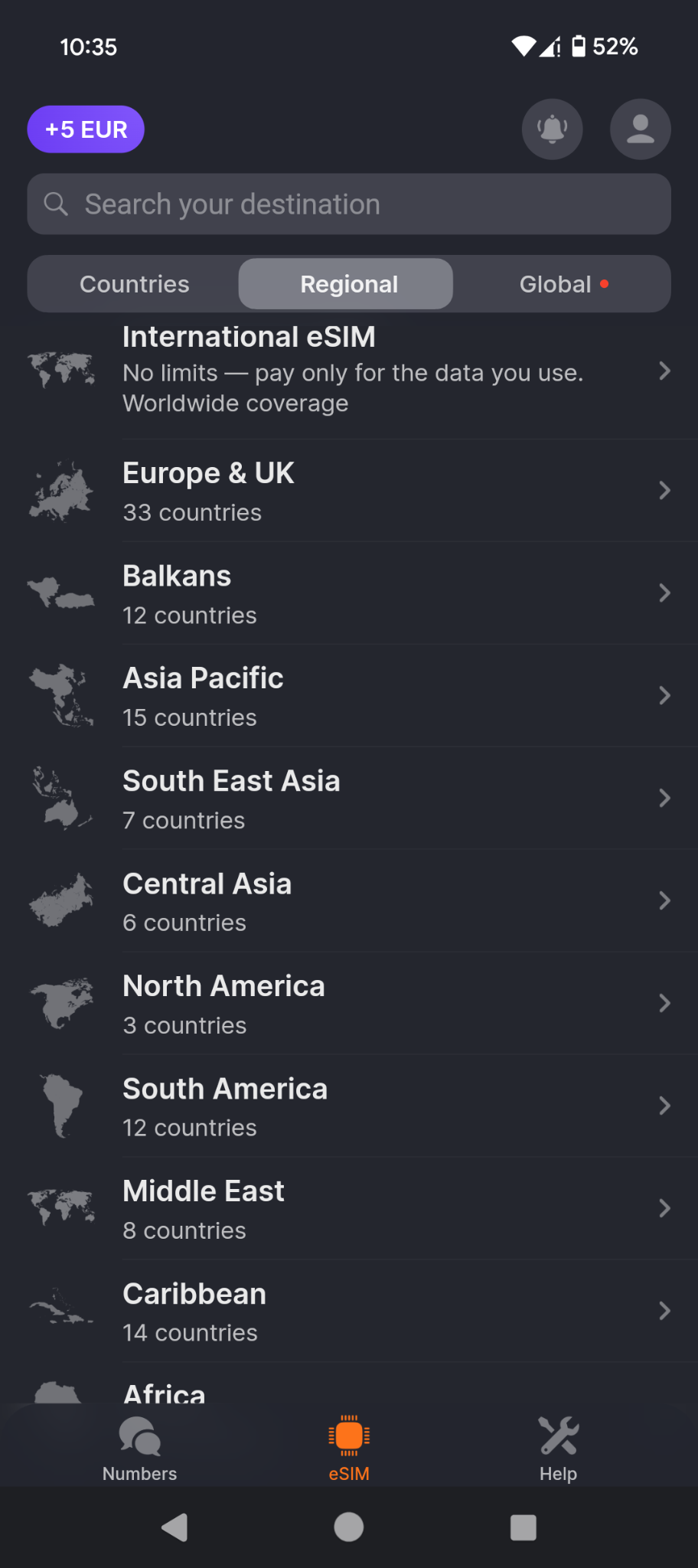
For anyone planning to switch to eSIM in 2026, Yesim is the app that will show benefits straight away.
Cleaner hardware, better device durability
Dropping the physical SIM tray isn’t only a design choice. It simplifies the hardware in ways that actually matter over time. Without a tiny slot that can loosen, jam, or collect debris, there’s one less mechanical failure point to worry about. It also helps reduce exposure to dust and water ingress, which is part of why eSIM-only devices like US-market iPhones are engineered with stronger water resistance ratings.
Internally, removing the tray frees up a bit of space that manufacturers can reallocate to battery capacity or antenna optimization, both of which improve everyday performance. It’s not the main reason to switch to eSIM in 2026, but it’s a quiet upgrade you benefit from the entire time you use the device.
Instantly switchable plans – no trip to the store required
Once you’ve used eSIM for a while, going back to physical SIM logistics feels unnecessary. With an eSIM, managing your mobile plan becomes a fully digital process. You can activate a new carrier, switch data plans, or remove an old profile straight from your phone’s settings in minutes. There’s no waiting for a SIM card to ship, no paperwork, and no standing in line at a carrier store just to make a basic change.
In practical terms, that means if your data runs out mid-trip, you can top up or switch providers in under two minutes instead of hunting down a retail shop in an unfamiliar city. The same applies at home: cancelling a plan or downgrading your data no longer requires a 45-minute queue and a conversation with a sales rep. For digital nomads and frequent travelers (anyone whose data needs shift month to month), this flexibility is one of the strongest arguments for switching to eSIM in 2026.
The cons and limitations: the honest truth
This is the section that shouldn’t be skipped. If you’re trying to decide whether you can fully switch to eSIM in 2026, these limitations matter more than the benefits. None of them are hypothetical – they’re real issues people run into, especially when traveling or changing devices. The difference between a smooth experience and a frustrating one usually comes down to whether you saw these coming. We’re going to lay them out directly, without softening the edges, so you know exactly what to expect before committing.
Switching devices is more complicated
This is probably the most noticeable downside in everyday use. With a physical SIM, switching phones takes seconds: you pop the card out, insert it into another device, and you’re back online. eSIM doesn’t work like that. Moving your number usually requires going through your carrier’s app, scanning a new QR code, or using a device-to-device transfer feature (like NFC-based migration on supported iPhones or Android devices).
When everything is working, it’s very manageable. But when it’s not, it becomes frustrating fast. The real issue shows up in urgent situations. If your phone breaks while you’re traveling and you need to switch to a backup device, you can’t just “move your SIM” – you need account access, a stable connection, and sometimes customer support. That delay can leave you temporarily disconnected when you need access the most. It’s a solvable problem, but you need to prepare for it. Before fully switching to eSIM, it’s worth checking exactly how your carrier handles transfers, so that you’re not figuring it out during an emergency.
Not all carriers and regions support it yet
eSIM support is widespread in 2026, but it’s not truly universal just yet. Major carriers across the US, Europe, and Australia fully support eSIM on modern flagship devices, so most users won’t run into issues day to day. The gaps tend to show up with smaller prepaid carriers, MVNOs, or networks in parts of South and Southeast Asia, Africa, and Latin America, where physical SIMs may still be required for activation or full functionality.
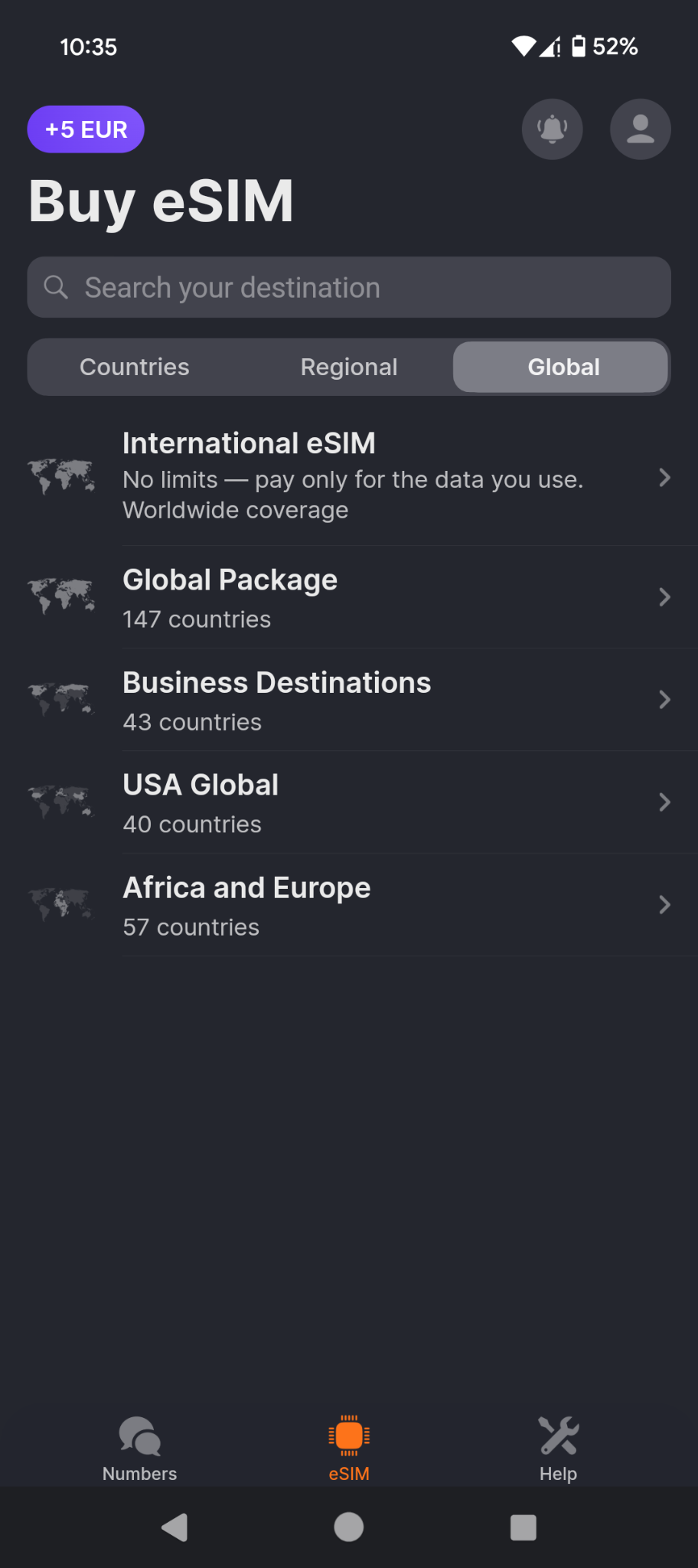
This doesn’t affect everyone, but if you rely on a specific local carrier. It’s something you need to check in advance – not after you’ve already committed to going eSIM-only. The practical workaround is that for travel data, dedicated eSIM providers like Yesim often offer much broader global coverage than any single carrier. This makes them a much more reliable option when moving between countries.
Budget and older Android devices may not support eSIM
Again, eSIM support isn’t evenly distributed across all devices yet. At the moment, it’s standard on flagship and most mid-range phones from Apple, Google Pixel, and Samsung Galaxy. That said, many budget Android devices, especially in the sub-$200 range, still don’t include the required eSIM chipset at all. That means no software update can enable it, so it’s a hardware limitation.
This becomes important if you’re planning to switch to eSIM in 2026 and are also thinking about upgrading your phone. Compatibility should be treated as a non-negotiable spec, right alongside battery life or camera quality. Always check whether the device explicitly supports eSIM before buying. The good news is that this gap is shrinking quickly these days. As component costs drop and adoption increases, eSIM is expected to become standard even in budget devices within the next couple of years. Yet for now, it’s something you need to verify.
Software troubleshooting is different (but not harder)
One of the first concerns one may have when switching to eSIM is “What do I do if something stops working and I can’t just pull the SIM out?” It’s a fair question, but in reality, the replacement steps are just as quick. Instead of physically reseating a card, you toggle Airplane Mode on and off, reset network settings, or re-download the eSIM profile from your carrier.
These actions take a couple of minutes at most and resolve the majority of connectivity issues. In fact, most modern phones are already optimized for this kind of software-first troubleshooting. Carrier support has also caught up significantly in 2025-2026, with clearer in-app recovery options and faster reactivation. The missing SIM tray may feel unusual at first, but that’s more about habit than capability. Once you’ve done it once or twice, it becomes second nature.
Who should switch fully to eSIM right now?
If you’re still undecided, the easiest way to choose is to match the setup to your real life, not to the marketing around eSIM. A modern flagship phone and frequent travel usually point to a full switch, while constant device swapping or uncertain carrier support make a hybrid setup the safer call. The main goal is to avoid forcing eSIM into a situation where it adds complexity instead of removing it.
| Your situation | Should you switch fully? |
| Modern flagship phone (iPhone 15+, Pixel 8+, Samsung S24+) | ✅ Yes, you’re ready. Your hardware fully supports it. |
| Frequent international traveler | ✅ Yes, eSIM travel data, especially via Yesim, is the single biggest quality-of-life upgrade. |
| A user who swaps phones frequently between multiple devices | ⚠️ Hybrid. Keep your primary line on a physical SIM, use eSIM for travel/data. |
| A user in a region where local carrier has limited eSIM support | ⚠️ Verify first. Check your carrier’s eSIM transfer process before committing. |
| Budget Android, older handset | ❌ Not yet ready. Check device specs first. |
The decision really comes down to hardware, travel habits, and how often you change devices. If you’re on a modern flagship and move around often, the natural answer is usually yes. If your setup is more complicated, a hybrid approach is still the safest middle ground.
How to make the switch correctly: a step-by-step overview
A smooth eSIM switch doesn’t require guesswork. Just follow the following checklist in order, check the basics once, and you’ll avoid the kind of problems that usually show up at the worst possible time.
- Verify your device supports eSIM. Check your phone’s spec sheet for “eSIM” or “nano-SIM + eSIM,” and if anything is unclear, confirm it on the manufacturer’s website.
- Confirm your carrier supports full eSIM activation and transfer. Ask specifically how they handle emergency device swaps, because that’s where many first-time users run into trouble.
- Set up your travel data plan on Yesim before your first trip. Download the app, choose your country or global plan, and activate it with a QR code in about 60 seconds.
- Store your key eSIM profiles. Keep your primary carrier line and your Yesim travel profile on the device so you can switch between them when needed.
- Test your setup before you need it. Flip between profiles once at home so the process feels familiar before you’re standing in a terminal.
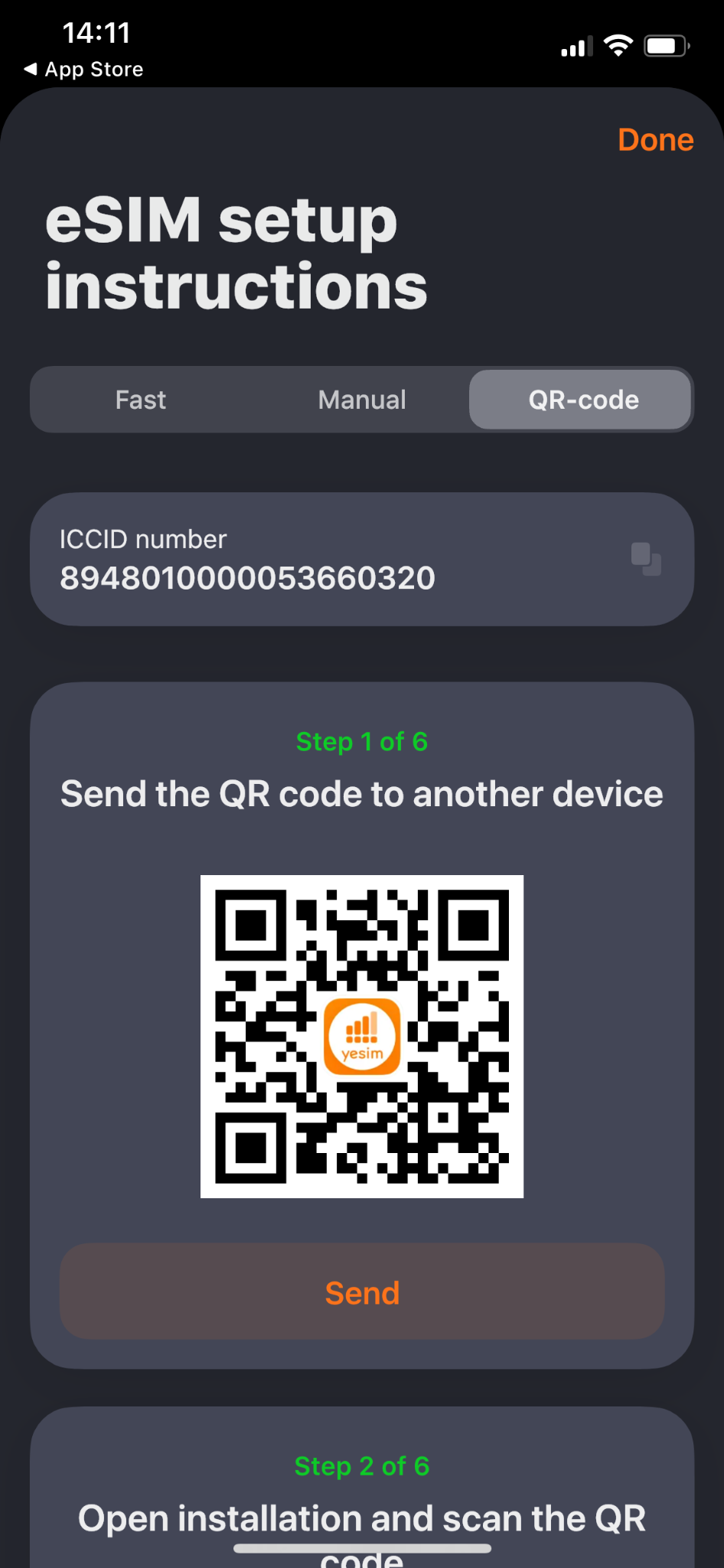
The main thing is to treat this like a setup, not troubleshooting. If you verify your device, confirm your carrier, and prepare your travel data plan in advance, the whole process becomes far more straightforward than most people expect.
Verdict: is 2026 the year to go fully eSIM?
For anyone using a modern flagship phone and traveling internationally even occasionally, 2026 is the right time to fully switch to eSIM. The technology is mature, carrier support is broad, and the practical benefits are evident. You get better security, easier plan management, and far less dependence on physical SIM cards. The one real drawback is device switching, but that’s manageable if you spend 10 minutes setting things up properly before you need it.
In other words, the trade-off is now small enough that the upside clearly wins. And if you want to make that switch feel effortless, Yesim is the app worth having ready before your next trip. With SwitchLess auto-network technology across 800+ operators, a built-in VPN, and 200+ destination coverage, it turns eSIM from a technical decision into an easy and smart travel upgrade.
People also ask
Can I switch back to a physical SIM after switching to eSIM?
Yes, you can switch back to a physical SIM from eSIM as long as your device retains a physical SIM tray. If you're using an eSIM-only device (like a US-market iPhone 15), switching back requires getting a physical SIM from your carrier and inserting it into a compatible device.
What happens to my eSIM if I lose my phone?
Your eSIM profile is tied to your device hardware and cannot be used by anyone in another phone. If you lose your phone, contact your carrier to transfer your eSIM profile to a new device.
Can I have multiple eSIM profiles on one phone?
Yes, you can have multiple eSIM profiles on one phone. Most modern devices support storing multiple eSIM profiles simultaneously, though only one or two can be actively connected at any given time.
Is eSIM available outside the US and Europe?
Yes, eSIM is available outside the US and Europe as coverage is expanding rapidly. In 2026, major carriers in the US, UK, EU, Australia, Japan, and Canada all fully support eSIM. For travel data in 200+ destinations, Yesim provides instant eSIM activation with no carrier restrictions.
Do I need Wi-Fi to activate an eSIM?
Yes, you would typically need Wi-Fi to activate your eSIM. The initial QR code scan and profile download require a Wi-Fi or existing data connection. This is why activating your Yesim travel eSIM before you leave home (on your home Wi-Fi) is the best approach.