Digital nomad toolkit 2026: Every service you need to work abroad (and the one you need first)
Our in-house expert researchers and journalists conduct independent, unbiased testing of eSIM services, assessing their real-life effectiveness and usability.
By staying current with industry developments and openly sharing our transparent testing methodologies, we ensure readers receive accurate, up-to-date insights so they can make informed choices about eSIM solutions.
Learn more

Most digital nomad guides focus on surface-level tools while ignoring the infrastructure decisions that actually determine whether remote work is possible. It’s easy to recommend a high-end laptop, a popular task manager, or a global coworking pass. It is much harder and far more important to address what happens when you land at a foreign airport without connectivity, access to your accounts, or a secure way to get online.
A common scenario: you arrive in a new country, your SIM does not work, the airport Wi-Fi requires email or SMS verification, and your banking app blocks logins from a new location. You are suddenly without the internet, and nothing works the way you expected. At that moment, every other tool in your setup becomes irrelevant.
This digital nomad toolkit 2026 guide takes a practical, experience-based approach grounded in real usage scenarios and common failure points observed across remote work setups. We break down the essential tools for digital nomads by function: connectivity, security, banking, workspace, and productivity. The focus is not just on what to use, but on why it matters in real-world conditions.
Internet connectivity – your most critical investment
Among all nomad connectivity tools, reliable internet remains the foundation every digital nomad depends on. Without stable internet, you cannot access your bank, confirm a coworking booking, connect to a VPN, or even log into your own work environment. In practice, most failures in remote work setups are not caused by missing apps, but by unreliable or insecure connections.
An experienced nomad approaches this as a layered system rather than a single solution. The first layer is a primary data source: a dedicated mobile data plan that works immediately upon arrival. The second layer is a backup option, like buying a local SIM card if you stay longer and want cheaper or faster internet. The third layer is a last resort, such as hotel internet or café Wi-Fi. These should only be used for simple tasks, because public networks are not secure and can expose your data.
One of the most common mistakes first-time nomads make is arriving in a new country without a connectivity plan. In the first hour at the airport, they search for a SIM card, try to understand the options, and usually end up paying overpriced rates. However, tools like the Yesim eSIM app provide mobile data in more than 200+ destinations as soon as you arrive. Reliable eSIM services are now a core part of remote work abroad because they provide internet access immediately after arrival.




Our team of researchers thoroughly tests eSIM services using a clear and consistent process. We combine first-hand experience with expert analysis to evaluate features, performance, coverage, and pricing - so you can make confident decisions before your trip. Learn how we test eSIMs.
The non-negotiable: Yesim eSIM — your passport to instant internet in 160+ countries
This is what makes remote working possible from the moment you land. When I arrived in Lisbon, I did not have a working connection, so I had to figure out how to get internet access on the spot. The first thing I needed to do was get online, check directions, and call for a ride. Instead, I was standing at the airport trying to understand local SIM card plans, comparing prices I did not fully understand, and just trying to get a basic connection. It took time, it was frustrating, and everything else had to wait.
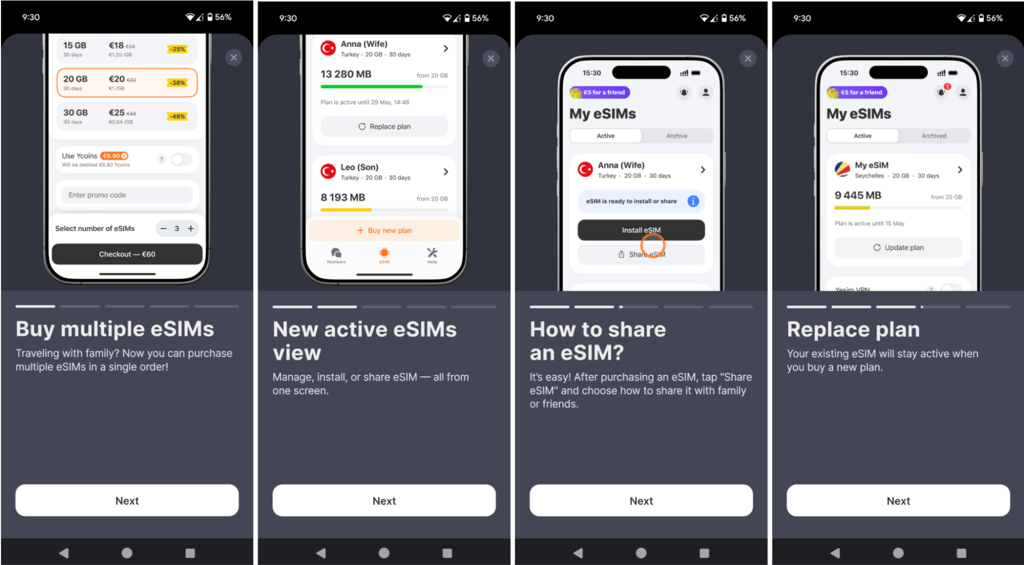
Of course, local SIM cards still make sense for longer stays, but after dealing with physical SIM swaps, activation issues, and expensive roaming fees in the past, I realized the biggest advantage is simply having internet ready before you land.
On another trip to Chiang Mai, I did it differently. I landed, turned on my phone, and I was already connected to cellular data using Yesim eSIM. Maps worked, messages came through, and I could access everything immediately. There was no stress and no extra setup.
Yesim works in more than 200+ destinations, activates in under a minute through a QR code, and is often significantly cheaper than traditional roaming plans, which can quickly become expensive for long-term travel. In comparison, many airport tourist SIMs also charge premium prices for short-term plans designed for convenience rather than value. Pricing and network speeds can still vary by country and local carrier partnerships.
Another important advantage is security. Without a reliable mobile connection, many travelers use random public Wi-Fi networks in airports or cafés, which are common targets for data interception and fake hotspot attacks. Using mobile data instead means your connection is private, stable, and ready whenever you need it.
The backup layer — portable hotspots and local SIMs
The majority of digital nomads only need a reliable eSIM setup. Across Europe, Asia, and most of Latin America, eSIMs like Yesim already provide secure private mobile data coverage without extra hardware or local carrier contracts.
That said, experienced travelers sometimes keep a backup option for more remote destinations or edge cases. This can be a local physical SIM card in regions with limited eSIM support, or even a portable hotspot in areas with unstable infrastructure. Some long-term travelers working from rural locations also use satellite internet devices, but this is usually relevant only to extreme remote-work setups.
In reality, this is the exception, not the standard. Most nomads working from cities, coworking spaces, or popular remote-work hubs will never need anything more than a solid eSIM plan with reliable coverage. The goal is not to build a complicated connectivity system but to avoid being the person stuck at the airport or café trying to get an online connection.
Security – protect your work, your money, and your identity
Digital nomads are one of the easiest targets for cybercriminals. They regularly log into work accounts, banking apps, cloud storage, and client systems from airports, cafés, hotels, and coworking spaces on networks they do not control. For example, one bad connection or weak password can expose far more than just your personal data.
This is why security is not optional. If you work remotely while handling client files, financial accounts, or sensitive company information, protecting your connections becomes part of your professional responsibility.
A reliable nomad security setup usually comes down to three layers. The first and most important layer is a secure internet connection. This is where mobile data and eSIM services like the Yesim app become valuable again. Using private cellular data is safer than connecting to random public Wi-Fi networks, especially in airports, hotels, or cafés, where fake hotspots and traffic interception attacks are common.
The second layer is a VPN. Even when using hotel Wi-Fi or coworking networks, a VPN encrypts your traffic and adds another layer of privacy between your device and the network you are connected to. For instance, when accessing your work dashboard, transferring files, or using online banking while abroad.
The third layer is credential protection. A password manager helps generate and store unique passwords for every account, while an authenticator app protects logins with two-factor authentication. The most common way accounts get compromised is by using the same password over and over again.
The goal is not to build a complicated cybersecurity setup. It is to reduce the number of easy mistakes that can turn a lost connection, a fake Wi-Fi network, or a leaked password into a serious problem while traveling.
A VPN for public Wi-Fi emergencies
Even with a reliable mobile connection, there will be situations where public Wi-Fi becomes unavoidable. Hotels, airports, cafés, and coworking spaces are common environments and among the most common settings for unsecured or malicious networks.
This is where a VPN becomes an important secondary security layer. A VPN encrypts your traffic and reduces the risk of exposing sensitive data while using shared networks. For digital nomads regularly accessing banking platforms, company dashboards, cloud storage, or client accounts abroad, that extra layer of encryption matters.
When choosing a VPN for travel, you should focus on security and reliability rather than marketing claims. A good VPN should have a strict no-logs policy, meaning the provider does not store records of your online activity. A kill switch is equally important because it automatically blocks internet traffic if the VPN connection drops unexpectedly. Fast server speeds and broad coverage across regions like Southeast Asia and Eastern Europe also help maintain stable performance for remote work tasks and video calls.
That said, a VPN should be used as a backup layer, not as a primary connection strategy. Public Wi-Fi still carries risks even when encrypted through a VPN. On the other hand, a private mobile data connection via services like the Yesim app remains the safe default option because it eliminates exposure to shared-network threats.
Password manager and authenticator app
Digital nomads can manage a large number of sensitive accounts across different devices and countries, from banking apps and client portals to cloud storage and work systems. If one account gets compromised, the impact can quickly spread across your entire remote work setup.
That is why a password manager should be one of your first security tools. It stores passwords in an encrypted vault and helps you use unique, complex passwords for every account instead of reusing the same login details.
The second layer is app-based two-factor authentication (2FA). Whenever possible, use an authenticator app instead of SMS verification. Travelers are more exposed to SIM-swapping attacks and temporary loss of phone access while changing SIM cards or roaming internationally.
For the safest setup, combine a password manager, app-based 2FA, and a secure mobile connection with Yesim eSIM to reduce exposure to insecure public networks.
Banking – moving money without losing it to fees
One of the easiest ways for digital nomads to lose money is through hidden banking fees. Foreign transaction charges, currency conversion markups, and international ATM fees can quietly add up across flights, accommodation, coworking memberships, and everyday spending abroad. This is why multi-currency digital banking has become one of the best services for remote workers abroad.
A good international banking solution should support multiple currencies, low-fee international payments, and currency exchange close to the real mid-market rate. Instant payment notifications are also important because they help detect suspicious activity quickly when cards are used in different countries.
Another important rule: never rely on a single payment method. At some point, an ATM will reject your card, a bank will flag a transaction, or a payment terminal simply will not work. Carrying a backup card from a different issuer can prevent a small banking issue from becoming a serious travel problem.
Reliable banking also depends heavily on the reliability of the internet. Payment approvals, fraud alerts, bank logins, and account recovery all require stable access to your devices and apps. This is another reason why secure mobile data with eSIM becomes part of the financial infrastructure itself, not just a travel convenience.
Finally, living abroad does not automatically remove tax obligations. Many digital nomads still need to file taxes in their home country, so consulting a specialist in expat or remote worker taxation is usually worth considering before long-term travel.
Coworking – the professional alternative to cafés
Working from cafés sounds appealing until you spend hours searching for power outlets, dealing with unstable Wi-Fi, or trying to take a client call in a noisy environment. For long-term remote work, coworking spaces are less about aesthetics and more about reliable infrastructure.
A good coworking space provides stable internet, ergonomic seating, quiet work areas, meeting rooms, and a professional environment for focused work. In many cities, coworking spaces have also become an easy way to meet other remote professionals and build connections while traveling.
Most digital nomads approach coworking in one of two ways: through global membership networks with access to vetted spaces across multiple cities, or through local booking platforms that allow day-pass testing before committing to long-term.
Some coworking spaces offer high-quality infrastructure, while others function more like cafés with shared desks. Looking for coworking options before arriving can save time, especially in destinations where internet reliability varies by neighborhood.
Even when using coworking Wi-Fi, sensitive tasks like banking or accessing client accounts are still safer on private mobile data. A cellular connection reduces exposure to shared-network risks common in public or semi-public workspaces.
Productivity and communication – running a business on the road
A reliable digital nomad setup in 2026 usually comes down to three things: communication, task management, and stable video calls.
Most remote workers need a real-time messaging platform to stay connected with clients or teams, a project tracker to manage deadlines and workflows, and video conferencing software that works reliably across both desktop and mobile devices. The exact tools matter less than having a system that keeps work organized while moving between countries and time zones.
What matters most is the infrastructure behind those tools. Even the best productivity tools become frustrating on unstable internet connections. Client calls, in particular, depend heavily on upload speed and connection stability.
That is why you should avoid random café Wi-Fi for anything client-facing. A secure mobile connection via services like Yesim usually provides more reliable performance and a lower security risk than overloaded public networks, especially during calls, file sharing, or time-sensitive work.
The complete digital nomad toolkit 2026
Before you book flights or choose your next destination, make sure your remote work setup is ready first. Use the table below as a practical work abroad checklist covering the core tools and infrastructure every digital nomad should have in place:
| Category | What you need | Key features to look for |
| Connectivity | ✅ Yesim eSIM | 160+ countries, instant activation, unlimited or large data, no roaming fees |
| Security – connection | eSIM cellular data (primary) | Carrier-grade encryption, no shared local network |
| Security – VPN | VPN app (backup) | No-logs policy, kill switch, fast servers in nomad hubs |
| Security – credentials | Password manager + Authenticator app | Cross-platform sync, app-based 2FA, encrypted vault |
| Banking | Multi-currency digital bank account | No FX fees, mid-market rates, instant notifications |
| Coworking | Global or local coworking membership | Stable internet, meeting rooms, and community |
| Productivity | Cloud-based PM + comms tools | Mobile-friendly, real-time sync, video calling |
These are the essential tools for digital nomads who want to work reliably and securely while traveling long term. However, most digital nomad setups fail because they focus on apps before infrastructure. In reality, reliable internet is the foundation that keeps banking, communication, security, and productivity tools working when you need them most.
People also ask
What is the most important tool for a digital nomad?
The most important tool for a digital nomad is reliable, secure internet connectivity. Banking apps, client calls, cloud storage, project management tools, and even account security all depend on being able to get online the moment you arrive in a new country. That is why tools like the Yesim eSIM are a core part of the modern nomad setup, providing instant mobile data access in more than 200+ destinations without relying on insecure public Wi-Fi.
Do digital nomads need a VPN?
Yes, digital nomads should use a VPN, but mainly as a safety net for public Wi-Fi. If you use eSIM cellular data as your primary connection through services like Yesim, your traffic is already protected by carrier-grade encryption. You need a VPN when you connect to hotel, airport, or café Wi-Fi for sensitive tasks like banking, client work, or accessing company systems.
How do digital nomads handle banking internationally?
Digital nomads usually manage international banking through multi-currency digital bank accounts. These accounts allow travelers to hold and convert different currencies, make international payments with low or no foreign transaction fees, and exchange money close to the real mid-market rate instead of paying the typical 2–3% conversion markup charged by many traditional banks.
Is it safe to work on public Wi-Fi in coworking spaces?
Coworking Wi-Fi is generally safer than open café Wi-Fi, but it should still not be treated as fully secure for sensitive activity. For banking, client portals, password management, or account logins, it is safer to use private mobile data with Yesim eSIM rather than shared public networks.
How does Yesim work for digital nomads?
Yesim gives digital nomads instant access to mobile data without a physical SIM card. You download the app, choose a country or global data plan, and scan the QR code to activate eSIM, and your phone automatically connects to the local carrier network when you arrive at your destination.