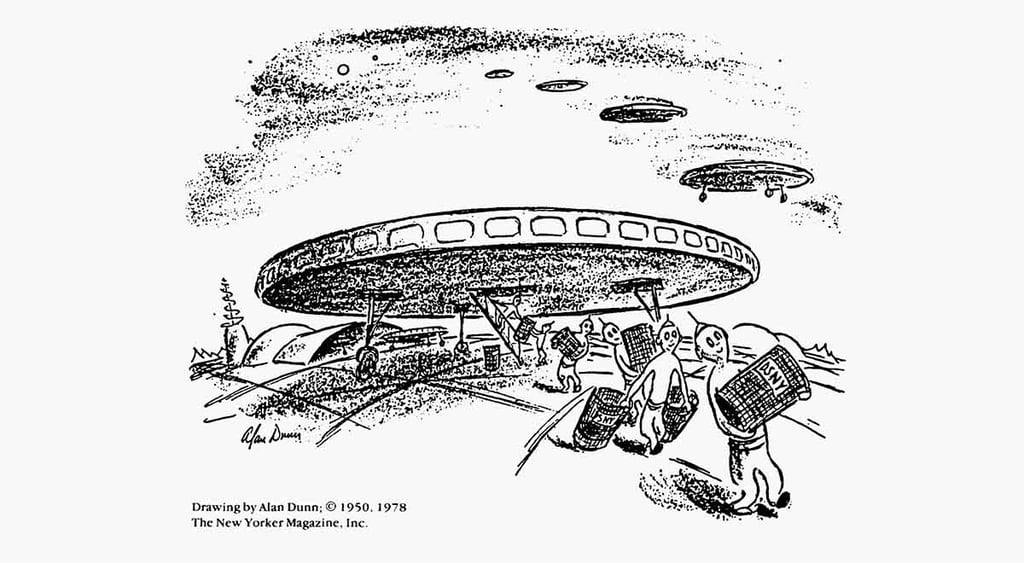
Adam Kirsch’s new book reveals that the most dangerous part of UFO disclosure isn’t the aliens
“Like the messiah, too, disclosure is constantly running behind schedule.”
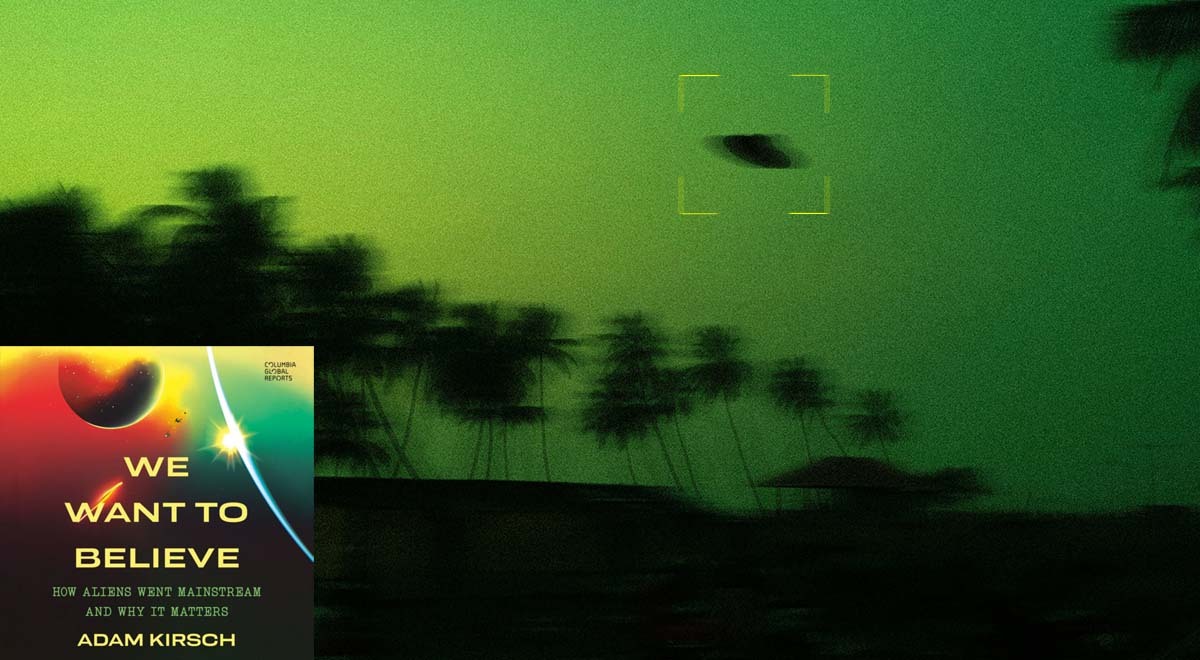
We Want to Believe by Adam Kirsch. Photo by Cybernews

 Follow us
- The 2017 Pentagon videos helped make UFOs a mainstream and legitimate topic for public debate.
- Kirsch warns that distrust of authorities can be risky when it spreads to public health issues.
- The book separates personal testimony from scientific evidence, while arguing witnesses should not be dismissed.
Key Takeaways by nexos.ai, reviewed by Cybernews staff.
“I want to believe,” reads a poster on Mulder’s (X-Files) wall. According to Adam Kirsch, a senior editor at The Atlantic and the author of On Settler Colonialism and The Revolt Against Humanity: Imagining a Future Without Us, the majority of UFO enthusiasts are not true believers, though.
“They are want-to-believers, hoping that they will live long enough to see conclusive proof that human beings are not the only intelligent species in the universe,” Kirsch writes in his new book, We Want to Believe: How Aliens Went Mainstream and Why It Matters, which is out today.
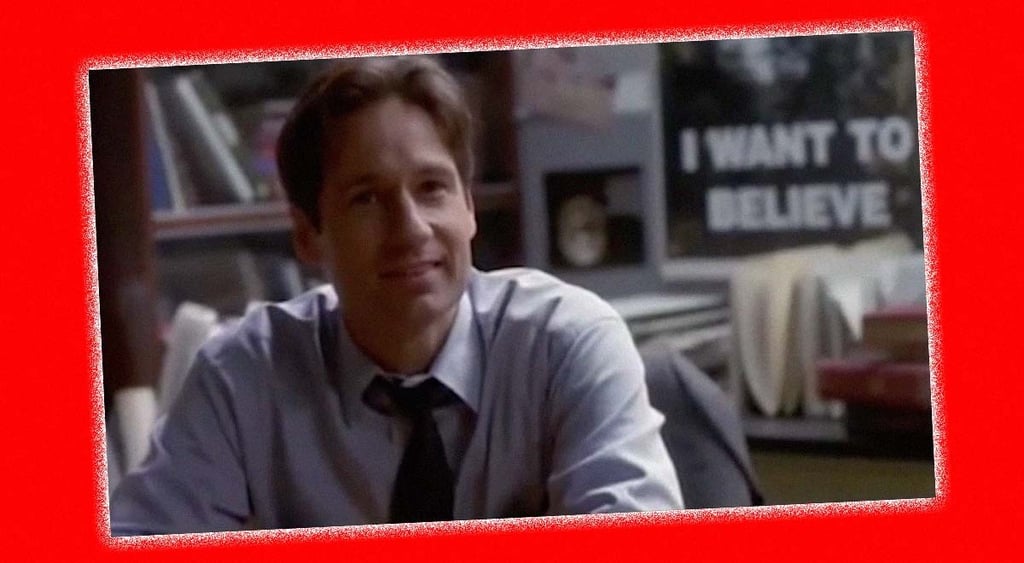
At just over 100 pages, the book offers a fresh perspective on the narrative of UFO (unidentified flying object, now called UAP – unidentified anomalous phenomena) believers and the concept of disclosure. It delves into the recent history of the search for extraterrestrial life, explaining how public perception of aliens has changed over the last decade and why this new way of thinking could be dangerous.




“In arguing about aliens, people are not fighting for survival, profit, or power. Rather, they are posing the kind of fundamental questions that philosophy addresses: What is real? How do we know? Who gets to decide?” Kirsch asks.
Pivotal moment in UFO discourse
The book, in Kirsch’s own words, is about the moment when “the way we talked about UFOs changed.”
The pivotal moment he was referring to was in 2017, when the famous Pentagon videos known as FLIR1 (Telemob, Gimbal, and GoFast) were released by the mainstream media.
“Mainstream media treatment of UFOs really changed pretty sharply,” Kirsch told Cybernews.
Actual videos from military aircraft and testimonies from authoritative figures – such as military pilots and personnel from the Department of Defense, Air Force, or Navy – have made UFOs a totally legitimate topic.
According to Kirsch, the narrative shifted from questioning whether UFOs actually exist to the idea that the government knows more than it is willing to admit. This skepticism applies not only to the field of extraterrestrial phenomena but also to other areas, such as medicine and vaccines.
“The idea that the authorities know more than they're telling us, they're not letting on the real truth, is an idea that appeals to a lot of people,” Kirsch told me.
This idea is also potentially dangerous. Whether one believes in UFOs or not doesn’t harm anyone, but thinking that the government is withholding the truth about the pandemic could lead to a massive rejection of public health measures, such as lockdowns, mask-wearing, and school closures.
“It's almost like a perfect thought experiment. Whether you believe in UFOs or not doesn't increase your chances of getting abducted by an alien, but whether you believe in vaccines or not does affect your chances of getting a disease,” Kirsch said.
Adbuctees are no longer nutjobs
We Want to Believe perfectly captured the troubling discourse around UFOs. It used to be ridiculed, and it seemed that only troubled people would speak up about their experiences.
For example, a whole chapter of a book I previously reviewed, Garrett M. Graff’s UFO: The Inside Story of the US Government’s Search for Alien Life Here – and Out There, is dedicated to alien abductees who claimed to have had sexual encounters with aliens.
Some have attempted to explain this phenomenon as “extraterrestrial sadomasochism, a fantasy world where victims could escape the day-to-day pressure of modern life and give over their self-control to imagined beings – beings that appeared regularly to offer bondage, sexual gratification, or humiliation experiences.”
Kirsch’s book, on the other hand, sheds new light on these testimonies. While the existence of extraterrestrial life has neither been proved nor disproved, the topic of UFOs has become more respectable over the last decade because authoritative figures have spoken out.
Unfortunately, that doesn’t bring us closer to the scientific approach when it comes to UAPs, as testimony is only a testimony – “it can only persuade or fail to persuade.”
In the book, Kirsch makes an important distinction between scientific evidence and testimony. Claims of seeing extraterrestrial life are testimonies and cannot be taken as scientific evidence. However, those experiences should not be dismissed.
“Nothing is more insulting and infuriating than being told you are mistaken about your own experiences,” he writes.
But science isn’t the only way to explain the world around us, is it?
“Science can see a lot of reality, but it can't see everything. And that there are at parts of reality that can only be captured through non-scientific insight, like religious spiritual insight or a sort of esoteric psychic experiences, and that these things are real, even though science doesn't capture them,” Kirsch said.



Stay updated with our latest stories and follow us on social media
Be the first to discover new stories, ideas, and updates from our team.
Where is everyone?
In Steven Spielberg’s Disclosure Day, at the end of the movie, there’s a trove of clips dating back to 1947 showing people interacting with aliens, and this proves that aliens exist.
Kirsch says it’s pure science fiction, as such a big secret in reality just couldn’t be kept concealed.
I don't think that there's a hidden resource of evidence that hasn't been tapped. Because I think it's just not plausible on the most basic level that kind of secret could be kept,Adam Kirsch told Cybernews.
“And there are lots of people whose job it is to examine the sky, to look at the sky, to look at outer space, who are constantly doing this, and who are highly motivated to find evidence of extraterrestrials, if they exist.”
Science, despite 80+ years of effort, hasn’t figured out where extraterrestrial life thrives, if that even exists.
Decades later, we are still trying to figure out the Fermi paradox. In Los Alamos, in 1950, physicist Enrico Fermi, one of the architects of the Manhattan Project, famously asked, “Where is everybody?”