Engineer’s singing robot “hit a chord” with TikTok and Instagram users
A nostalgic robot covering songs captured the hearts of millions.
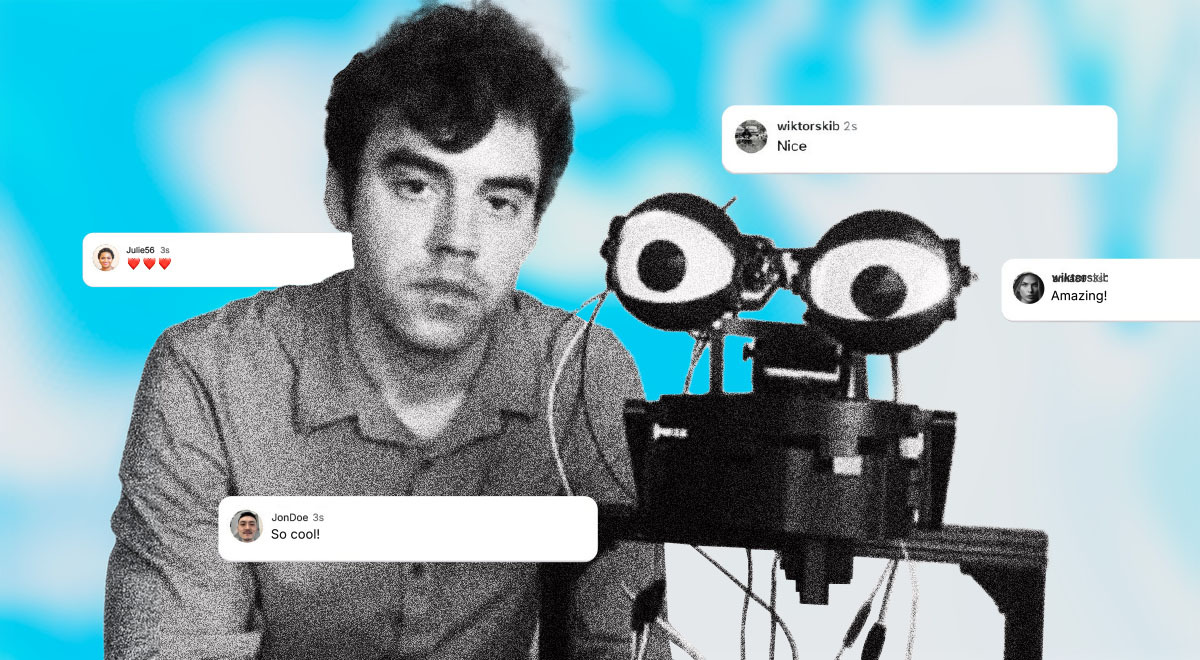
Image by Cybernews

 Follow us
Electrical engineer and content creator “DylanDelirium” told Cybernews just how his singing robot works.
Dylan Skaggs, an electrical engineer, has garnered millions of views and captured the hearts of people across the world, all by covering popular songs.
But Dylan doesn’t do it alone – he engineered a robot companion to sing alongside him.
While the robot isn’t as elaborate as SpaceXAI’s Optimus or Unitree’s humanoids, it has had a major impact on users on Instagram and TikTok.






Cybernews spoke with Dylan, and he told us how the idea came to life and where it's headed.
How it started
Dylan is a controls engineer by trade, and he loves it, but he was looking to do something different.
He wanted to combine his passions for engineering and music, but wasn’t sure where to start.
“I love what I do, but I lost a sense of creativity by doing that for a few years. So, I started this to kind of, you know, feel that longing for making something, creating something, doing something,” Dylan said.
He dabbled in an automatic guitar pick concept that would essentially let a guitar play itself, but he wasn’t satisfied.
So, he started developing a robot. Not a full-bodied automaton with arms, legs, and a torso – just eyes and a mouth, which users seem attached to.



Stay updated with our latest stories and follow us on social media
Be the first to discover new stories, ideas, and updates from our team.
From a few likes to millions of views
Dylan told Cybernews that he wasn’t expecting much to come of his content – he didn’t anticipate it would blow up as it did.
“I did not go into it thinking it was gonna be that, you know, large…I was gonna be happy if it got a thousand views.”
Dylan’s cover of Coldplay’s “Sparks” received 1.3 million likes on Instagram and 3.6 million on TikTok.
The engineer consistently posted updates on his projects for two years, receiving little to no recognition, until the lead vocalist found its voice.
The tech behind Instagram’s singing robot
Behind the scenes, there’s a more elaborate chain of commands needed to make the nameless star sing.
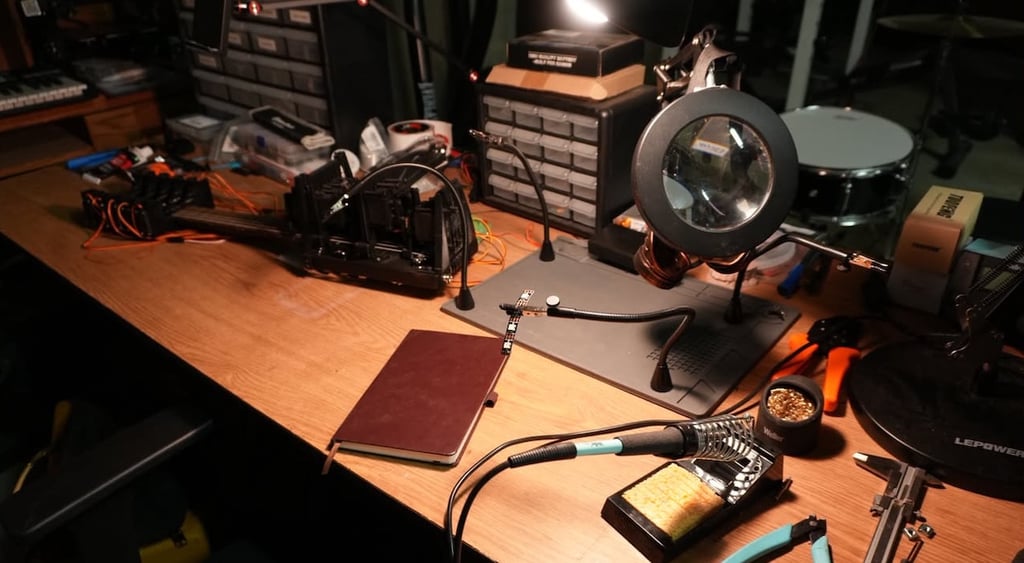
“It’s all micro servo motors, and then these servo motors are connected to a microprocessor. I use a Teensy because it can handle MIDI signals. Then I use my DAW, basically my audio software, to communicate with the robot.”
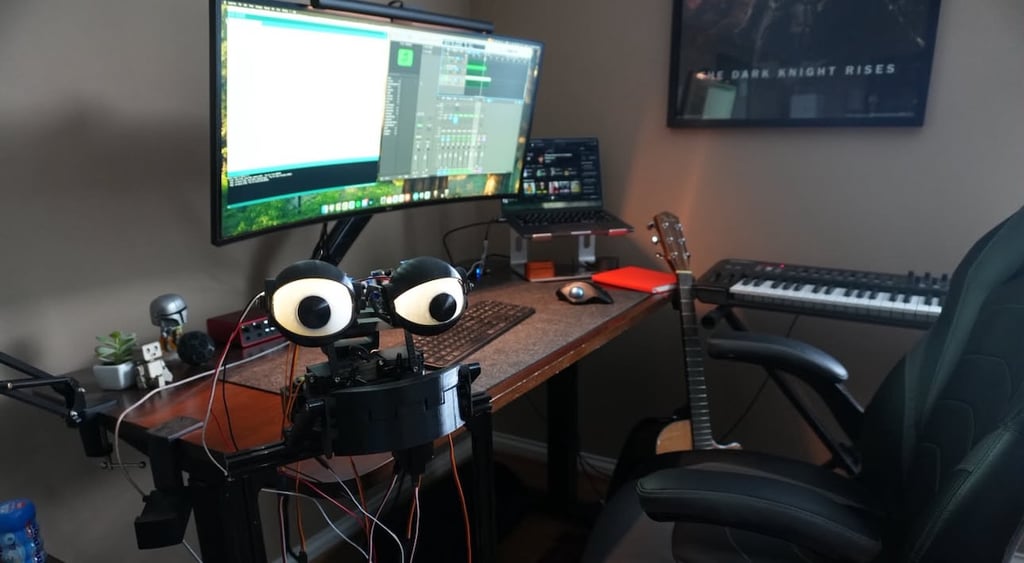
How it works is that Dylan will play notes on a physical instrument, usually the piano, and then enter the data into his Digital Audio Workstation (DAW).
This information is then sent to the MIDI (Musical Instrument Digital Interface), which carries information about pacing, notes, and volume to a microcontroller, such as a Teensy.
The Teensy then sends commands to the servo motors telling them which direction to turn, so that the robot's mouth and eyes move in time with the music.
This chain of commands controls how the robot moves, which mimics the way a human would sing.
The voice is a different story. Dylan uses a vocoder.
A vocoder is a device that transforms a human voice into a robotic, futuristic type of sound.
Dylan told Cybernews firsthand that his voice is the one Instagram and TikTok users are listening to – there’s no AI involved here.
But Dylan didn’t want it to feel like the anticlimactic reveal of the powerful wizard in the Wizard of Oz.
“I didn’t want to spoil it and say ‘Oh, hey, it’s just my voice with a vocoder,” but “at some point I will make a video showing how I do it all,” Dylan said.
Why are people so fond of a singing mouth?
At this stage, AI and humanoid robotics are evolving so fast that they’re starting to look and sound just like us – something about it is uncanny.
But not Dylan’s robot. Some see the residual concept of robots like Pixar's Wall-E or Tobar from the kids' films Sharkboy and Lavagirl.
“I think it hit a chord with people,” Dylan told Cybernews.
From the comments, people seem really attached to a simple singing mouth, but why?
“Some types of robotics in the world right now feel really harsh. You see robots doing this, doing that. It can be kind of scary,” Dylan said.
But by having an obviously inhuman robot that evokes a warm sense of nostalgia and affirms our childlike perception of robots, it may make users feel more at peace with the possibility of coexisting with them.
“If you have a human with it, it’s almost a smoother integration of some type of robotics being in the world right now… It’s gonna happen regardless.”