Cloud repatriation: How companies are saving money by coming down from the cloud
Cloud computing can be costly, with some companies electing to go it alone to reduce charges.
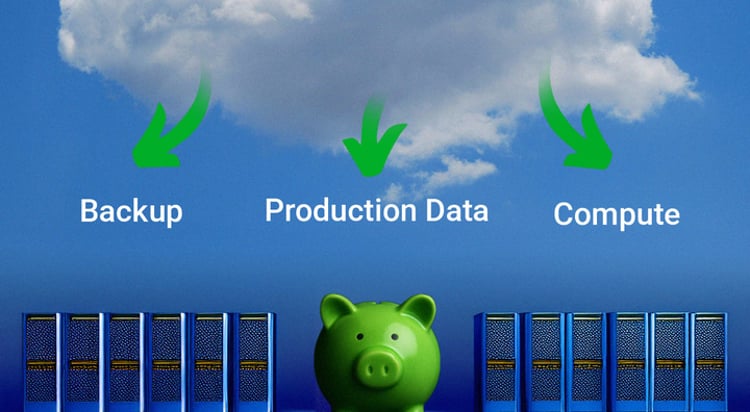
Image by Cybernews.

 Follow us
Cloud computing can be costly, with some companies electing to go it alone to reduce charges.
Cloud computing promised cheaper, easier infrastructure. Now a growing number of companies are discovering an expensive catch – and choosing to bring some workloads back home. The move, known as “cloud repatriation”, has gathered momentum over the past three years as bills from hyperscalers swell and once-temporary architectures become permanent drags on companies’ bills.
The poster child is 37signals, the company behind Basecamp and Hey. After years on Amazon and Google’s clouds, the firm began a “cloud exit” in the early 2020s, buying its own hardware and shifting stable workloads to a colocation instead.
Within a year, CTO David Heinemeier Hansson said the company had cut its monthly cloud bill by roughly 60% – about $1 million a year – by running its own servers, with a total five-year saving projected in the eight figures.
Insurer GEICO arrived at a similar conclusion from the opposite direction: after a decade of cloud investment, costs spiked to 2.5 times their original projections at the same time as reliability became more unreliable, prompting a program to pull key systems back to owned infrastructure. Industry analysis flagged GEICO’s shift as emblematic of a broader rethink among large enterprises.
Repatriation at lower cost
The two companies aren’t alone. A Barclays survey of technology leaders reported that 83% of CIOs planned to repatriate at least some workloads in 2024, up from 43% in 2020. This was presented as evidence of a swing toward hybrid infrastructure rather than “all-in” cloud.
Meanwhile, IDC found nearly half of buyers overspent on cloud in 2023 and 59% expected the same in 2024, citing surprise usage growth, pricey managed services, and data egress fees.
The data also highlighted that less than one in 10 businesses planned full repatriation: most were moving specific elements (like production data, backup, or compute) while keeping cloud for other needs.

The economics explain the U-turn. Cloud’s on-demand pricing is rocket fuel for early-stage products. Andreessen Horowitz called it a “trillion-dollar paradox”: you’re crazy if you don’t start in the cloud. But they then added that once you’ve scaled to the point of sustainable growth, you’re crazy if you stay on it.
For mature software companies, public cloud can become half of the cost of revenue and depress margins unless workloads are redesigned or moved.
Repatriation advocates say the savings are more than theoretical. Those predictable, steady-state workloads like databases, caches, and analytics jobs often run cheaper and faster on modern on-premises hardware, especially when amortised over years.
The case against
But repatriation isn’t a slam dunk for every company.
Cost is only one variable, and for many, the idea of global scale, security certifications, and managed services that hyperscalers provide will be a benefit. Giving that up risks slower development and new overheads like regular hardware refresh cycles, power and cooling, as well as paying for people to keep the systems running.
Even some of the success stories of a cloud repatriation acknowledge that headline savings exclude ongoing costs, which can narrow the gap over time.




The market context also matters. Public cloud is still expanding: Gartner expects end-user spending on public cloud services to reach $723.4 billion in 2025, up around 21% from 2024. This suggests most organisations aren’t fleeing, but instead are rebalancing where workloads live.
For consumers and workers, the outcome is usually invisible. After all, apps still load and streams still play. But for businesses, the stakes are high. Lower infrastructure costs can improve margins and fund new features, while missteps can slow product development.
It seems like the next few years will likely look less like a mass exodus and more like a negotiated settlement: a hybrid future where the cloud remains central, but no longer unquestionably so.
Unlock more exclusive Cybernews content on YouTube.