How we test proxies


A proxy server or system is the gateway between your devices and the internet. Basically, it acts as the middleman. More precisely, your request goes through the proxy, and instead of connecting directly, it forwards it to the end server.
However, as proxies are crucial for your privacy and security, we run in-house tests to help you pick the best ones on the market. While the testing process isn’t identical for every proxy, the Cybernews team tends to stick to some general criteria.
When reviewing proxies, we put ourselves in your shoes and test:
So, keep reading this guide to find in-depth information about our proxy-testing criteria.
Why trust Cybernews?
You probably know how hard it is to find an online source that’s relevant and has up-to-date data. Therefore, at Cybernews, we maintain transparency and clearly outline the criteria, testing methodology, and the sources we use. We even disclose all of our affiliations to make sure we stay accountable and transparent.
With this in mind, the Cybernews team has experts with extensive experience in software testing, cybersecurity, and information technology. We ran all of our reviews independently, ensuring they’re not biased by external parties. Plus, each of our evaluations relies on objective criteria and empirical evidence, rather than subjective opinions and preferences.
Additionally, we stick to strict testing protocols that cover performance, security, usability, and value for your money. This is because we want to provide you with thorough information and an assessment of all the capabilities of the products or software we test.
We also dive deeply into every aspect of the products we test. From performance to security to pricing, we cover everything, so you can know exactly what to expect. Our process is always consistent, ensuring you can rely on clear and reliable insights to inform your decisions.
Our in-house testing and methodology
Our Cybernews research team conducts real-life testing and analysis to show you how proxies perform. That’s why our testing covers different methodologies, such as performance, proxy types, rotation options, global coverage and targeting, and pricing.
Performance testing
When testing proxy performance, we use a bash curl loop script, which sends requests to a target website 100 times, measuring the time it took to get an HTTP response, as well as outputting HTTP response codes.
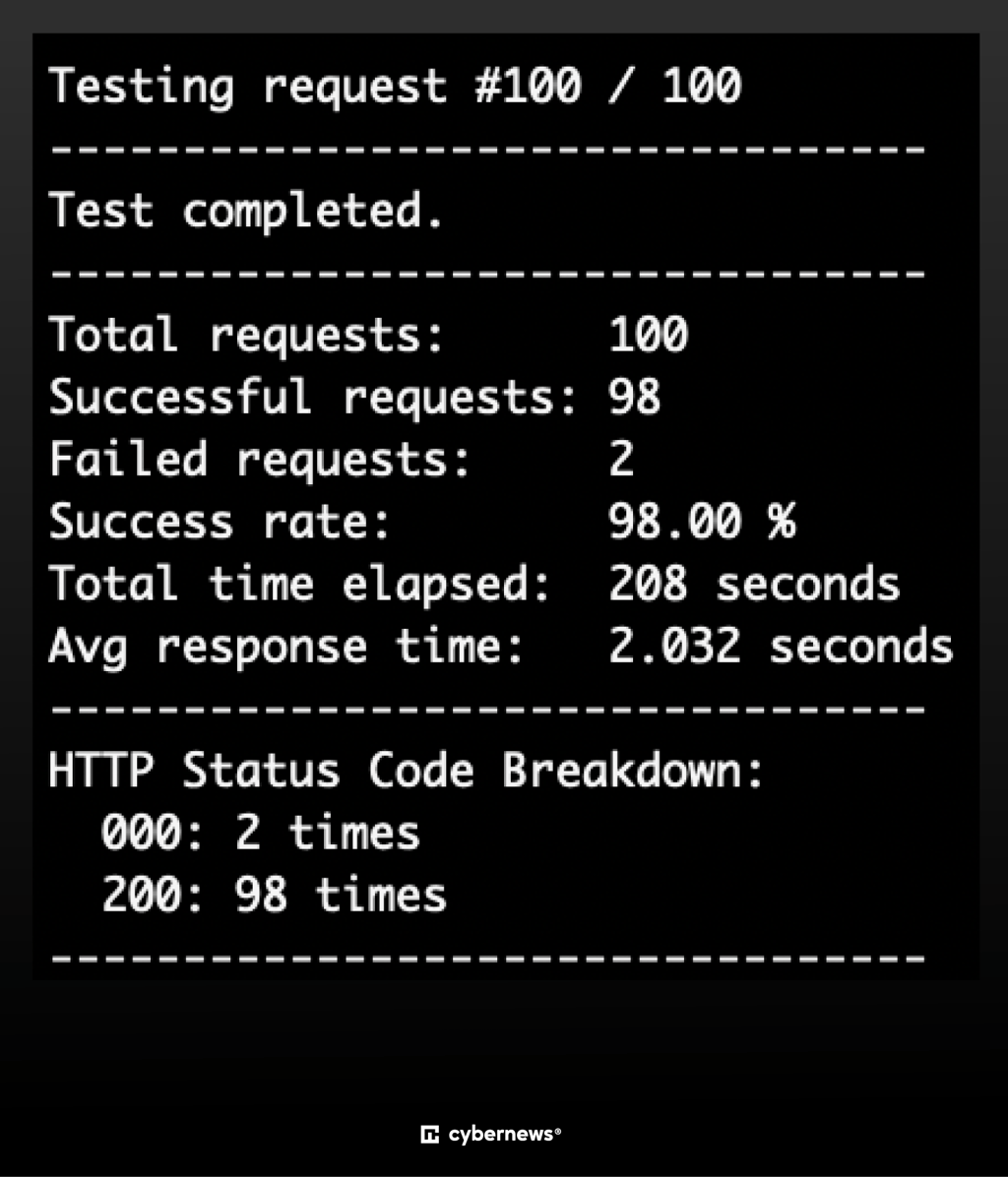
The script gives us information on the total amount of requests sent to the target website, the number of successful ones, the time it took to access the website during all attempts, as well as all of the HTTP response codes it received. This way we can measure how fast and successful the proxy servers are, which is an essential metric in most proxy usage contexts.
Proxy types
Most of the modern proxy service providers must cover the main IP types. These include datacenter, residential, ISP, and mobile IP proxies.
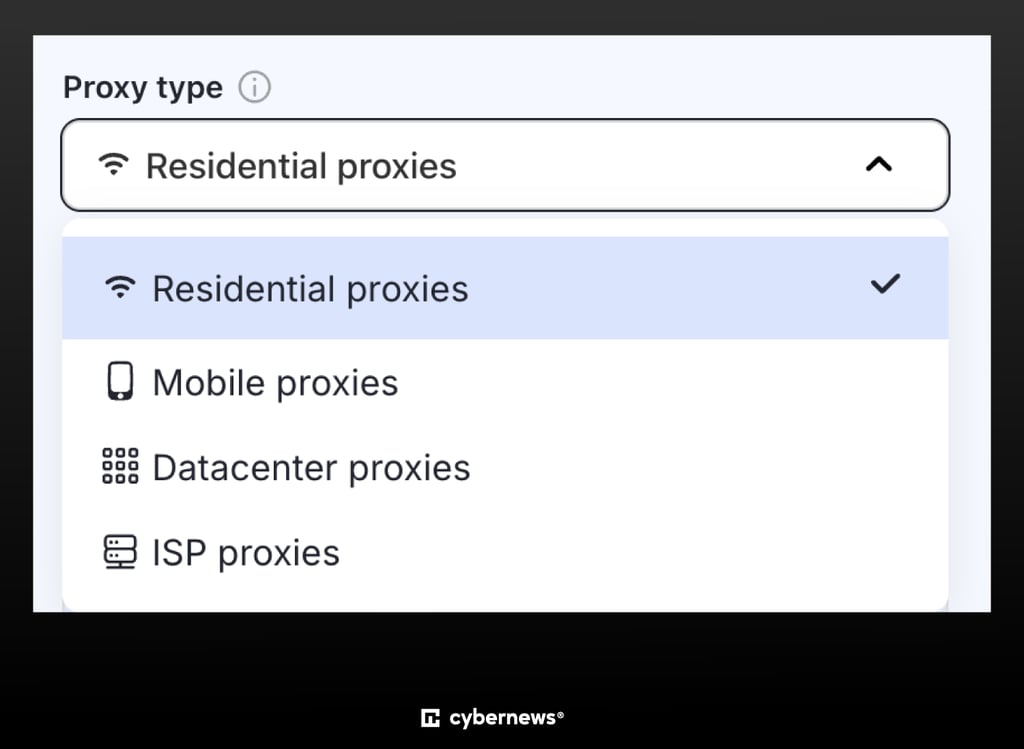
That’s why when evaluating them we always check whether proxies offer access to all of the proxy IP types, as well as the pool size behind each type.
Rotation options
We also check whether the proxy provider has sticky and rotating sessions. More precisely, we’re interested in whether your credentials use the same proxy IP for a specified amount of time or if the IP changes after each request.
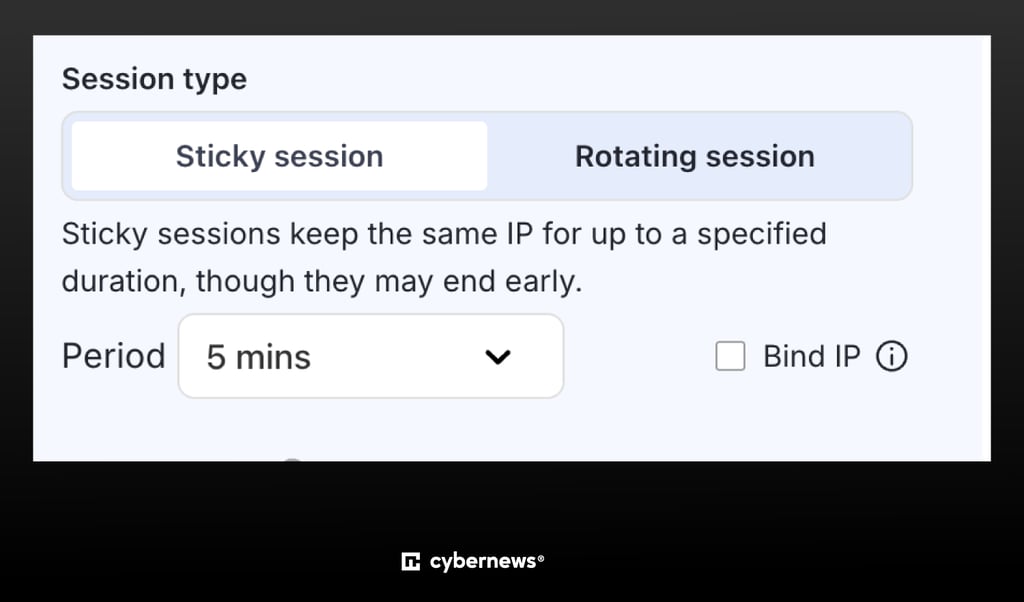
This is crucial to know, as proxy rotation is essential for enhancing your security and bypassing blocks.
Global coverage and targeting
Global coverage and targeting is one of the most relevant aspects when choosing a proxy provider. We check how many proxy location options are available, as well as how precisely they can be targeted.
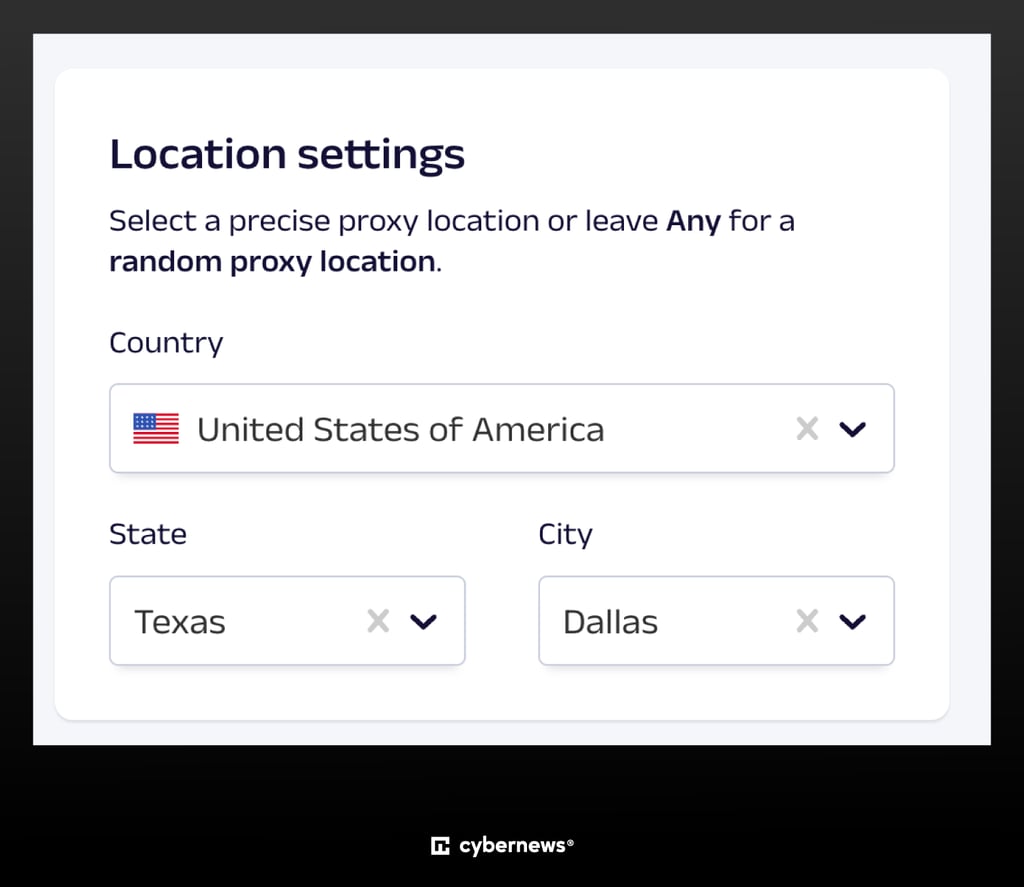
Advanced proxy providers will offer several targeting options, including region, country, state, city, and ZIP code targeting. This allows you to simulate very precise location connections.
Pricing
Last but not least, we evaluate the pricing options offered by the proxy provider. A good provider will offer various service purchase methods, including a pay-as-you-go model, pricing per traffic (per GB), or pricing per IP.
Additionally, we compare the pricing with other providers to determine the best use case for each proxy provider.
Our researchers



At Cybernews, our in-house research team of information, security, and tech experts conducts all of the proxy tests. The team spends hours and uses proprietary tools, following industry-standard methods. This helps us evaluate the effectiveness of different proxies with ease.
While testing, the Cybernews team also gains valuable insights into pricing, which is crucial for determining the value you get for your money, not just the price.
Another crucial aspect is the collaboration between our writers and research team to ensure that our guides and articles are relevant, accurate, up-to-date, and easy to understand for the broader audience. If you think something’s missing, feel free to reach out anytime.