Apparently we need to tell ICE agents not to wear Meta AI glasses
Agents continue to wear Meta glasses during immigration raids – forcing ICE to finally put its foot down.

ICE agents stand guard in front of protesters. Newark, New Jersey. Michael M. Santiago/Getty Images

 Follow us
- ICE says the new directive simply clarifies rules against using personal recording devices that were already in place.
- Agents have been spotted wearing the glasses across at least six states – and sometimes recording the public.
- Meta’s smart glasses have faced growing privacy concerns over secret recordings and facial-recognition technology.
- DHS wants $7.5 million to develop AI smart glasses with its own biometric identification technology.
Key Takeaways by nexos.ai, reviewed by Cybernews staff.
ICE is finally banning agents from wearing Meta AI glasses on the job after officers were repeatedly spotted using the smart eyewear during immigration raids – despite personal recording devices being strictly prohibited.
The directive came in a memo signed by ICE Acting Director David Venturella on Tuesday, according to the New York Times, which first reported the story after viewing a copy of the memo.
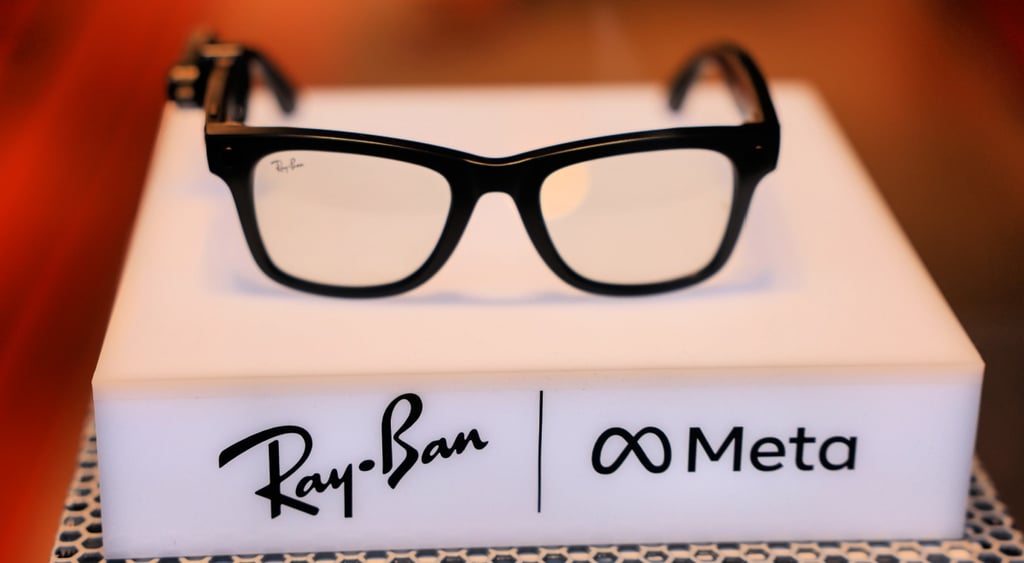
“The use of Meta Glasses or similar devices could unintentionally capture, record, or transmit sensitive information, potentially compromising privacy and legal protections,”the Immigration and Customs Enforcement agemcy memo said.






The ban is said to apply to all ICE employees, not just field agents, and covers the entire federal workplace.
Yet, ICE agents are already forbidden from donning any “personally owned body-worn cameras and unauthorized recording devices” while conducting immigration operations or other official business.
The Department of Homeland Security (DHS), which oversees ICE, has explicitly called the latest directive a “clarification” of a previous June memo, which basically said the same thing, the Times reported.
So why the repeat?
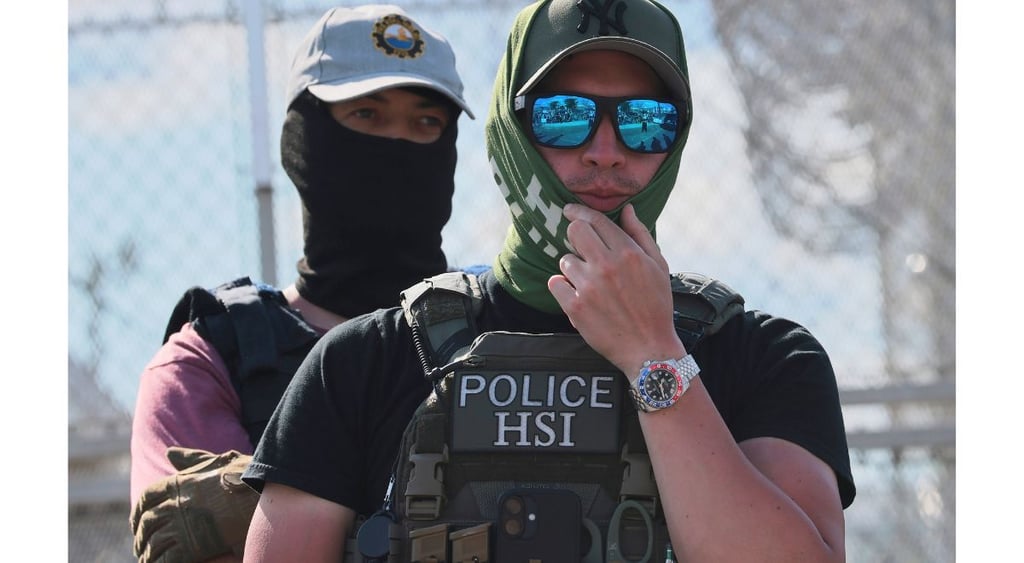
Because apparently ICE agents – in at least six states that we know about – have seemingly been ignoring (or misreading) the agency rule and have been spotted in public wearing the controversial glasses anyway – for at least a year.
And in some of those cases, agents were caught recording or photographing members of the public.
One of the first cases reported was in August 2025, when 404 Media obtained footage showing a Customs and Border Protection (CBP) agent wearing Meta Ray-Bans during an immigration raid outside a Home Depot in Los Angeles. Many other incidents have been documented since.

Meta glasses meet ICE raids
If you haven't heard, Meta’s Ray-Ban smart glasses look like an ordinary pair of sunglasses.
However, the eyewear packs a privacy punch with cameras, microphones, speakers, and Meta AI built into the frames, allowing wearers to take photos and videos, livestream, make calls, and interact with Meta’s AI assistant and companion app.
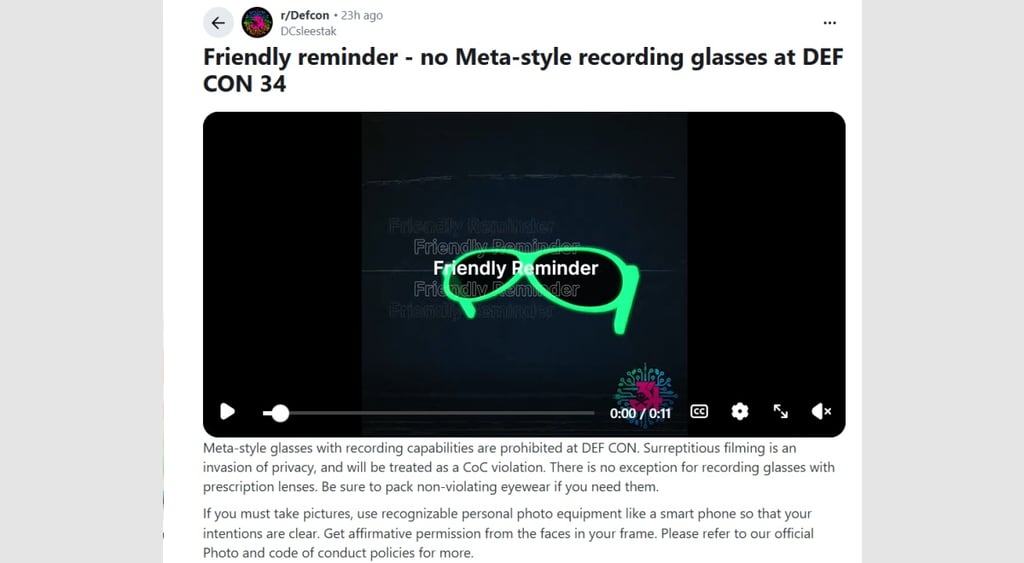
In fact, Meta smart glasses have sparked bans worldwide over privacy fears, secret recordings, and soon-to-be-added facial recognition capabilities, but more on that later.
Connected to a smartphone via Bluetooth and Wi-Fi, the app has a media management feature that lets the wearer import, view, save, and share any photo and video captured with the glasses from the user's point of view.
Privacy advocates warn that smart glasses can capture video and audio from the wearer’s point of view, potentially recording immigrants, protesters, bystanders, colleagues, documents, computer screens, and other sensitive information during federal operations.
And unlike agency-issued body cameras, there are concerns about who has access to those recordings, where the footage is stored, and whether it can be used as evidence in court or for other legal purposes.
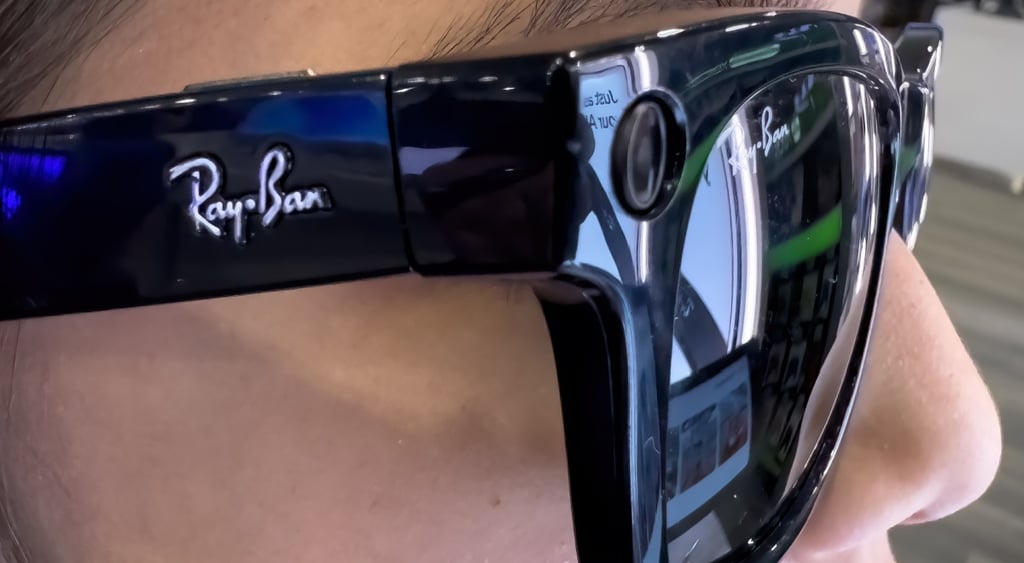
And the thing is, it’s not always clear when the device is recording.
Although Meta’s glasses were designed with a small LED “privacy light” built into the frame, meant to alert people when the camera is recording – the indicator light can be difficult to notice.
Furthermore, privacy gurus – and perverts – have created an entire underground ecosystem paying technicians about 50 bucks to disable the Meta privacy light by actually physically drilling it out of the frame.
Not everyone is buying it
It’s worth noting that Meta has already faced scrutiny over reports that third-party contractors – unrelated to ICE or law enforcement – were able to view sensitive footage captured through the glasses' AI features as part of its AI data-labeling operation.
The contractors, hired to review information users share with Meta AI to improve the glasses experience, apparently viewed accidental recordings of people undressing, using bathrooms, having sex, and even images of their bank cards.
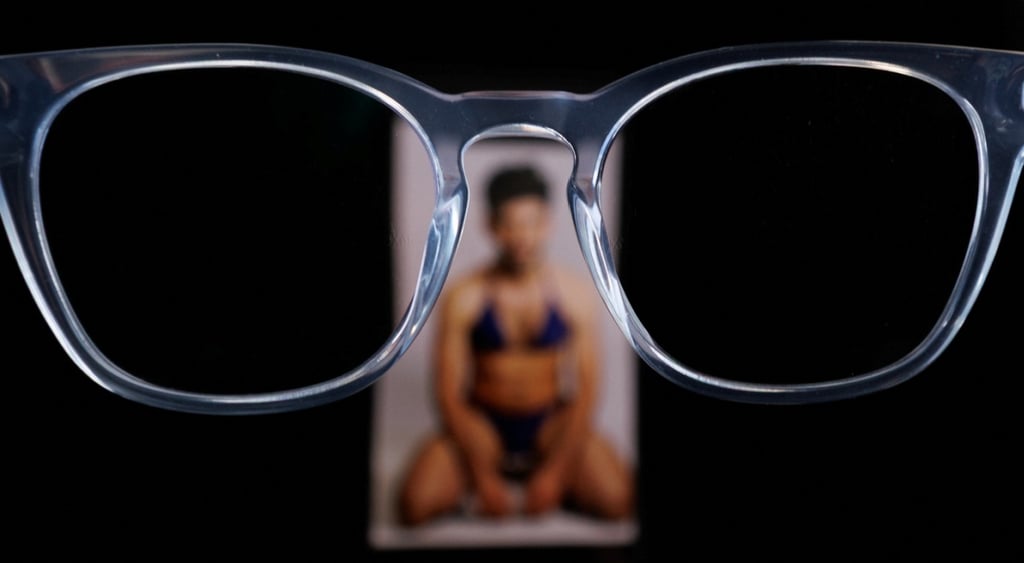
Also notable, DHS says it has no contract with Meta for the glasses, although not everyone believes it.
“I assume the US tax payer paid for them and ICE bought them. It’s not like they’re hard to source,” one Reddit user commented, while another was just amazed that "Meta found someone to buy the damn things.”
This Redditor suggested flipping the script on the "much-hated" agency. "If I were an observer/protester filming ICE, I would use smart glasses too. Maybe not Meta's.”
Others focused less on who bought the glasses and more on why agents were using personal recording devices in the first place.
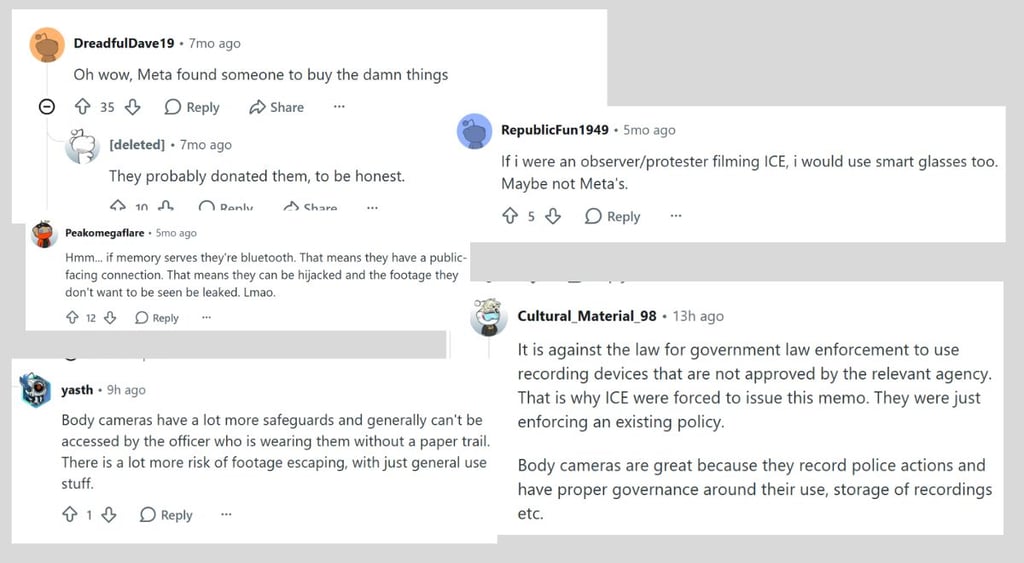
“Body cameras have a lot more safeguards and generally can't be accessed by the officer who is wearing them without a paper trail. There is a lot more risk of footage escaping, with just general use stuff,” one commenter pointed out.
Another simply noted that ICE was just reminding its agents that they are not allowed "to use recording devices not approved by the relevant agency. That is why ICE were forced to issue this memo. They were just enforcing an existing policy.”
Who needs Meta, we’ll make our own smart glasses
Not surprisingly, federal immigration and law enforcement agencies across the nation are actively determined to keep pace with AI and other advanced technology in the name of efficiency.
The kicker is that as it issues the ban on Meta glasses, DHS is seeking $7.5 million in funding to develop its own AI smart glasses – complete with its own biometric facial identification technology, Fortune reported in May.
The motivation: give immigration agents the ability to identify people using facial recognition and other biometric technology via their ICE-approved smart glasses.
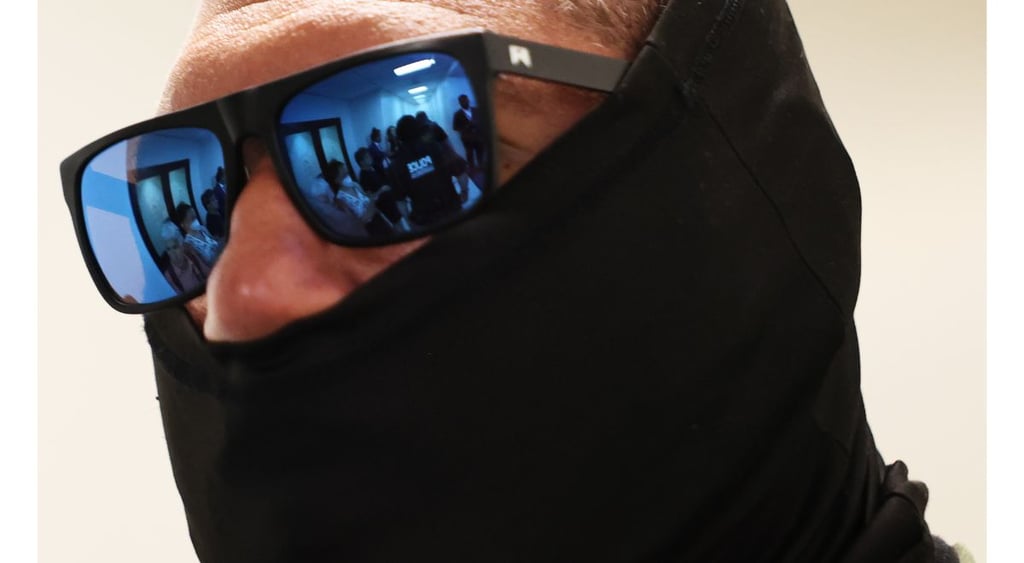
DHS officials previously confirmed that ICE was exploring glasses that could work alongside Mobile Fortify, the agency’s facial-recognition tool used by agents in the field.
And interestingly enough, Meta at one point tested a version of facial-recognition software from Rank One Computing – a company which just happens to be contracted with US government agencies such as the US Marshals Service, the Naval Criminal Investigative Service (NCIS), and US Special Operations Command.
According to Wired – which says Meta eventually scrapped that particular biometric recognition technology – “roughly 80% of Rank One’s revenue comes from government contracts,” mostly from law enforcement and military customers.




Stay updated with our latest stories and follow us on social media
Be the first to discover new stories, ideas, and updates from our team.