Nazi pop and algorithmic blindspots – TikTok has become a trojan horse for extremist music
Extremist groups are using TikTok’s remix features to spread Nazi lyrics and hate speech hidden in catchy pop songs, evading moderation and reaching millions.

Image by Cybernews

 Follow us
Extremist groups are using TikTok’s remix features to spread Nazi lyrics and hate speech hidden in catchy pop songs, evading moderation and reaching millions.
Cheesy Euro-pop from the late nineties has a lot of range, as it’s emblazoned all over TikTok in the form of dance and cut-up influencer montages.
But did you know that these sounds can also be a trojan horse for hate speech and Nazi lyrics?
That’s right – new research by Marloes Geboers of the University of Amsterdam and Marcus Bösch at Heinrich Heine University in Düsseldorf involved scraping thousands of clips from TikTok.
The researchers found that hate speech and Nazi lyrics are often woven into pop classics from Aqua and the like.
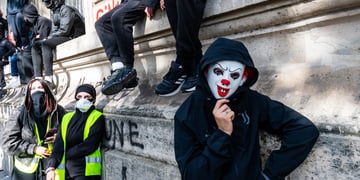


It can be quite chilling to see a simple walk to school set to a remix with Nazi lyrics, but that was one of the findings the authors dug out.
Hate hiding in pop
Audio on TikTok is more than background – it’s central to how content spreads. And extremists have noticed.
TikTok’s “use this sound” feature lets anyone reuse the soundtrack from a video they like – the app makes it frictionless.
When one person posts a video with a remix containing hate speech or Nazi references, others can unknowingly reuse it in new videos.
“The remix affordances [make] it so extremely easy to hide latent messages of extremism in layers of frivolous expressions... people can inject and perpetuate extremist vibes through sounds that feel rather innocent,” said author Geboers to Cybernews.

Eurodance, repurposed
The most widely reused track that’s used is unsurprisingly, L’Amour Toujours by Gigi D’Agostino – a trance anthem repurposed with Nazi slogans like “Ausländer raus.”
There’s also an AI-generated German pop song titled Verknallt in einen Talahon, associated with the far-right AfD party.
The word “Talahon” itself is nonsense, but it became a viral meme and an inside joke on TikTok.
“Talahon” is a youth trend originating in German migrant communities – especially Arab-background youths – portraying a hyper-masculine, patriarchal, and materialistic subculture.
The nonsense term’s ambiguity helps far-right content slip past moderation, as it doesn’t trigger keyword filters.
As Bösch noted, “There is for sure the sound ‘Verknallt in einen Talahon’ that was an AI AfD song that was nodded toward through the ubiquitous presence of the word Talahon.”
While the viral TikTok video linked below might not be overtly racist, it certainly can be seen as a slant, and has provoked huge debate in the media about whether it is a parody or far-right discrimination
@technodancefee Ich glaub ich bin verknallt 🤭🖤 #talahon #verknallt #fyp #goodvibes #ravegirl #techgirls #technoworld❤️🔥 #technomusic #technogirl #remix ♬ Originalton - theholysantabarbara
Mod tools missing
Meanwhile, TikTok’s moderation is reactionary and relies heavily on user flagging, allowing hateful audio to persist for months.
“The platform takes action, but very, very slowly, and they need to be made aware of something. It is all very much about flagging and, as such, reactionary moderation,” observed Geboers.
She sees the issue as structural, rooted in TikTok’s design as much as in its moderation gaps.
The remix culture of TikTok facilitates users borrowing another person’s sounds at the drop of a hat without any checks for clearance or content moderation, and then a viral video is free to proliferate, making digital divisions even wider.