How to opt out of Whitepages (2026)
Being behind major reports like The Mother of All Breaches and RockYou2024, our in-house cybersecurity experts and journalists provide unbiased, real-world testing and in-depth analysis.
We maintain complete transparency by openly sharing our testing methodologies with our audience.
Learn more
Whitepages is a popular data broker and the largest online directory provider in the US, with over 250million user records. It collects and shares personal information like names, addresses, and phone numbers for everyone to see, which can pose severe privacy risks.
As an online security expert with more than 10 years of experience, I’ve made it my mission to help you protect your privacy and keep your personal data confidential. Together with my team of Cybernews experts, I've researched ways to file a Whitepages suppression request and remove your data from the site.
Keep reading to learn how to opt out of Whitepages and protect your personal information.
How to opt out of Whitepages with a data removal tool

- Pick a reliable data-removal service. I recommend Incogni.
- Subscribe and create an account.
- Input the required details like phone number, address, etc.
- Allow Incogni to act on your behalf and send opt-out requests to data brokers. Incogni will automatically contact all applicable data brokers to remove your data, and you can request a Custom Removal for Whitepages from within the app.
- Incogni will automatically contact all applicable data brokers to remove your data.



The Cybernews team consists of professional and highly skilled writers and an in-house research team. They’re the core of all our reviews, bringing the performance of each tool closer to you. Additionally, we stick to a transparent testing process, which includes investigating various services, their features, and disclosing our testing methodology with everyone. Discover more about our testing process.
What is Whitepages?
Whitepages is one of the most popular people search platforms in the US. It collects information from publicly available sources, like social media profiles, government records (such as birth certificates and court documents), and directory listings. Although gathering and selling this information is legal, it puts the privacy of individuals at risk.
While certain information can be found on Whitepages for free, more delicate details are only accessible through a paid report. Here’s an overview of all the information that anyone can see for free on Whitepages:
- Your full name
- Your phone number
- Your residential address (including city, state, and ZIP code)
- Your job position and company name
A paid report reveals even more details, like your birth date, email address, criminal record, property ownership records, and more. It also allows anyone to take a deep dive into your financial history through mortgage details, bankruptcies, and other sensitive records.
The data broker lets users access its people search engine for free, which means anybody can look up your details. Marketing agencies use Whitepages as a tool for targeted advertising, and government entities use it as a public records platform, but actors with ill intent can use it for malicious purposes.
Cybercriminals can exploit the personal information on sites like Whitepages for scams. For example, they can send fake emails enriched with personal details to make them look more convincing. This data can also be used for identity theft, phishing, scam-calling, extortion, harassment, and stalking.
So, how do you find the Whitepages opt-out form? How exactly do you remove your information from Whitepages? Continue reading for step-by-step instructions.
How to opt out of Whitepages
The best way to opt out of data broker sites like Whitepages is to entrust the task to a professional data removal service. Apps like Incogni or DeleteMe will contact data brokers on your behalf, saving you the time and effort of doing it yourself. This is a faster and more reliable method, but it also requires a paid subscription.
Alternatively, you can fill out Whitepages’ opt-out form manually. It doesn't cost anything, but you will need to repeat it every few months to prevent your data from reappearing on the site. Since there are hundreds of other data brokers out there, this method is only just the start of the process of reclaiming your data.
How to remove your data from Whitepages with a data removal tool
There are two ways of removing your personal data from Whitepages: you can either do it manually or by using a data removal tool.
The former approach usually takes more time, and there’s no guarantee you’ll be able to fully remove everything. Still, it’s worth a shot, and it can be done through the official Whitepages website.
You can simply type in your name, find your profile on the site, copy the URL, and paste it into the appropriate section on the “Suppression Requests” page. Whitepages also requires you to verify your request by confirming your identity, which is usually done via phone.
For automated data removal, I’d recommend choosing a service like Incogni, which specializes in removing information from data brokers. Once you set it in motion, Incogni automatically scans supported data broker databases and sends suppression requests whenever it detects your personal information. For Whitepages specifically, removals are handled via Incogni’s Custom Removals feature rather than the fully automated workflow. Incogni also works with many other data brokers, and you can see the full list of supported sites inside the app.
Here's how it works:
- Choose a trustworthy data removal service. I use Incogni
-
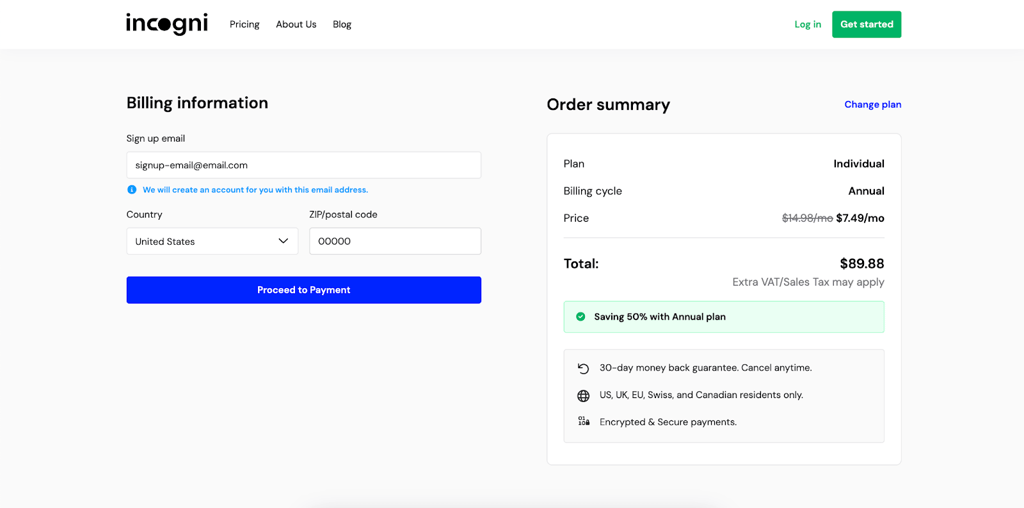
Choose a plan, subscribe to it, and complete the purchase
-
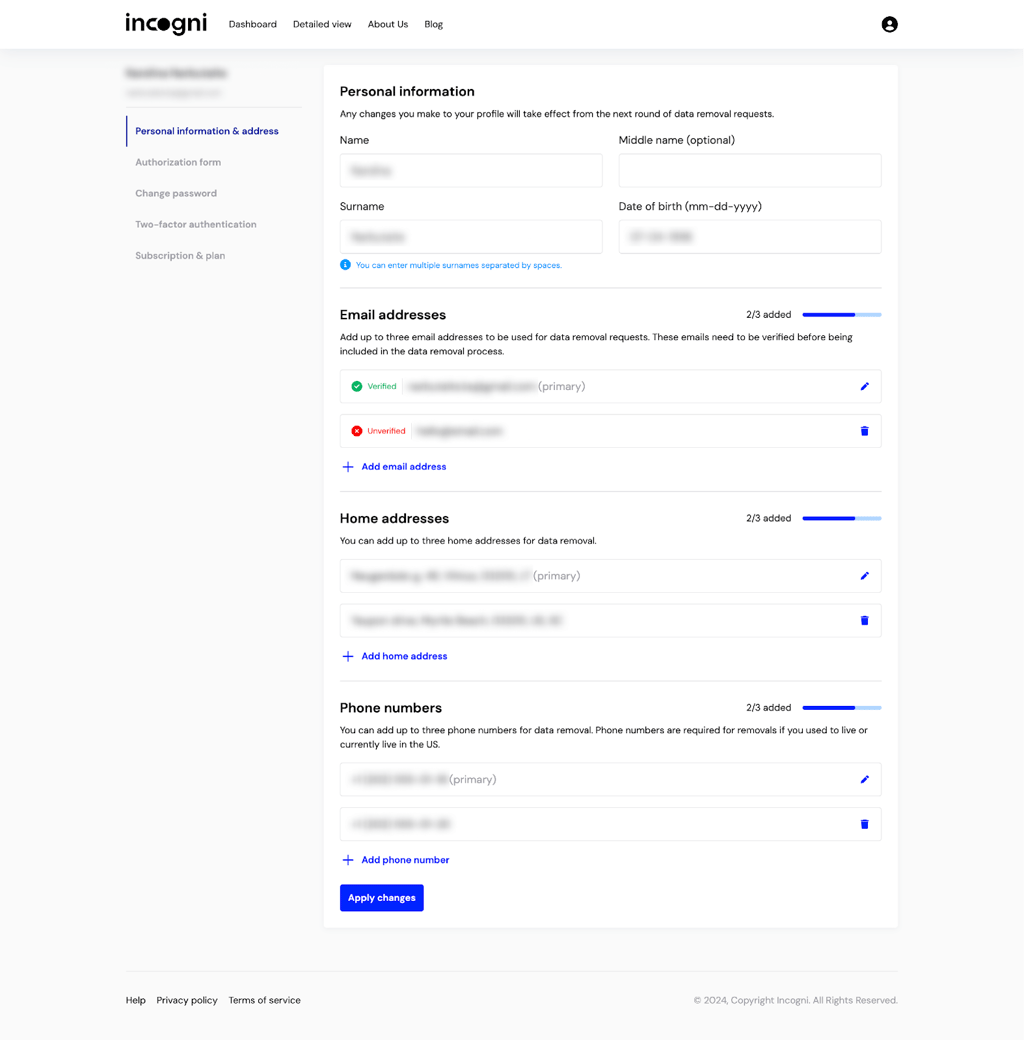
Create an account and log in with your credentials.
-
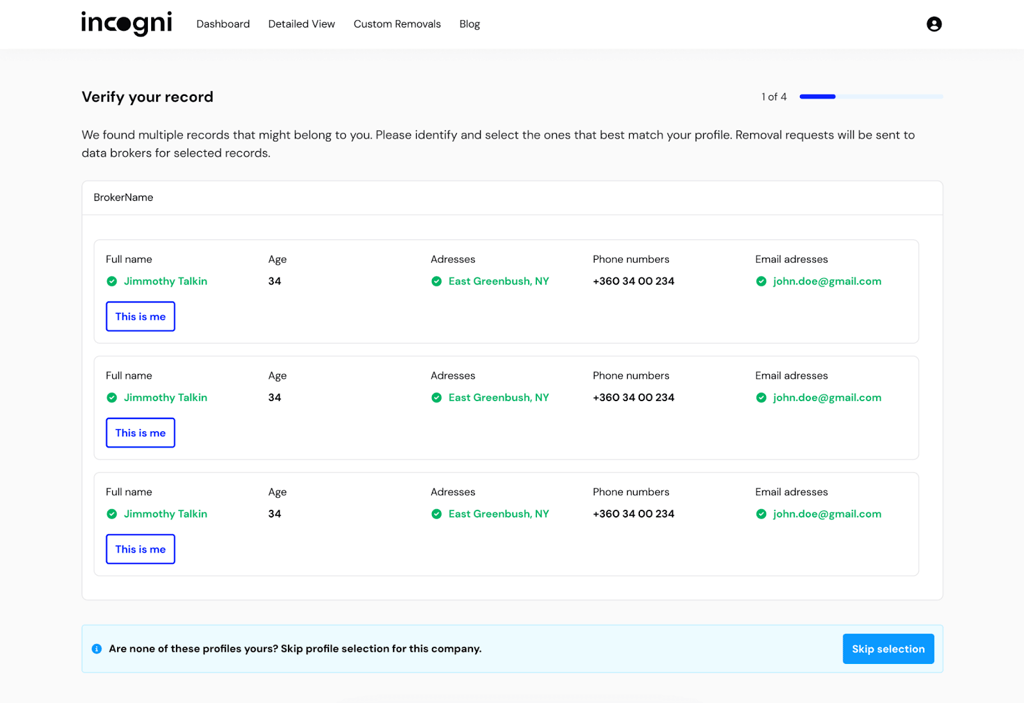
Verify your record(s) to demonstrate which ones are yours
-
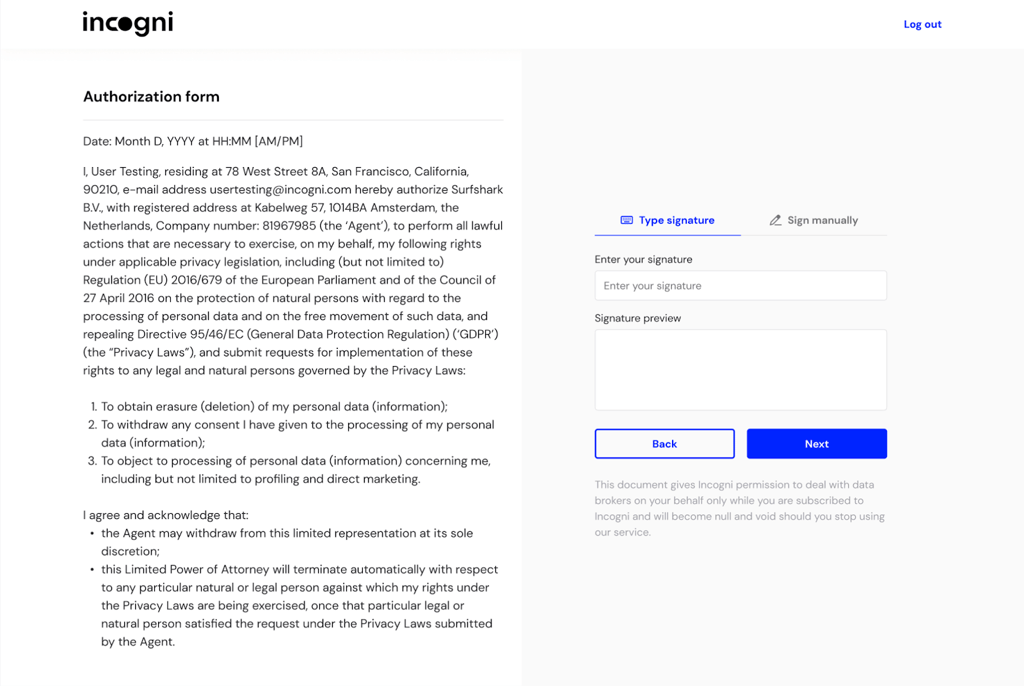
Allow Incogni to act on your behalf with a limited Power of Attorney. You can provide your signature by typing or signing
-
Incogni will start the automated process of contacting all data brokers, like Whitepages, that have your personal details to remove your information.
Since data removal times vary from one broker to another, there’s no specific estimate for Whitepages. You can simply monitor your Incogni dashboard, particularly the “Average resolution time” section, which is frequently updated. Once Incogni finishes removing your data, the status field will change to “Completed”.
How to manually remove your data from Whitepages
If you don't want to pay for a data-removal app or want more control over the whole process, you can use the manual Whitepages removal method. Remember that data brokers can resubmit your data in the future, and without a dedicated data removal app, you have to contact all brokers one by one.
Here's where to begin:
-
Go to the official Whitepages website and search for your name and surname

-
Scroll down until you see all the records with your name and surname.

- Click “View Details,” then copy the profile URL
- Now, go to the Whitepages Suppression Requests section
-
Paste your profile URL and click Next.

-
Confirm it is indeed your profile and click the “Remove Me” button.
-
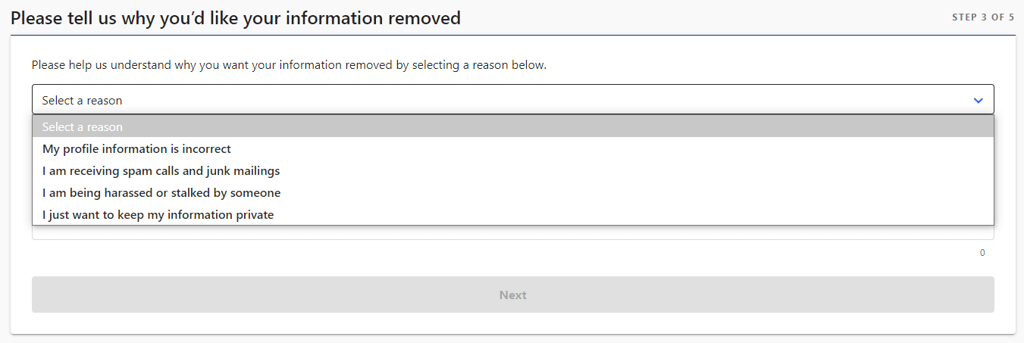
In the next window, select the reason why you are opting out and leave a comment
- Input your phone number to get a code, and click “Call now to verify”
- You will receive a call from the Whitepages automated system. Input the code to remove your data
Alternative Whitepages opt-out methods
You can remove your personal data from Whitepages using several alternative methods beyond the standard opt-out process. These options are useful if you want more direct control or need formal channels to escalate your request.
If you experience repeated privacy violations or unresponsive removals, I recommend reviewing the General Data Protection Regulation (GDPR) in Europe or the California Consumer Privacy Act (CCPA) in the US. These frameworks define how personal data can be collected and processed, and they may provide leverage or guidance relevant to your situation.
Opt out via email
You can request removal by emailing Whitepages directly. Send your request to [email protected] [email protected]. Email opt out is a good route to take if you prefer direct communication over using online forms. In most cases, Whitepages responds within 30 to 45 days, followed by another 24 to 48 hours for removal processing.
Opt out through the Whitepages consumer rights page
Whitepages provides a dedicated consumer rights page where you can submit privacy and data removal requests. Here, you can review your rights and available actions before submitting an opt-out request.
Contact Whitepages via Zendesk
You can also submit a privacy request through the Whitepages Zendesk support portal. This requires using a request form, which lets the support team track responses and follow-ups more easily.
Use automated data removal tools
You can also avoid the manual work by relying on automated data removal services like Incogni or alternatives such as Aura or DeleteMe. I would choose Incogni, since tools like Aura focus more on identity theft monitoring, while Incogni is more robust for data removal specifically.
How to keep your data from appearing on Whitepages
Data brokers like Whitepages build profiles from public records and online activity. Opting out helps, but lasting protection depends on limiting future data exposure. Having consistent privacy habits reduces the chances of your data reappearing.
- Share less information online. Avoid posting phone numbers, addresses, or identifiers on social platforms and forums. Skip non-essential profile fields, and review what third party apps can access before granting permissions.
- Decline cookies and tracking requests. Reject non-essential cookies, and disable cross-app tracking on supported devices. This reduces behavioral data that advertisers and brokers can aggregate over time.
- Tighten account privacy settings. Audit social media visibility, search engine indexing, and location-sharing options. Reviewing these options regularly can prevent silent setting changes, which worsen your exposure behind your back.
- Delete unused accounts and apps. Dormant profiles still store data and often lack modern security controls. Removing them shrinks your digital footprint and limits future data leaks.
- Use privacy-focused browsers and search engines. These tools block trackers, limit fingerprinting, and reduce referral data. Using these apps regularly reduces the amount of background data collected as you browse the web.
- Browse with a VPN. A reliable VPN encrypts your IP address and prevents ISPs or public networks from monitoring your online activity. This step matters most on shared or unsecured Wi Fi.
- Use data removal services for scale. Automated tools like Incogni submit recurring opt-out requests and monitor supported broker databases for relisted data. For sites like Whitepages, removals are handled via Custom Removals rather than the fully automated process. This approach saves time and improves coverage across multiple platforms.
- Monitor data breaches and record exposure. Breach alerts notify you if your emails, passwords, or phone numbers start circulating illegally. Getting notifications allows for faster password changes and follow-up removal requests.
- Separate primary contact details. Use secondary emails and virtual numbers for signups to prevent core identifiers from spreading. This limits future linkage risks.
Reasons to remove your information from Whitepages
The annual FBI Internet Crime Report for 2024 reveals a major increase in data exposure complaints compared to 2023. To be exact, it indicates a staggering 33% increase in internet crime losses related to data theft and exposure. In terms of money, it’s also an imposing figure: the losses stretch beyond $16 billion.
Additionally, this report states that the most common types of cybercrime in 2024 were phishing, personal data breaches, and even extortion. In my mind, these are all related, and having your data plainly exposed on sites like Whitepages leads to a higher chance of fraud and scams, especially now that scammers are equipped with powerful AI tools, which can easily detect exposed information.
By submitting a Whitepages suppression request, you will limit data availability for the following cybercrime methods:
- Identity theft. This one is among the most severe types of cybercrime, as it involves scammers exploiting your data for mortgage and other credit-related fraud, debt collection phone calls, and tax identity theft.
- Credit card fraud. Exposed personal details might also lead to credit card fraud, where criminals use your credit or debit cards to make unauthorized purchases.
- Impersonation. This type of fraud may involve anything from text, email, or phone call campaigns with scammers assuming your identity to make payments or commit financial fraud.
- Social engineering. Some more sophisticated scammers may also rely on social engineering manipulation techniques to trick you into making a mistake that would reveal your sensitive details.
- Phishing. As a very common method of data-related fraud, phishing can be done via email, texts, or even phone calls. It occurs when shady individuals pose as trustworthy and credible companies, tricking you into exposing your details like passwords and card numbers.
- Stalking. In the cybercrime-related sense, stalking includes online harassment, often involving the misuse of your personal information.
- Doxing. This occurs when individuals or websites publicly share your personal information without your consent.
- Extortion. Finally, data-related fraud may also lead to perpetrators stealing your accounts/data and requiring a payment to return them.
Personal information is used in numerous cyber attacks, so removing your private information from data broker sites is a solid step toward securing your digital identity.
Other guides you might be interested in:
Conclusion
As shown by the FBI’s annual cybercrime survey, data exposure is very common nowadays, and brokers like Whitepages make things even easier for scammers.
Restricting access to your personal information is the best way of reducing the risk of becoming a victim. That’s why I recommend using tools like Incogni to constantly monitor the web for exposed personal information and quickly removing it.
I especially liked how it files regular suppression requests not just to Whitepages, but also dozens of other data broker sites. If you wish to keep your personal details confidential, it’s a far more effective option than manual data removal.
FAQ
Is Whitepages free?
Not entirely. Whitepages offers a free people search engine that lets you search for people by name, address, or phone number. However, a more detailed record is locked behind a paywall, which can include property ownership, criminal record, contact email, etc.
Is Whitepages opt-out legit?
Yes, a Whitepages opt-out is a legitimate way to request that this platform remove your information. However, in some cases, Whitepages may decide to keep specific information or add your personal details to the list in the future, so you may have to opt out repeatedly.
How can I remove my info from Whitepages?
The easiest way to remove your information from the Whitepages is to use an automated service. Incogni scans data broker websites for your details and sends data removal requests automatically. It works with hundreds of data broker sites, so you can protect your online privacy in one go.
Why is my info on Whitepages?
Your information appears on Whitepages because it has appeared in some other public records. Whitepages collects user data from government records (birth certificates, court records, etc.), directory listings, and other public databases like social networks or online forums.
Does Whitepages tell someone you looked them up?
No, Whitepages does not alert anybody about profile lookups.
How long does it take for Whitepages to delete my information?
In most cases, Whitepages takes from 30 to 45 days to process data deletion requests. It also usually needs 24 to 48 hours to remove the information.
How does Whitepages get my information?
Whitepages collects your personal information from dozens of third-party brokers and public records. It may be anything from phone records to voting registers, financial statements, and even criminal records.
Can Whitepages re-add my information after I submit a data removal request?
Yes, if your details appear in recently released public records or other sources, Whitepages may repopulate its database with this new information. This requires a new removal request to maintain your privacy.
Why does Whitepages require a phone number to opt out?
Whitepages asks for a phone number during the opt-out process to verify your identity and confirm you are the person associated with the listing. This step prevents unauthorized removals and ensures the request is valid before personal data is removed.