Children under 13 may be barred from social media under new EU plans
The EU wants to incite teenagers to rediscover boredom.
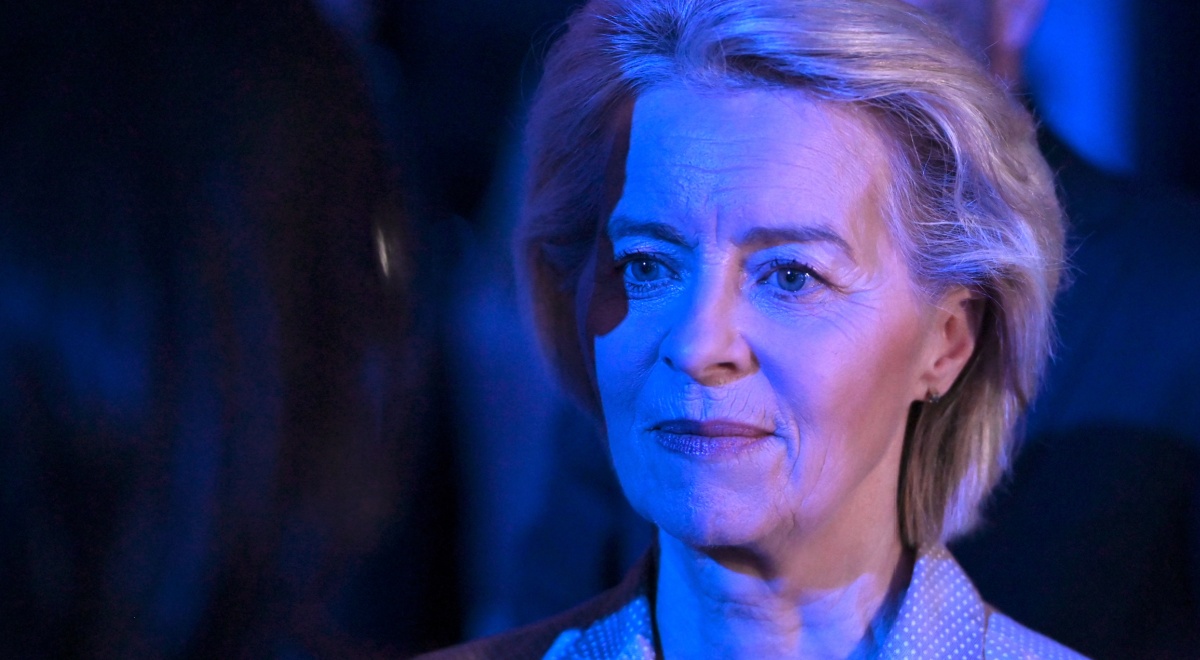
Ursula von der Leyen, President of the European Commission. M. Lenhardt/picture alliance/Getty.

 Follow us
- The European Commission is proposing to bar children under 13 from social media platforms.
- Children aged 13 to 15 would only get parent-supervised accounts with limited features and time restrictions.
- Platforms would need to remove addictive features and prove their services are safe for minors.
- Critics say bans may not stop many teenagers from using social media anyway.
Key Takeaways by nexos.ai, reviewed by Cybernews staff.
The European Commission is leaning towards stricter social media rules in the EU. If it were up to the Commission, all European children under the age of 13 would be restricted from using social media platforms.
That’s what European Commission President Ursula von der Leyen said on Wednesday during her annual State of the Union address.
According to Von der Leyen, children spend 4 to 6 hours per day staring at a screen. And they’re pulled even deeper into timeline feeds because of addictive features like endless scrolling and autoplay.
“This is depriving children of their childhood,” she asserts.



“What our children need is time to grow into themselves. To grow up with others. To be confronted with all of the emotions and choices that come with real life. They even need time to get bored because this is when they have to use their imagination. When they have to talk, agree, disagree, form an opinion, change an opinion.”
Von der Leyen also mentions the growing number of kids with severe addiction, mental health issues, and even fatalities caused by excessive social media interaction.
I convened a Special Panel of experts. We spoke to young people. We looked at Australia and others who have moved ahead. And now it is time for Europe to act,the European Commission President said.
To make this happen, the EU’s executive branch is proposing the EU Kids Act. The core of the proposal is to gradually give teenagers more freedom to explore and use social media platforms as they grow older.
“No social media under the age of 13. No personal account under the age of 15. That means, from 13 until a child turns 15, only mini accounts set up and supervised by parents, with limited features and time restrictions. And between 15 and 18, safe design will be an obligation for the platforms,” Von der Leyen argued.
This means that social media platforms can’t contain any addictive features. In addition, user data can’t be used for AI training purposes by default. And photos of teenage girls can’t be used to generate sexualized images.



Stay updated with our latest stories and follow us on social media
Be the first to discover new stories, ideas, and updates from our team.
“We are reversing the burden of proof. Platforms will have to prove that they are safe. Because it is not about our minors accessing social media. It is about when and how we allow social media to access minors,” Von der Leyen concluded the State of the Union address.
In November 2025, the European Parliament passed a resolution calling on the European Commission to consider a minimum age that would be appropriate to access social media for teenagers.
The conversation on this topic is live. Join in the discussion.
In March 2026, a majority of the Members of the European Parliament supported a ban on social media for children under the age of 13.
In July, France became the first European country to ban children under 15 from accessing social media platforms, including Instagram, Snapchat, TikTok, and YouTube.
However, critics argue that a social media ban doesn’t stop most teenagers from using social media platforms anyway.