Norway seeking temporary ban on smart glasses in public domain
Norway isn’t seeing eye to eye with AI glasses.
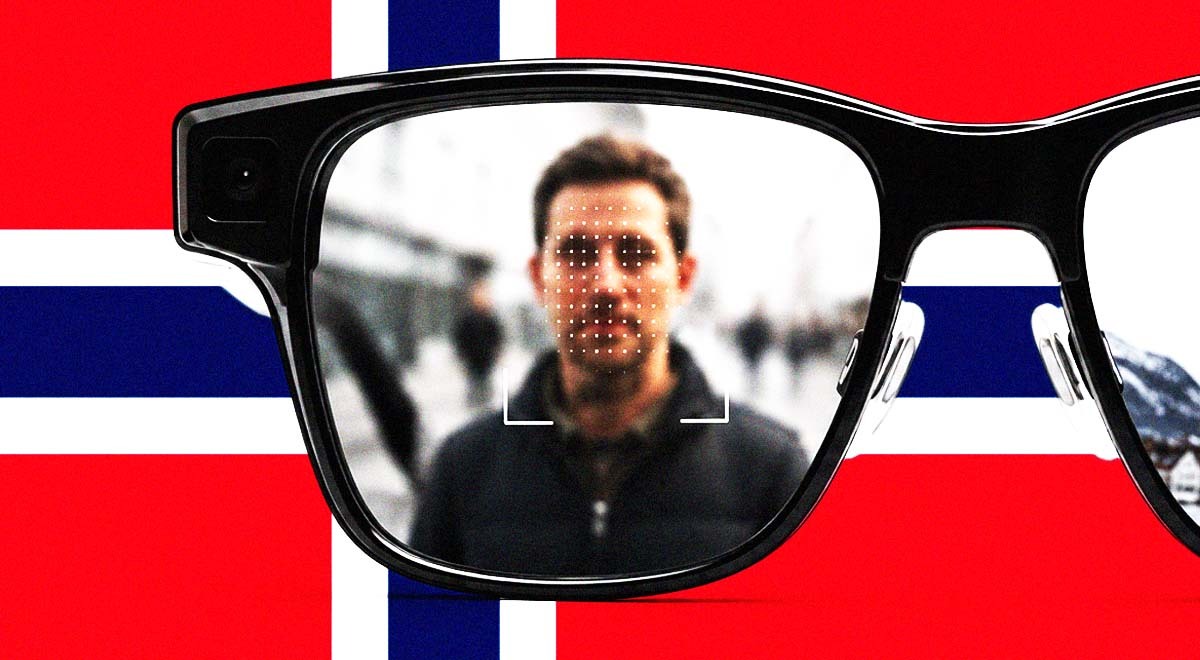
Image by Cybernews

 Follow us
- Norway proposes a temporary smart glasses ban in public places where privacy is a concern.
- The proposal covers parks, museums, beaches, malls, public events, schools, playgrounds, hospitals, and fitness facilities.
- Officials say the pause would allow investigation and debate before lasting rules are considered.
- Other countries and retailers are also weighing privacy risks linked to smart glasses.
Key Takeaways by nexos.ai, reviewed by Cybernews staff.
The Norwegian government wants to impose a temporary ban on smart glasses in public places where privacy is a concern.
“I am worried that new, powerful technology is being introduced where people risk being photographed, filmed, or audio-recorded without knowing it. It will give us time to conduct a thorough investigation and have an enlightened debate that can lay a good basis for a lasting regulation,” Minister of Digitalization and Public Governance Torgeir Micaelsen said in a statement on Monday.
The government wants to get a grip on the potential risks of AI glasses and is therefore proposing a temporary ban on them in selected places of the public domain.
The ban is considered for locations where people often travel, such as parks, museums, beaches, shopping malls, and public events. It also includes places where children hang around, such as schools, playgrounds, kindergartens, and leisure clubs.



Lastly, the temporary ban will also be enforced in places where privacy is important, such as hospitals, fitness facilities, and places with wardrobes and showers.
We do not want a society where people are concerned about hidden audio recordings, photography, and filming in places and in situations where they are used to being without being monitored. Such a society can be experienced as unsafe and make us pull away,Micaelsen added to his statement.
Norway isn’t out to fully ban all products that incorporate artificial intelligence (AI) technology. Experts are currently considering long-term national legislation.
The government promises to present a bill to parliament as soon as possible.
Norway isn’t the only country dealing with the implications of smart glasses.
Last week, California’s governor vetoed legislation that would have penalized using smart glasses to record people without their permission in places like changing rooms, doctors’ offices, and other spaces people generally consider private.
However, the legislation didn’t make it because the bill’s definition of a wearable recording device was considered too broad.
In the Netherlands and Belgium, eyewear retailer Hans Anders suspended sales of Meta’s Ray-Ban smart glasses over privacy concerns.
“This decision follows the ongoing public and political debate surrounding smart glasses and the questions being raised about the conditions under which this technology can be used,” a company spokesperson explained.