Best heated vests in 2026: warmth, comfort, and everyday usability

If you spend a lot of time outdoors during winter, you already know how grueling the cold can be. For many, the solution is to wear multiple layers of clothing, but even this isn’t perfect because it can bulk you up and restrict your mobility. That’s exactly the problem heated vests solve.
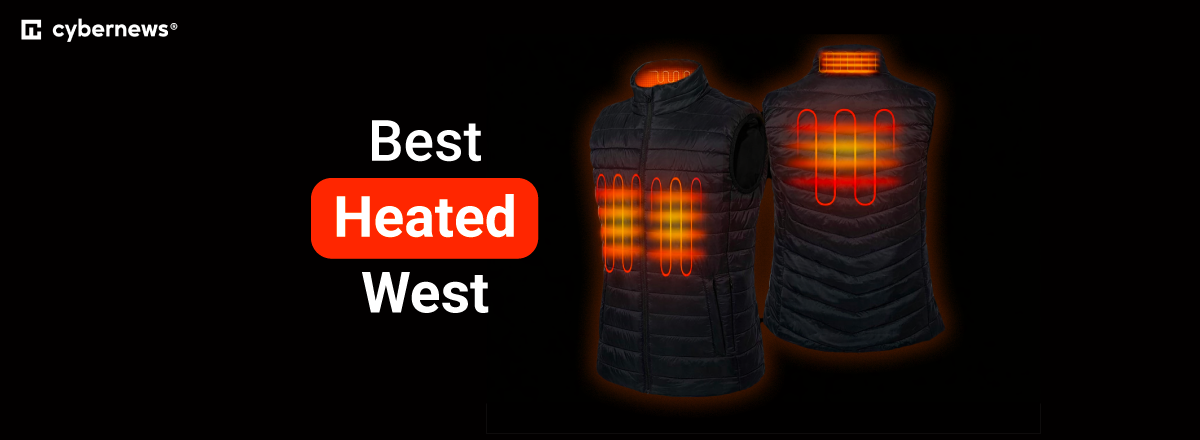
Heated vests are lightweight, specialized clothing with built-in, battery-powered heating elements that give you adjustable, targeted warmth in cold conditions. This makes them perfect for cold-weather work, outdoor activities, commuting, and medical comfort.
To help you choose the best heated vest for your needs, I teamed up with the Cybernews research team to review manufacturer specifications, safety documentation, and user feedback to identify which heated vests stand out today. This guide will walk you through how heated vests work, the benefits of owning one, what to consider before buying, and the top user-backed picks.
Best heated vests – shortlist
- WellaHeat – overall best heated vest
- ORORO Men's Lightweight Heated Vest – best premium option
- Venustas Men's Fleece Heated Vest – best runtime
- ORORO Women's Lightweight Heated Vest – best durable heated vest
- KOVNLO Heated Vest Women – best budget option
The best heated vests compared
Before diving into a detailed best heated vests review, comparing each of these products side by side will help you easily spot their strengths and differences.
| Best heated vest | Type | Category | Weight | Heat settings | Insulation type | Battery life | Heat zones | Price | Best for |
| WellaHeat Vest | Vest | Insulated | 0.5lbs | 3 heat settings | Polyester | 8 hours | 9 heating zones | Mid-tier | Comprehensive heat coverage |
| ORORO Men's Heated Vest | Vest | Insulated | 1.2lbs | 3 heat settings | Polyester | 10 hours | 4 heating zones | High-tier | Versatile outdoor activities |
| Venustas Men's Fleece Heated Vest | Vest | Soft shell | 1.5lbs | 3 heat settings | Fleece | 20 hours | 6 heating zones | Mid-tier | All-day use and marathon sessions |
| ORORO Women's Heated Vest | Vest | Insulated | 1.5lbs | 3 heat settings | Polyester | 10 hours | 4 heating zones | High-tier | Use in harsh conditions |
| KOVNLO Heated Vest | Vest | Insulated | 1.5lbs | 3 heat settings | Nylon | Depends on your power bank | 3 heating zones | Low-tier | Performance on a budget |
5 best heated vests – our detailed list
Now, here’s a deep dive into the best heated vest options that the Cybernews research team and I identified after extensive research.
1. WellaHeat Vest – best heat coverage
| Heating zones | 9 heating zones |
| Insulation type | Polyester |
| Battery life | 8 hours |
| Price | Mid-tier |
| Best for | Comprehensive heat coverage |
The WellaHeat vest ranks at the top of my list because it provides the best heat coverage. It comes with 9 different heating zones, way more than the industry standard of 3 or 4. It also comes with 3 heat settings, so you can easily regulate how much warmth you get on the go.
Meanwhile, it has a thin, lightweight design, so you can conveniently wear it over your daily outfit. You’ll also get up to 8 hours of continuous use from a single charge, and the outer material is waterproof. If you’re looking for a heated vest that is simple, powerful, and affordable, check this out.
2. ORORO Men's Lightweight Heated Vest – best multi-purpose use
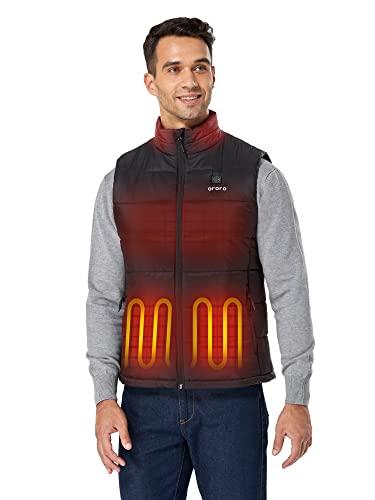
One thing that makes this ORORO heated vest really stand out to me is its versatility. It is made with quality synthetic fibres like nylon and polyester, which give it powerful insulation abilities without making it feel too stiff or uncomfortable. Because of this, you can use it for several different activities, like commuting, outdoor work, walking, hiking, sports, and more.
This heated vest comes with 4 heating zones distributed across key areas, including the collar. In addition, the heated vest is insulated, so it will trap your body heat very efficiently, and it is made of durable, waterproof materials.
3. Venustas Men's Fleece Heated Vest – best for use over extended periods
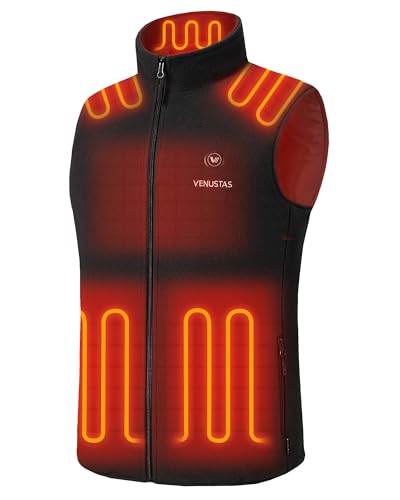
If you’re someone who typically spends a lot of time outdoors, even in winter, then the Venustas men's fleece heated vest could be what you need to stay warm. This vest features a powerful 36Wh battery pack that keeps it active for up to 20 hours, and it takes about 2.5 hours to charge. In addition, this Venustas vest also features a heated collar and allows switching between 3 heat settings.
4. ORORO Women's Lightweight Heated Vest – best heated vest for demanding conditions
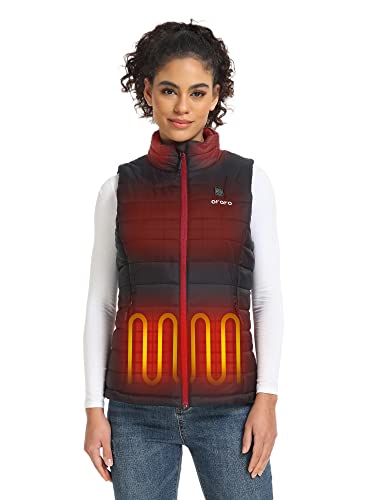
One thing that stood out to me when I was researching the ORORO women’s heated vest is how durable it is. This heated vest is made with water- and wind-resistant materials, making it perfect for harsh conditions.
In addition, the heating elements can withstand more than 50 machine wash cycles without damage, and the zipper easily withstands wear and tear. It also has a long-lasting battery that delivers up to 10 hours of use on a single charge.
5. KOVNLO Heated Vest Women – best budget heated vest
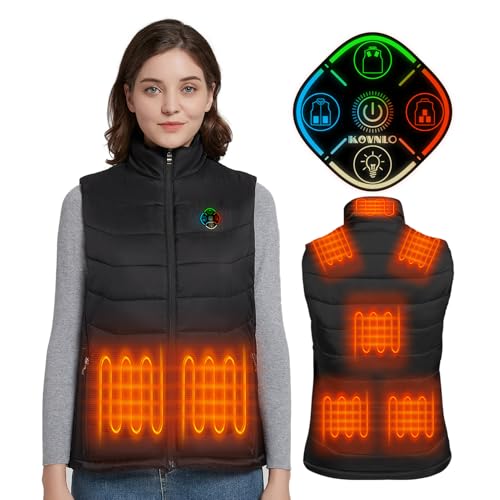
I decided to include the KOVNLO heated vest in this list because of its affordability. Even though it is not the best heated vest on the market, it still comes with solid features like 3 heating zones and wind and water resistance. I also like that it comes in various colors and is thin, making it easy to style with different outfits.
It does not come with its own battery pack, but it is compatible with 5V 2A power banks, so if you already have one, you won’t need to spend extra.
Our methodology
To arrive at this comprehensive list of the best heated vests on the market, the Cybernews research team and I thoroughly assessed different documentation and user feedback on multiple platforms with a focus on the following criteria.
- Heating performance and coverage zones (25%). I focused on how quickly the vests warm up, which body areas receive heat directly, and how consistent the warmth distribution is across different temperature settings.
- Battery life and power options (20%). I researched how long each of these heated vests lasts, based on the heat levels used and whether they are compatible with different power banks or come with dedicated power packs.
- Comfort, fit, and materials (15%). I reviewed the build quality and fabric choices of these heated vests to determine how well they trap heat. I also considered user feedback on how comfortable they really are and on the available sizing options.
- Safety features and certifications (15%). I checked manufacturer pages and safety labels to see which heated vests had good overheat protection, auto-shutoff functions, and other relevant safety features.
- Ease of use and controls (10%). I used user feedback to assess how intuitive the heating controls are, whether you can easily access them while wearing the vest, and if temperature adjustments work smoothly.
- Price and long-term value (10%). I compared costs and warranty coverage across different models to determine the most pocket-friendly options. I also considered the heated vest's durability to assess whether each vest has long-term value.
- User reviews and brand reliability (5%). Finally, I checked to see what current and previous owners are saying about the heated vests to identify common strengths and potential issues.
How do heated vests work?
Heated vests look like regular sweater vests or jackets. The major difference is that they have three key components that allow them to generate heat: built-in heating elements, a battery, and temperature control settings. The heating elements are usually thin carbon fiber strips placed across areas where warmth matters most – like your chest, upper back, shoulders, and sometimes around the collar.
For power, the heated vests rely on rechargeable batteries, and this is where heated vest models split into two types. Some come with a dedicated power pack, while others don’t but are compatible with standard USB power banks.
The kind of temperature control you get depends on the heated vest model. Some vests have a simple button you can use to cycle through heat levels. More advanced heated vest options include app connectivity or LED indicators to show you your current setting.
Benefits of heated vests
I assessed reviews from current and past users to find out the practical benefits of owning a heated vest. These are the most notable ones.
- Targeted warmth without bulk. One of the things users seem to love most about heated vests is that they let you stay warm without layering multiple pieces of clothing. The strategically placed heating elements ensure your core areas stay comfortably warm.
- Energy efficiency. Many people use their thermostats to stay warm all day, but this consumes a lot of energy and may raise your electricity bills. Heated vests offer a better alternative for warmth. With them, you get targeted heating that draws minimal power from a rechargeable battery and can last for more than 10 hours of continuous use. So this approach uses less energy than traditional heating methods.
- Versatility. Because of their lightweight design, you'll be able to use heated vests to stay warm while engaging in various activities like sports, commuting on cold mornings, and even outdoor work like construction or delivery.
How to use the heated vest?
If you want to get the best out of your heated vest, here's a step-by-step guide that will help you.
- Step 1: Charge the battery. Before your first use, make sure you fully charge the accompanying battery pack using the included USB cable.
- Step 2: Connect and activate the heating. You should be able to find the power port inside one of the vest pockets. Connect the powerpack and then press and hold the power button to activate the vest.
- Step 3: Select your heat level. Some heated vests come with dedicated buttons you can use to cycle through heat levels. Others come with just the one button you can use to cycle through heat settings. The LED indicators on your vest will show your current level.
- Step 4: Layer it properly. If you have a soft-shell heated vest, you can layer it under your jacket. This will help you trap heat more effectively. But if what you have is an insulated or puffy vest, it is better worn as an outer layer rather than under your clothes.
For safety, make sure you don't leave your heated vests on maximum heat for extended periods, as this could cause overheating. Also, make sure you follow the manufacturer's washing instructions strictly and pay attention to usage directions in the product manuals.
How to choose the best heated vest for your needs
If you want to choose the best heated vest for your needs, here are some important factors to consider.
- Heating zones and temperature levels. The more time you spend outdoors in the cold, the more heating zones you'll need. Also, most heated vests come with the standard 3 temperature adjustment levels. That said, if you constantly spend long hours outdoors in the cold, you may want to consider getting a heated jacket instead or at least add a hand warmer to your outfit.
- Battery capacity and runtime. The runtime you’ll get depends on the heat setting you use and how long you plan to wear it. Some models come with strong batteries that support continuous use for up to 20 hours. Choose a heated vest with a runtime that matches your typical day outdoors.
- Fit, sizing, and adjustability. The best heated vest for your needs should be fitted enough so it doesn't ride up, but not too tight that it feels restrictive. You should also be able to layer it under or over your clothing as necessary.
- Material breathability and weather resistance. You want a heated vest that has enough breathability to keep you warm and dry without overheating or getting damp from sweat and weather resistance that protects the internal electronics and prevents external moisture from stealing body heat.
- Weight and flexibility. The lighter the vest, the easier you'll move and the more flexibility you have.
- Washability. I recommend you opt for a heated vest that is machine-washable because it will save you time and effort.
A heated vest may feel restrictive indoors, so if you want to maintain the same quality of warmth generation without using a heated vest, then consider getting a heated blanket hoodie instead.
Best heated vests according to users
According to numerous user reviews on platforms like Reddit, heated vests are great for keeping warm in the coldest conditions. One user even notes that he can sit outside in the cold for hours without feeling uncomfortable.
One device users seem really excited about is the WellaHeat vest. Several reviews praise its battery life, saying it lasts a long time and that they don’t have to charge it frequently. Another user says he loves that he can wear it for hours without any issues while working.
That said, there are some complaints about heated vests. Some users mention that using them during very active exercises, like hunting, may not be ideal because the heat can become too intense. There are also complaints about fit, with some users receiving vests that are too small. This is why I recommend verifying your size with the company’s chart before placing an order.
Bottom line
Overall, if you spend a lot of time outdoors in cold weather, you should get a heated vest to help you stay warm. I recommend the WellaHeat vest because it provides the best balance of heating performance and affordability.
With it, you get a combination of 9 heating zones, 8 hours of operation, and it's still lightweight and durable. There are more affordable options on the market, but the trade-off is reduced warmth capabilities and reduced battery life.
That said, you should be aware that higher prices will buy you better battery performance and more consistent heat zones. But consider how often you'll actually use the heated vest before spending extra.
FAQ
How long does a heated vest battery usually last?
Heated vests generally last for about 8 to 10 hours on a single charge. However, the actual runtime you’ll get depends heavily on the heat temperature settings you’re using and the duration.
Are heated vests safe to wear for long periods?
Yes, they are. Heated vests come with built-in safety features such as smart sensors, insulating materials, and automatic shut-offs, which help prevent burns and skin irritation.
Can heated vests be washed in a washing machine?
Yes, they can. Most heated vest models are machine washable, but some aren’t. Make sure you verify if the model you’re considering does before you go ahead.
Do heated vests work in extremely cold temperatures?
Yes, they do. Heated vests are designed to keep you warm even in very cold weather. However, depending on how cold it is, you may need to layer the heated vest under a jacket to get the best results.
Are heated vests allowed on airplanes?
Yes, they are. However, you will have to detach the battery first and keep it in your carry-on luggage. This is because heated vests usually use lithium-ion batteries, which are considered fire hazards.