GitHub overwhelmed as flood of vulnerability reports slows security fixes
While GitHub, the world's most popular proprietary developer platform, is experiencing a record-high surge in vulnerability reports, you can help yourself by following several suggestions as the platform adjusts to the new reality.


 Follow us
While GitHub, the world's most popular proprietary developer platform, is experiencing a record-high surge in vulnerability reports, you can help yourself by following several suggestions as the platform adjusts to the new reality.
- GitHub faces a record surge in vulnerability reports, slowing advisory reviews and security fix publication.
- In May, GitHub published 1,560 reviewed advisories, more than five times its usual monthly output.
- GitHub says more reporting shows progress, but longer processing times can leave users exposed for longer.
- The company urges clearer reports, careful CVE requests, and closer coordination with maintainers to speed reviews.
Key Takeaways by nexos.ai, reviewed by Cybernews staff.
The company reported that, in May, the GitHub Advisory Database published 1,560 reviewed advisories, or more than 5 times its typical monthly output, while from March through May, GitHub sustained more than 6,000 advisory decisions per month.
This has been attributed to more repositories enabling responsible disclosure, more researchers reporting vulnerabilities, and more maintainers publishing fixes and advisories, as the vulnerability ecosystem scales toward greater transparency. For example, more than 1.7 million repositories have enabled private vulnerability reporting.
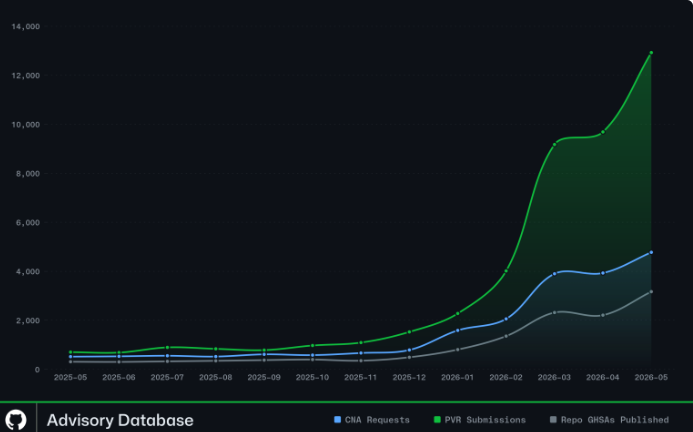






In either case, the surge in these reports has resulted in longer waiting times for those reporting vulnerabilities.
"Since mid-April, due to this surge, we have not consistently met our internal goals for publication. Processing times extended first to about a week, then to multiple weeks for a meaningful share," Madison Ficorilli, a vulnerability transparency advocate and staff security manager at GitHub, said, adding that longer publication times can increase exposure windows.
Therefore, while the company is improving its systems, including building AI-assisted research tools and automating processes, you can follow these suggestions so your report is processed faster:
According to Ficorilli, a vulnerability report should include:
- Complete data, such as affected version ranges, the root cause, and clear reproduction steps.
- The right advisory details, as this affects how quickly and accurately advisories can be reviewed and published.
- Intentional requesting of CVEs (Common Vulnerabilities and Exposures).
"When requests are made without plans to publish, it can divert time and attention from advisories that are actively moving toward release," Ficorilli said.
She also suggested coordinating closely with maintainers and other researchers to align affected packages, version ranges, and fixes, while also encouraging developers to contribute pull requests to the Advisory Database.
"The increase in vulnerability reporting reflects real progress. More issues are being found, fixed, and disclosed than ever before," Ficorilli concluded, inviting researchers, maintainers, and data consumers and producers to collaborate to maintain quality at this scale.
Unlock more exclusive Cybernews content on YouTube.